
Zeewier tagliatelle met romige carbonara saus
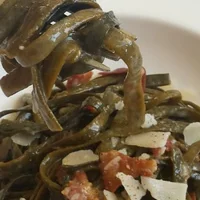
Seaweed tagliatelle brings a savoury, distinctive note to this creamy carbonara, with crisp pancetta and Parmesan for richness. It is a straightforward pasta dish that makes a memorable centrepiece for a meal.
Ingredients
- 100 gseaweed tagliatelle
- 250 gpancetta
- 100 gParmesan cheese
- 4egg yolks
- 3egg whites
- to tastefreshly ground black pepper
Instructions
- 1
Cook the pasta
Cook the seaweed tagliatelle according to the packet instructions, allowing 20 minutes.
- 2
Fry the pancetta
Slice the pancetta and fry it in a sauté pan over a medium heat for about 10 minutes.
- 3
Mix the eggs
In a small bowl, combine the egg yolks and egg whites with half of the Parmesan. Season with freshly ground black pepper.
- 4
Combine the pasta
Add the cooked tagliatelle to the pancetta and toss together. Turn off the heat, then add the egg mixture.
- 5
Finish and serve
Scatter over the remaining Parmesan and add black pepper to taste. Serve straight away.
What is seaweed tagliatelle carbonara?
Carbonara is an Italian pasta dish known for its combination of pork, eggs, cheese and black pepper. This version uses seaweed tagliatelle, whose savoury character gives the familiar rich sauce a different edge.
The method keeps the ingredient list short: pancetta provides a salty, crisp contrast, while Parmesan and eggs make the coating. Tossing everything together off the heat helps keep the sauce smooth.
Nutrition and macros by portion
The nutrition label shows one serving as written: 480 calories, 29g protein, 18g carbs, 31g fat.
| Portion | Adjustment | kcal | Protein | Carbs | Fat |
|---|---|---|---|---|---|
| Lighter | Use less pancetta | 336 kcal | 20g | 13g | 22g |
| This serving | As written | 480 kcal | 29g | 18g | 31g |
| Hungry | Serve a larger portion | 720 kcal | 44g | 27g | 47g |
Most of the carbohydrates come from the tagliatelle, while pancetta, Parmesan and eggs contribute much of the fat and protein. Pair a serving with a green salad or vegetables to add freshness and balance the plate.
Choosing the ingredients
Seaweed tagliatelle: Follow the packet directions, as cooking times can differ between products. The recipe specifies 20 minutes.
Pancetta: Slice it before frying so it cooks evenly and is easy to toss through the pasta. It brings both savouriness and richness to the dish.
Parmesan: Finely grated cheese is easier to mix into the eggs and scatter over the finished pasta.
Getting the egg sauce right
The eggs are stirred into the pasta after the heat is turned off. Residual warmth helps coat the strands without treating the mixture like scrambled eggs.
Have the egg mixture ready before the pasta is done, and toss promptly once it goes into the pan. If the sauce seems thick, a small splash of hot pasta water can help loosen it.
Pancetta and texture
Fry the pancetta for about 10 minutes over a medium heat, as directed, until it is cooked through and crisp at the edges. Stir occasionally so the pieces brown evenly.
Avoid draining away all the rendered fat before adding the pasta: it helps carry the pancetta flavour through the dish. If the pan looks excessively greasy, remove a little first.
Timing the pasta
The listed cooking time for the seaweed tagliatelle is 20 minutes, so check its texture towards the end of that time. Aim for pasta that is tender but still holds its shape.
Coordinate the pasta and pancetta so the tagliatelle can go into the pan as soon as it is cooked. This keeps the dish hot when the egg mixture is added.
What to serve alongside
A crisp green salad or simply dressed leaves make a fresh counterpoint to the creamy sauce and salty pancetta. Keep the dressing light so it does not compete with the pasta.
Serve the tagliatelle immediately, with any extra black pepper at the table. The dish is rich, so a modest side of vegetables is a practical way to round out the plate.
Recipe notes & tips
- Grate the Parmesan finely so it blends readily with the eggs.
- Prepare the egg mixture while the pasta cooks.
- Keep the pancetta over a medium heat so it browns without scorching.
- Turn off the heat before adding the egg mixture.
- Serve as soon as the sauce coats the pasta.
Variations
- Extra pepper: Add more freshly ground black pepper at the table for a sharper finish.
- Garlic note: Fry a little sliced garlic with the pancetta for a more aromatic version.
- Herb finish: Scatter chopped parsley over the pasta just before serving.
- Vegetable side: Toss in cooked peas for a sweeter contrast and extra colour.
- Cheese swap: Replace some Parmesan with Pecorino for a saltier, tangier flavour.
Common mistakes to avoid
- Adding eggs over direct heat: the mixture can turn grainy; switch off the heat before adding it.
- Overcooking the pancetta: it can become tough and overly crisp; check it as it fries.
- Skipping the packet directions: seaweed pasta cooking times vary; use the stated 20 minutes as a guide and check the texture.
- Leaving the pasta to stand: the sauce thickens as it cools; toss and serve promptly.
- Adding all the cheese at once: reserve half for the finish, as the recipe directs.
How to store
This dish is best eaten straight away. Refrigerate leftovers promptly in a sealed container and use within 1–2 days; reheat gently in a pan, adding a splash of water to loosen the sauce.
Frequently asked questions
Can I use another type of pasta?
Yes. Tagliatelle or another long pasta can stand in for seaweed tagliatelle, though the distinctive seaweed flavour will be absent. Follow the cooking time on its packet.
Why are there egg whites as well as yolks?
This recipe uses four yolks and three whites for its sauce. Mix them together with half of the Parmesan before adding the mixture to the pasta.
How do I stop the eggs scrambling?
Turn off the heat before adding the egg mixture and toss it through promptly. The warmth of the pasta and pan helps form the coating.
Can I make the sauce ahead?
It is best to mix the eggs and Parmesan shortly before using them. The finished dish is also at its best freshly made.
How can I tell when the pancetta is ready?
After about 10 minutes over a medium heat, it should be cooked through and crisp at the edges. Adjust the time slightly if your slices are especially thick or thin.
Cook it from the original
This recipe comes from cookinglife.eu. Their page has the author’s own photos, notes and tips — the best place to cook it from.
Open the recipe on cookinglife.eu