
Chinese Chicken Cabbage Stir-Fry
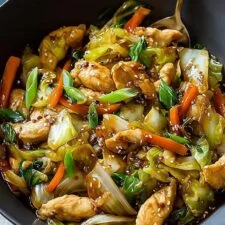
This Chinese-inspired chicken and cabbage stir-fry brings chicken, crisp vegetables and a savoury, gently spicy sauce together in one pan. It is a practical weeknight meal, ready in about 30 minutes.
Ingredients
- 15 ml (1 tablespoon)butter
- 1 mediumonion, sliced
- 2 clovesgarlic, minced
- 2chicken breasts, cut into bite-sized pieces
- 1/2 headcabbage, chopped
- 1carrot, cut into thin matchsticks
- 1bell pepper, sliced
- 30 ml (2 tablespoons)soy sauce
- 15 ml (1 tablespoon)oyster sauce
- 2.5 ml (1/2 teaspoon)black pepper
- 5 ml (1 teaspoon)red pepper flakes
- 5 ml (1 teaspoon)sesame oil
Instructions
- 1
Prepare the vegetables
Slice the onion, mince the garlic, chop the cabbage, cut the carrot into thin matchsticks and slice the bell pepper.
- 2
Stir-fry the ingredients
Melt the butter in a large skillet and cook the onion and garlic until fragrant. Add the chicken and cook until browned, then add the cabbage, carrot and bell pepper. Stir in the soy sauce, oyster sauce, black pepper, red pepper flakes and sesame oil. Cook until the vegetables are tender and the chicken is cooked through.
What is chicken cabbage stir-fry?
Stir-frying is a cooking style associated with Chinese cuisine, using a hot pan to cook ingredients quickly while keeping their flavours distinct. This version pairs chicken with cabbage, carrot and bell pepper, then coats them in a savoury sauce.
The method works best when the ingredients are prepared before cooking, so they can be added in the recipe’s order without pausing at the pan.
Nutrition and macros by portion
The nutrition label shows one serving as written: 300 calories, 25g protein, 20g carbs, 14g fat.
| Portion | Adjustment | kcal | Protein | Carbs | Fat |
|---|---|---|---|---|---|
| Lighter | Use less butter | 210 kcal | 18g | 14g | 10g |
| This serving | As written | 300 kcal | 25g | 20g | 14g |
| Hungry | Serve with extra rice | 450 kcal | 38g | 30g | 21g |
The chicken provides most of the protein, while the vegetables and sauces contribute carbohydrates; butter and sesame oil supply much of the fat. Serve with a modest portion of rice and add extra vegetables if you want to balance the plate with more produce.
The key ingredients
Chicken: Bite-sized pieces are easier to brown and cook through alongside the vegetables.
Cabbage and other vegetables: Cabbage gives the dish its bulk, while carrot and bell pepper bring contrasting shapes and textures.
Sauces and seasonings: Soy and oyster sauces provide savouriness, sesame oil adds a fragrant finish, and pepper flakes bring heat.
Getting the pan ready
Prep first: Slice and chop all the vegetables and chicken before heating the skillet, as the cooking sequence moves from aromatics to meat and then vegetables.
Use a large skillet: A roomy pan makes it easier to stir the ingredients together and helps avoid packing them tightly into one spot.
How to judge doneness
Chicken: Brown the pieces, then make sure they are cooked through before serving.
Vegetables: Cook them until tender, as directed, stirring them into the chicken and sauce so they are evenly coated. The method does not specify a fixed cooking time, so use these visual and texture cues.
Balancing the flavours
Sauce: Stir the soy sauce, oyster sauce and sesame oil through the pan rather than leaving them in one area, so their flavours reach the chicken and vegetables.
Heat: The red pepper flakes and black pepper bring a little warmth; keep the listed amounts together for the recipe as written.
What to serve alongside
Rice is a straightforward accompaniment that pairs well with the savoury sauce. You could also serve the stir-fry on its own or alongside noodles, bearing in mind those additions change the meal’s overall nutrition.
Recipe notes & tips
- Cut the chicken into similarly sized pieces so they cook at a more even rate.
- Have all the vegetables ready before you start cooking.
- Use a large skillet so the ingredients are easier to stir together.
- Add the sauces and seasonings together as directed, then stir to coat the ingredients.
- Check the chicken is cooked through before serving.
Variations
- Milder heat: Reduce the red pepper flakes for a gentler version.
- Extra vegetables: Add more cabbage or bell pepper, keeping the cooking sequence the same.
- Noodle bowl: Serve the finished stir-fry over cooked noodles.
- Rice accompaniment: Spoon the stir-fry over rice to make a more substantial plate.
- Vegetarian option: Replace the chicken with firm tofu and use a vegetarian oyster-style sauce.
Common mistakes to avoid
- Uneven chicken pieces: Cut them to a similar size so they cook more evenly.
- Crowded skillet: Use a large pan so the ingredients can be stirred without spilling.
- Unprepared vegetables: Chop everything before heating the pan to keep the cooking sequence moving.
- Undercooked chicken: Check that the pieces are cooked through before serving.
- Overcooked vegetables: Stop cooking once they are tender, as the method directs.
How to store
Refrigerate leftovers in a covered container and eat within 3 days. Reheat in a skillet until hot throughout, stirring often; add a small splash of water if the mixture seems dry.
Frequently asked questions
How do I know when the chicken is cooked through?
Check the thickest pieces before serving; they should be cooked through, with no raw centre. If unsure, use a food thermometer and follow local safe-cooking guidance.
Can I prepare the vegetables ahead?
Yes. Slice and chop them in advance and keep them covered in the fridge until you are ready to cook.
Can I make the stir-fry less spicy?
Yes. Use fewer red pepper flakes or leave them out, then adjust the heat to your preference.
What can I serve with it?
Rice is a simple pairing, and cooked noodles also work. Either can be served alongside or underneath the stir-fry.
Can I use a different pan?
A large frying pan or wok is suitable. Choose one with enough room to stir the chicken and vegetables comfortably.
Cook it from the original
This recipe comes from busyrecipe.com. Their page has the author’s own photos, notes and tips — the best place to cook it from.
Open the recipe on busyrecipe.com