
Tuna Cabbage Salad
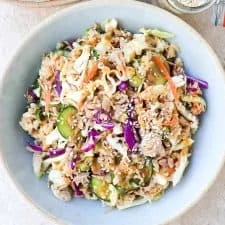
This Asian-inspired salad combines crunchy cabbage, carrots and cucumber with tuna, rice and a creamy peanut dressing. It comes together quickly and makes a filling lunch or an easy cold-weather meal.
Ingredients
- About 300 g (4 cups)shredded cabbage
- 2carrots, shredded
- 1cucumber, sliced
- About 370 g (2 cups)cooked white or brown rice
- 425 g (15 oz)tuna in spring water, canned
- 2spring onions, sliced
- To tastesesame seeds
- 45 g (3 tablespoons)smooth peanut butter
- 30 ml (2 tablespoons)soy sauce or tamari
- 10 ml (2 teaspoons)honey
- 60 ml (1/4 cup)white wine vinegar or rice vinegar
Instructions
- 1
Prepare the vegetables
Shred the cabbage with a mandolin slicer or a food processor fitted with the slicing attachment. Slice the cucumber and spring onions, and shred the carrots with a julienne peeler.
- 2
Flake the tuna
Drain the tuna and break it up with a fork, keeping some larger pieces.
- 3
Combine the salad
Put the cabbage, cooked rice, cucumber, carrots, tuna and spring onions in a large mixing bowl.
- 4
Whisk the dressing
In a bowl or jar, mix the peanut butter, soy sauce or tamari, vinegar and honey. Whisk until smooth and creamy.
- 5
Dress and serve
Pour the dressing over the salad and toss until everything is coated. Divide between bowls and sprinkle with sesame seeds if desired.
What is tuna cabbage salad?
This is a crunchy, rice-based salad with flaked tuna and a peanut dressing, inspired by flavours common in a range of Asian cuisines. It is not one traditional regional dish, but a practical combination of slaw-style vegetables, pantry staples and a savoury-sweet dressing.
Cabbage holds its crunch while the rice makes the bowl more substantial. Peanut butter brings the ingredients together in a creamy dressing that clings to both the vegetables and tuna.
Nutrition and macros by portion
The nutrition label shows one serving as written: 330 calories, 26g protein, 40g carbs, 7g fat.
| Portion | Adjustment | kcal | Protein | Carbs | Fat |
|---|---|---|---|---|---|
| Lighter | More cabbage, less rice | 231 kcal | 18g | 28g | 5g |
| This serving | As written | 330 kcal | 26g | 40g | 7g |
| Hungry | Add extra rice | 495 kcal | 39g | 60g | 11g |
The rice supplies most of the carbohydrates, while the tuna provides much of the protein and the peanut butter contributes most of the fat. Cabbage, carrots and cucumber add crunch and fibre; serve the salad with extra vegetables if you want a more vegetable-focused plate.
Choosing the ingredients
Cabbage: Slice it finely so it is easy to toss and eat, but avoid shredding it so thinly that it loses its crunch. A mandolin or food processor makes quick work of the job.
Tuna: Tuna in spring water keeps the salad from becoming overly rich. Drain it well, then leave a few larger flakes for more varied texture.
Rice: Use rice that has already been cooked and cooled. White rice gives a soft, neutral base, while brown rice brings a firmer bite and nuttier flavour.
Getting the dressing smooth
Peanut butter: Whisk it with the vinegar, soy sauce or tamari and honey until the mixture looks creamy. If the peanut butter is very stiff, keep whisking steadily to help it blend with the liquids.
Balance: The vinegar cuts through the peanut butter, while honey rounds out its tang and the soy sauce adds savoury depth. Taste the dressing before tossing, as soy sauces vary in saltiness.
Keeping the crunch
Vegetables: Shred the cabbage and carrots, and slice the cucumber shortly before serving for their crispest texture. A julienne cut gives the carrots a similar shape to the cabbage.
Tossing: Add the dressing once the ingredients are in the bowl and toss until evenly coated. Mix gently so the tuna keeps some larger pieces rather than breaking down completely.
Timing and preparation
This recipe takes about 10 minutes when the rice is already cooked. If preparing rice for the salad, allow time for it to cool before combining it with the vegetables and tuna.
The dressing can be whisked in a bowl or shaken in a jar, making either option convenient for a quick lunch. Keep the sesame seeds until the end so they stay distinct on top.
Serving ideas
Serve the salad in bowls as a complete lunch, with the rice, tuna and vegetables all together. A little extra vinegar at the table can brighten the dressing if you prefer a sharper finish.
For a broader meal, pair it with a light vegetable soup or a side of extra sliced vegetables. Sprinkle sesame seeds over each portion just before serving.
Recipe notes & tips
- Use cooked, cooled rice so it mixes easily without wilting the vegetables.
- Drain the tuna thoroughly to avoid watering down the dressing.
- Slice the cabbage finely for a more even coating of dressing.
- Whisk the dressing until no thick peanut butter streaks remain.
- Add sesame seeds just before serving to preserve their texture.
Variations
- Use brown rice: Swap in cooked brown rice for a firmer, nuttier base.
- Choose tamari: Use tamari instead of soy sauce if that is your preferred seasoning.
- Change the vinegar: Rice vinegar gives the dressing a gentler tang than white wine vinegar.
- Add a little heat: Stir a small amount of chilli into the dressing.
- Use another protein: Replace the tuna with cooked, flaked salmon for a different fish option.
Common mistakes to avoid
- Wet tuna: Drain it well so excess liquid does not loosen the dressing.
- Warm rice: Let freshly cooked rice cool before adding it, or the vegetables may lose their crunch.
- Lumpy dressing: Whisk the peanut butter thoroughly with the liquids before pouring it over the salad.
- Over-shredded cabbage: Keep the shreds fine but substantial enough to retain some bite.
- Breaking up the tuna: Fold the salad gently to preserve a few larger flakes.
How to store
Store the salad in an airtight container in the fridge and eat within 2 days for the best texture. The vegetables will soften as they sit in the dressing; if making ahead, keep the dressing separate and toss before serving. This salad is best served cold rather than reheated.
Frequently asked questions
Can I make this salad ahead?
Yes. Prepare the vegetables, rice and dressing ahead, then store them separately in the fridge and toss together shortly before serving for the crunchiest result.
Can I use leftover rice?
Yes, provided it has been cooled and stored safely in the fridge. Use it cold or let it lose its chill before mixing.
How do I make the dressing thinner?
Whisk in a little water at a time until it reaches a pourable consistency. Add it gradually so the dressing does not become too thin.
Can I use tuna in oil?
Yes. Drain it well before adding it; the salad may have a richer flavour than when made with tuna in spring water.
Is this salad served hot or cold?
It is served cold or at room temperature. Cooled rice helps keep the vegetables crisp.
Cook it from the original
This recipe comes from goodnessavenue.com. Their page has the author’s own photos, notes and tips — the best place to cook it from.
Open the recipe on goodnessavenue.com