
Traditional Peruvian causa rellena with chicken
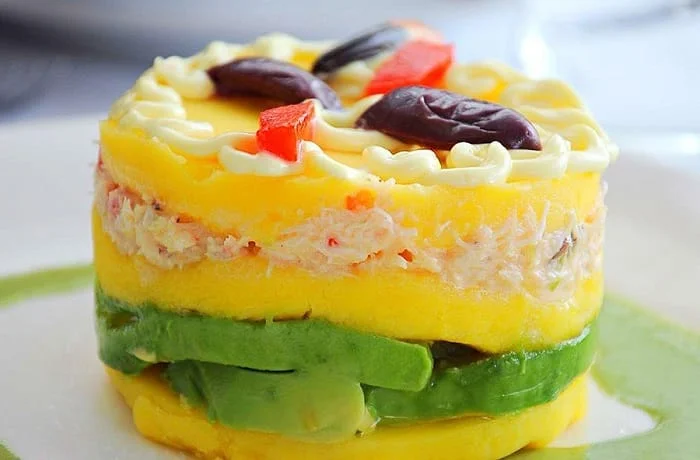
Causa rellena is a Peruvian layered potato dish filled here with creamy chicken and avocado. Its bright, lime-seasoned potato layers make a satisfying make-ahead lunch or starter.
Ingredients
- 1 kgfloury potatoes
- 300 gchicken breast
- 45 gají amarillo paste
- 60 mllime juice
- 45 mlneutral oil
- 60 gmayonnaise
- 1ripe avocado
- to tastesalt
- to tasteblack pepper
Instructions
- 1
Cook the potatoes
Boil the potatoes in their skins until tender when pierced with a knife. Drain, leave until cool enough to handle, then peel.
- 2
Cook the chicken
Poach the chicken breast in gently simmering water until cooked through. Remove it, cool, then shred finely.
- 3
Mash and season
While the potatoes are still warm, mash them until smooth. Mix in the ají amarillo paste, lime juice and oil, then season with salt and pepper.
- 4
Make the filling
Combine the shredded chicken with the mayonnaise and season to taste.
- 5
Layer the causa
Press half the potato mixture into a serving dish or ring mould. Arrange the avocado in a layer, spread the chicken over it, then cover with the remaining potato.
- 6
Chill and serve
Refrigerate until firm enough to slice, then unmould if using a ring and serve chilled.
What is causa rellena?
Causa rellena is a Peruvian dish of seasoned mashed potato layered around a filling. Its roots are in Peru’s long tradition of cooking with potatoes, while ají amarillo and lime give the mash its distinctive flavour.
This version pairs the gently spicy, citrusy potato with shredded chicken, mayonnaise and avocado. Chilling helps the layers hold together and makes it easy to serve in neat portions.
Nutrition and macros by portion
The nutrition label shows one serving as written: 505 calories, 23g protein, 54g carbs, 21g fat.
| Portion | Adjustment | kcal | Protein | Carbs | Fat |
|---|---|---|---|---|---|
| Lighter | Less mayonnaise, more salad | 354 kcal | 16g | 38g | 15g |
| This serving | As written | 505 kcal | 23g | 54g | 21g |
| Hungry | Larger slice | 758 kcal | 35g | 81g | 32g |
The potato provides most of the carbohydrates, while the oil, mayonnaise and avocado contribute much of the fat. Chicken supplies most of the protein. Serve a slice with a generous salad or other vegetables to round out the plate.
Choose potatoes that mash well
Floury potatoes: these break down readily into a soft mash. Cook them in their skins so they take on less water.
Warm potatoes: peel and mash them while they are still warm, when they are easiest to work smoothly. Avoid blending, which can make the texture gluey.
Balance the seasoning
Ají amarillo: this Peruvian yellow chilli paste brings fruitiness and a moderate heat. Stir it into the potato gradually, tasting as you go.
Lime and oil: lime supplies the sharpness that keeps the potato lively, while oil helps make the mash supple. Add salt after mixing, since the chilli paste can already be seasoned.
Keep the filling tender
Chicken: poach the breast gently and stop as soon as it is cooked through, so it stays easy to shred rather than drying out. Let it cool before mixing it with mayonnaise.
Avocado: use a ripe but still firm avocado and slice it shortly before assembling. This gives the middle layer a creamy texture without making it difficult to stack.
Layer for clean slices
Even layers: spread the potato and filling gently so the layers remain distinct. A ring mould can help shape individual portions, but a small serving dish works too.
Chilling: give the assembled causa time in the fridge to firm up before slicing. If the potato feels sticky, lightly wet your hands or spatula as you shape it.
Serve it as a meal
Fresh sides: serve with a crisp green salad or sliced tomatoes to contrast with the rich potato and creamy filling. A little extra lime at the table suits the bright seasoning.
Portions: this dish can be served as a substantial starter or a light main. For a fuller meal, add vegetables rather than making the potato layers thicker.
Recipe notes & tips
- Mash the potatoes while warm for a smoother, easier-to-layer texture.
- Add the ají amarillo paste a little at a time and taste before adding more.
- Shred the chicken finely so it spreads evenly through the filling.
- Use avocado that is ripe but firm enough to slice cleanly.
- Chill the assembled causa before cutting so its layers stay neat.
Variations
- Tuna filling: replace the chicken with drained, flaked tuna mixed with mayonnaise.
- More chilli: increase the ají amarillo paste gradually for a hotter potato layer.
- Herb finish: scatter chopped coriander over the top just before serving.
- Extra crunch: add a layer of finely sliced red onion for a sharper bite.
Common mistakes to avoid
- Waterlogged potatoes: boil them in their skins and drain thoroughly before peeling.
- Gluey mash: mash by hand rather than using a blender or food processor.
- Over-seasoned potato: add the chilli paste and lime gradually, tasting before adjusting.
- Dry chicken: poach gently and remove it as soon as it is cooked through.
- Unsteady layers: chill the causa before slicing and use a sharp knife.
How to store
Cover and refrigerate leftovers promptly, then eat within 2 days. Serve cold; if the avocado has browned or the filling has been left at room temperature for an extended period, discard it.
Frequently asked questions
Can I make causa rellena ahead?
Yes. Assemble it and keep it covered in the fridge until serving. For the freshest-looking avocado, assemble the dish close to serving time.
What can I use instead of ají amarillo paste?
The paste gives the potato its characteristic flavour, so there is no exact substitute. If unavailable, use a mild yellow chilli paste and adjust the amount to taste.
How do I know when the potatoes are cooked?
A knife should slide through the centre without resistance. Drain them well before peeling and mashing.
Can I serve causa warm?
It is generally served chilled or cool, which helps the layers hold their shape. Let it sit briefly out of the fridge before serving if it is very firm.
Can I make it without a mould?
Yes. Layer it in a small serving dish, or shape portions by hand with a spatula. A mould is only needed for a more defined presentation.
Cook it from the original
This recipe comes from cocinaencasa.cl. Their page has the author’s own photos, notes and tips — the best place to cook it from.
Open the recipe on cocinaencasa.cl