
Dijon Vinaigrette
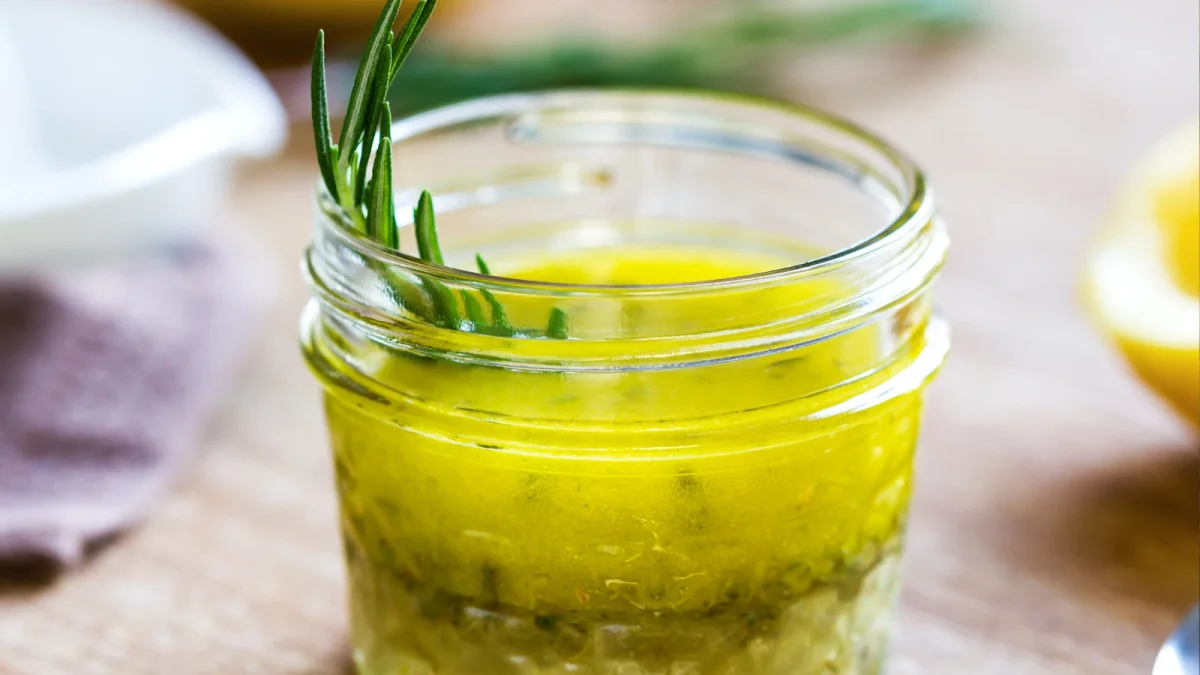
This quick Dijon vinaigrette combines olive oil, red wine vinegar, fresh herbs and lemon zest for a tangy dressing. Shake it together in a jar to dress salads, drizzle over steamed vegetables or use as a chicken marinade.
Ingredients
- Zest of 1lemon
- 22.5 ml (1½ tablespoons)Dijon mustard
- 37.5 ml (2½ tablespoons)red wine vinegar
- 1 tablespoonchopped tarragon
- 1 tablespoonchopped parsley
- 60 ml (¼ cup)olive oil
- ½, thinly sliced (optional)shallot
- 5 ml (1 teaspoon, optional)honey
Instructions
- 1
Marinate the shallot
If using shallot, put it in a jar or other container with a tightly fitting lid and pour in the red wine vinegar. Leave it for a few minutes, then add the remaining ingredients, close the lid and shake well to combine.
What is Dijon vinaigrette?
Vinaigrette is a dressing made by combining oil with an acidic ingredient such as vinegar. This version uses Dijon mustard for a savoury, gently sharp flavour, with lemon zest and fresh herbs for brightness.
Its simple, French-style combination is useful well beyond salad: toss it with leafy greens, spoon it over steamed vegetables or use it to marinate chicken before roasting.
Nutrition and macros by portion
The nutrition label shows one serving as written: 130 calories, 1g protein, 3g carbs, 14g fat.
| Portion | Adjustment | kcal | Protein | Carbs | Fat |
|---|---|---|---|---|---|
| Lighter | Use less olive oil | 91 kcal | 0g | 2g | 9g |
| This serving | As written | 130 kcal | 1g | 3g | 14g |
| Hungry | Serve a larger portion | 195 kcal | 1g | 4g | 20g |
Most of the energy and fat in each serving come from the olive oil; the mustard, herbs, lemon and vinegar contribute flavour, while the optional honey adds a little carbohydrate. Serve it with plenty of vegetables and a protein such as chicken to make a more balanced plate.
Why marinate the shallot?
Shallot first: letting the slices sit in the vinegar for a few minutes gives them a brief pickle and softens their sharp edge. The vinegar also picks up some of their flavour before the oil is added.
Optional ingredients: leave out the shallot for a smoother dressing, or skip the honey if you prefer a sharper, less sweet vinaigrette.
Shake for a smooth dressing
A jar with a secure lid makes this recipe especially straightforward: add the ingredients, close it firmly and shake until the oil and vinegar look evenly mixed. The dressing may separate as it stands, so give it another shake just before serving.
Mustard helps the mixture hold together temporarily, but it will not stay permanently emulsified. A little separation is normal.
Balance the flavours
Acidity: red wine vinegar and lemon zest give the dressing its lively edge. The mustard adds savoury depth, while the herbs bring a fresh, aromatic note.
Sweetness: honey is optional and can round off the sharpness. Add it with the other ingredients and shake; taste the dressing before deciding whether you want the extra sweetness.
Serving ideas
Leafy greens: start with a small amount of dressing, toss, then add more only if needed so the leaves are coated rather than heavy.
Vegetables and chicken: drizzle it over steamed vegetables, or use it to marinate chicken before roasting. If using it as a marinade, keep raw-chicken marinade separate from dressing for serving.
Timing and texture
The only waiting step is the shallot’s brief rest in vinegar; the rest comes together with a shake. The finished vinaigrette should look evenly blended straight after shaking and pour easily.
Freshly chopped tarragon and parsley give the dressing visible flecks and a more fragrant flavour. Shake again if the oil begins to gather on top.
Recipe notes & tips
- Use a jar with a lid that closes securely before shaking.
- Slice the shallot thinly so its flavour is distributed through the dressing.
- Chop the tarragon and parsley shortly before mixing for their freshest flavour.
- Shake the dressing again just before pouring if it has separated.
- Taste before serving and add the optional honey only if you want a sweeter finish.
Variations
- Sweeter dressing: add the optional teaspoon of honey and shake until incorporated.
- Without shallot: omit it for a simpler, smoother vinaigrette.
- Herb swap: replace the tarragon with another fresh herb you enjoy.
- More lemon: add a little extra lemon zest for a brighter citrus note.
- Vegetable dressing: spoon it over steamed vegetables just before serving.
Common mistakes to avoid
- Adding oil before marinating: let the optional shallot sit in the vinegar first so it gets a brief soak.
- Loose jar lid: check that the lid is secure before shaking to prevent spills.
- Expecting it to stay blended: separation is normal, so shake again just before use.
- Overdressing salad: add a little at a time and toss before deciding whether it needs more.
- Using marinade on cooked chicken: keep any dressing that touched raw chicken separate and discard it after marinating.
How to store
Keep the vinaigrette in a sealed container in the fridge and use it within 3 days. Shake well before serving; no reheating is needed.
Frequently asked questions
Can I make this without a jar?
Yes. Whisk the ingredients together in a bowl until blended, adding the oil gradually while whisking.
Can I leave out the shallot?
Yes. It is optional, and the vinaigrette will still work without it.
Do I have to add honey?
No. It is optional and adds sweetness; leave it out for a sharper dressing.
Why has my vinaigrette separated?
Oil and vinegar naturally separate over time. Shake or whisk the dressing again just before serving.
Can I use it as a chicken marinade?
Yes. The recipe description suggests using it to marinate chicken before roasting. Keep any dressing that has touched raw chicken separate from food served at the table.
Cook it from the original
This recipe comes from goodlfe.com. Their page has the author’s own photos, notes and tips — the best place to cook it from.
Open the recipe on goodlfe.com