
Focaccia
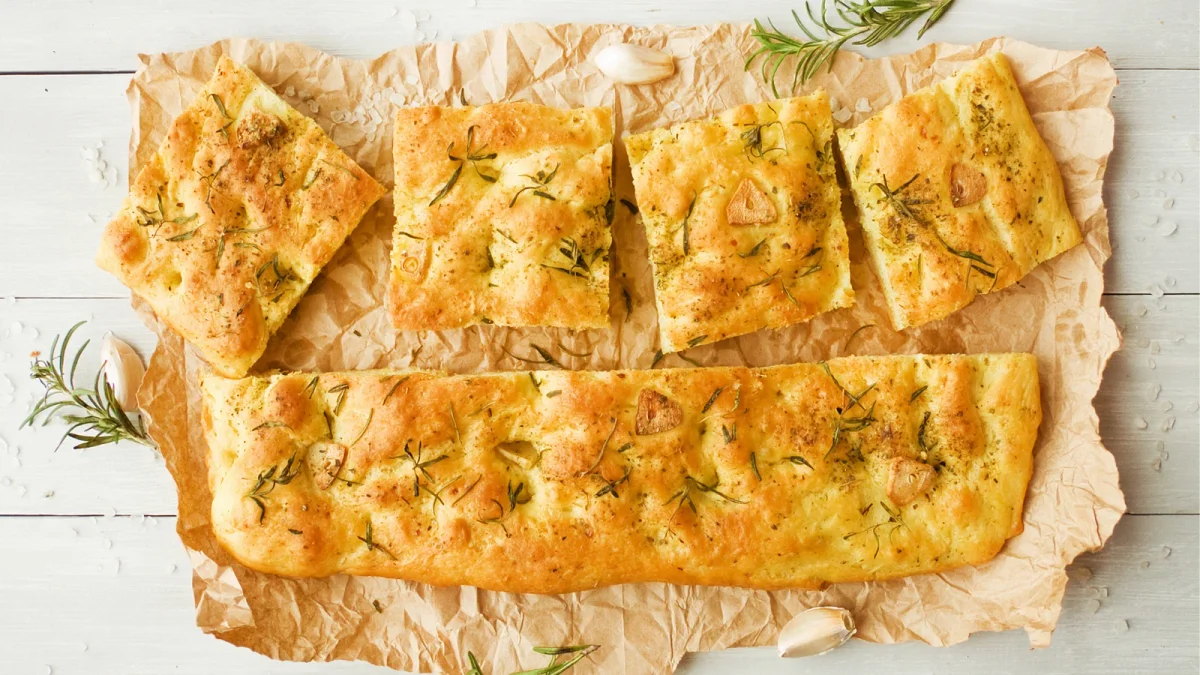
Focaccia is a soft, dimpled Italian flatbread with a golden, crisp base and plenty of olive oil. Serve it warm for dipping, alongside mussels or split for panini.
Ingredients
- 1 batchpizza dough
- 120 ml (½ cup), divided in halfolive oil
- 30 ml (2 tablespoons)chopped rosemary
- To tastecrunchy salt
Instructions
- 1
Mix and knead
Make one batch of pizza dough, adding the rosemary to the flour before mixing. Follow the pizza dough recipe, kneading for a few extra minutes—about 5 minutes in total for this additional kneading—to develop the gluten. Keep the dough as one ball and place it in a large, oiled mixing bowl. To bake it straight away, cover the bowl with a damp towel and leave the dough somewhere warm until doubled in size, about 1 hour.
- 2
Chill if ahead
To make the dough ahead, cover the bowl tightly with cling film and let it rise slowly in the fridge for up to 3 days. Press it down each day to keep it from escaping the bowl. On the day you bake, leave it undisturbed so it can have a full rise.
- 3
Shape and prove
When ready to bake, heat the oven to 200°C (400°F) and generously oil a baking tray with 60 ml (¼ cup) of the olive oil. Turn the dough out onto the tray and use your hands to stretch it to the edges. If it springs back towards the centre, leave it to rest for 20 minutes, then stretch it again. Once it reaches the edges, cover it with a towel, baking parchment or cling film and leave it until doubled in size, about 1 hour.
- 4
Dimple the dough
Press your fingers across the surface of the risen dough to make dimples. Pour the remaining olive oil over the top, filling the indentations; add more oil if any dimples are left empty.
- 5
Bake until golden
Bake the focaccia in the middle of the oven for 30–45 minutes, turning the tray halfway through, until the top is golden. Finish with crunchy salt.
What is focaccia?
Focaccia is an Italian bread, traditionally baked as a flat, generously oiled loaf and often seasoned with herbs. Its simple dough and dimpled surface make it a good bread to serve on its own or with a meal.
Rosemary scents this version, while olive oil in the tray helps create a crisp base and in the dimples keeps the top flavourful. The dough is baked as one large piece rather than shaped into individual rolls.
Nutrition and macros by portion
The nutrition label shows one serving as written: 680 calories, 14g protein, 90g carbs, 27g fat.
| Portion | Adjustment | kcal | Protein | Carbs | Fat |
|---|---|---|---|---|---|
| Lighter | Use less olive oil | 476 kcal | 10g | 63g | 19g |
| This serving | As written | 680 kcal | 14g | 90g | 27g |
| Hungry | Serve a larger slice | 1020 kcal | 21g | 135g | 41g |
Most of the carbohydrates come from the pizza dough, while the olive oil supplies most of the fat and energy. The dough contributes some protein, with rosemary and salt adding little to the overall macros. Pair a piece with vegetables and a protein-rich dish to round out the meal.
The dough matters
Pizza dough: The recipe calls for one batch, so use the accompanying pizza-dough recipe for its quantities and initial mixing instructions. The extra kneading helps develop gluten, which gives the focaccia structure as it rises.
Rosemary: Stir the chopped herb into the flour before mixing the dough. This distributes it through the bread rather than leaving all the flavour on the surface.
Give the dough time
First rise: If baking straight away, let the covered dough rise somewhere warm until it has doubled, about 1 hour. The visual cue is more useful than the clock if your kitchen is cool.
Chilled rise: For a make-ahead loaf, refrigerate the covered dough for up to 3 days and press it down each day. On baking day, avoid pressing it down so it can rise fully before baking.
Stretch without forcing
Start by turning the dough onto a well-oiled tray and gently stretching it towards the edges. If it keeps shrinking back, leave it for 20 minutes; the rest gives the dough time to relax before you try again.
Once it reaches the edges, cover it and leave it to rise until doubled, about 1 hour. Covering helps keep the surface from drying while it proves.
Make the signature dimples
Press your fingertips across the risen dough to create indentations without flattening it completely. Pour the remaining oil over the top so it settles into the dimples.
The oil is central to the flavour and texture of this focaccia. Check for empty indentations and add oil where needed, as the recipe directs.
Check the bake
Bake on the oven’s middle shelf at 200°C for 30–45 minutes, rotating the tray halfway through for more even browning. The surface should look golden when the bread is done.
Ovens and trays can vary, so use the colour cue as well as the stated time range. Add the crunchy salt after baking, as instructed.
Serving ideas
Serve pieces warm with pesto for dipping, or alongside steamed mussels to mop up their juices. The bread also works as a base for panini once cooled enough to slice.
For a more balanced plate, pair a portion with vegetables and a protein-rich filling or side. The focaccia is rich in oil and bread, so fresh, lightly dressed vegetables make a useful contrast.
Recipe notes & tips
- Oil the tray generously so the base can crisp and the dough releases more easily.
- Let springing dough rest for the full 20 minutes before stretching it again.
- Use a large bowl for the chilled rise, leaving room for the dough to expand.
- Press down the refrigerated dough each day, but leave it untouched on baking day.
- Rotate the tray halfway through baking to encourage even browning.
- Add the crunchy salt after baking, as directed.
Variations
- Add garlic: Mix finely chopped garlic into the olive oil before pouring it over the dough.
- Try another herb: Swap the rosemary for chopped thyme for a different herbal flavour.
- Add olives: Press pitted olives into the dough before baking.
- Top with onion: Scatter thinly sliced onion over the dimpled dough before it goes into the oven.
- Serve with pesto: Put pesto on the side for dipping rather than baking it into the bread.
Common mistakes to avoid
- Forcing the dough: If it pulls back, rest it for 20 minutes before stretching again.
- Skipping the tray oil: Oil the baking tray generously to help the base crisp and prevent sticking.
- Leaving the dough uncovered: Cover it during the rise so the surface does not dry out.
- Pressing down on baking day: Keep the dough’s full rise; do not knock it back before shaping.
- Missing empty dimples: Check the surface after adding oil and fill any indentations left dry.
- Judging by time alone: Bake until the top is golden, within the stated 30–45-minute range.
How to store
Once cool, store the focaccia in an airtight container at room temperature and eat within 2 days for the best texture. Reheat in a moderate oven until warmed through. The dough can be made up to 3 days ahead and kept covered in the fridge, pressing it down each day as directed.
Frequently asked questions
Can I make the dough ahead?
Yes. Keep it tightly covered in the fridge for up to 3 days, pressing it down each day. On baking day, do not press it down again.
Why does my dough keep shrinking as I stretch it?
It likely needs time to relax. Leave it on the tray for 20 minutes, then stretch it towards the edges again.
How do I know when the focaccia is ready?
The recipe gives a baking time of 30–45 minutes at 200°C. Look for a golden top, and rotate the tray halfway through.
Can I use dried rosemary?
The recipe specifies chopped rosemary. If using dried rosemary instead, use less than the stated amount because dried herbs are more concentrated.
What can I serve with focaccia?
Serve it with pesto for dipping, alongside steamed mussels, or use it for panini. It is also useful for scooping up sauces.
Can I freeze baked focaccia?
Yes. Cool it completely, wrap it well and freeze. Defrost before reheating in the oven; the texture is best freshly baked.
Cook it from the original
This recipe comes from goodlfe.com. Their page has the author’s own photos, notes and tips — the best place to cook it from.
Open the recipe on goodlfe.com