
Thai curry with sugar snaps and cashew
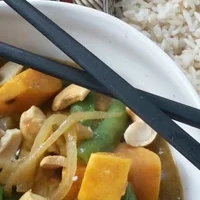
This quick Massaman-style curry brings together chicken, sweet potato and crisp sugar snaps in a gently spiced coconut sauce. Serve it over rice and finish with cashews for a satisfying midweek meal.
Ingredients
- 200 gchicken breast
- 150 gbrown rice
- 1 packetConimex Thai Massaman curry paste
- 150 gsugar snaps
- 2sweet potatoes (or 2 regular potatoes)
- 200 mlcoconut milk
- 1onion
- 1 clovegarlic
- 2 cmfresh ginger
- 1 tbsppeanut butter
- 2 tbspwok oil
- 150 mlwater
- 2 handfulsunsalted cashews
Instructions
- 1
Prepare vegetables
Peel and slice the onion. Peel the sweet potatoes and cut them into cubes of about 2 cm.
- 2
Cook the rice
Cook the rice according to the instructions on the packet.
- 3
Make the curry
Cut the chicken into pieces. Heat the wok oil in a wok and stir-fry the chicken until golden brown. Add the sweet potato and fry briefly. Grate the ginger, then stir-fry it with the onion and garlic for 1 minute. Turn down the heat and add the coconut milk, 150 ml water, peanut butter and Massaman curry paste. Stir well and bring to the boil, stirring as you do. Simmer gently for 10 minutes. Wash the sugar snaps and trim off the ends and any strings. Add them to the curry and simmer for a further 5 minutes. Serve with the rice, scattering a handful of cashews over each plate.
What is Massaman curry?
Massaman is a Thai curry style known for its fragrant spice paste and rich sauce, often served with rice. This home-cooked version combines the paste with coconut milk and peanut butter for a creamy base, while sweet potato adds softness and sugar snaps bring a fresh crunch.
Nutrition and macros by portion
The nutrition label shows one serving as written: 810 calories, 43g protein, 94g carbs, 31g fat.
| Portion | Adjustment | kcal | Protein | Carbs | Fat |
|---|---|---|---|---|---|
| Lighter | Use less coconut milk | 567 kcal | 30g | 66g | 22g |
| This serving | As written | 810 kcal | 43g | 94g | 31g |
| Hungry | Serve with extra rice | 1215 kcal | 65g | 141g | 47g |
The rice and sweet potatoes provide most of the carbohydrates, while coconut milk, wok oil, peanut butter and cashews contribute much of the fat. Chicken supplies protein, with smaller amounts also coming from the cashews and peanut butter. For a more balanced plate, add extra vegetables alongside the curry and rice.
Choosing the ingredients
Curry paste: the packet paste supplies the main seasoning, so taste the sauce before adding anything extra. Products can vary in saltiness and heat.
Coconut milk: it gives the sauce its creamy texture. Shake or stir the tin before measuring so the thicker and thinner parts are evenly mixed.
Potatoes: sweet potatoes lend sweetness and soften as they simmer; regular potatoes work too, though the flavour will be less sweet.
Building the sauce
Brown the chicken first to give it colour, then fry the sweet potato briefly. Once the ginger, onion and garlic have softened for a minute, lower the heat before adding the coconut milk, water, peanut butter and paste.
Stir as the sauce comes to the boil so the peanut butter and curry paste disperse evenly. Keep it at a gentle simmer rather than a hard boil.
Getting the texture right
Cut the sweet potato into roughly 2 cm cubes so the pieces cook through during the simmer without disappearing into the sauce. Check a piece before serving; it should be tender when pierced.
Add the sugar snaps for only the final 5 minutes. This helps them become hot and tender while retaining some bite.
Timing the meal
Rice first: start cooking it according to the packet while preparing the curry ingredients, so it is ready around the time the sauce finishes.
The curry simmers for 10 minutes before the sugar snaps go in, then for another 5 minutes. If the sweet potato needs longer, continue simmering gently until tender.
Serving and finishing
Spoon the curry over the cooked rice so the grains can take up some of the coconut sauce. Add one handful of cashews to each plate just before serving for a crunchy finish.
A simple side of extra vegetables or a light cucumber salad can add freshness alongside the creamy curry.
Recipe notes & tips
- Cut the sweet potato into evenly sized cubes so they cook at a similar rate.
- Trim any strings from the sugar snaps before adding them.
- Stir the sauce as it comes to the boil to help blend the curry paste and peanut butter.
- Keep the curry at a gentle simmer to help prevent the coconut sauce from splitting.
- Cook the rice while the curry simmers to have both components ready together.
- Add the cashews at the table so they stay crunchy.
Variations
- Use regular potatoes: swap them for the sweet potatoes if you prefer a less sweet curry.
- Add more vegetables: include sliced peppers with the onion for extra colour and texture.
- Adjust the richness: use a little less coconut milk and make up the liquid with water.
- Change the nuts: top each serving with roasted peanuts instead of cashews.
- Make it vegetarian: replace the chicken with firm tofu and brown it before adding the vegetables.
Common mistakes to avoid
- Large potato cubes: they may stay firm; cut them to about 2 cm.
- High heat for the sauce: a vigorous boil can affect its texture; keep it at a gentle simmer.
- Sugar snaps added too early: they can lose their bite; add them for the final 5 minutes.
- Untrimmed sugar snaps: tough ends and strings can spoil the texture; remove them before cooking.
- Cashews added during simmering: they can soften; scatter them over the curry just before serving.
How to store
Refrigerate leftover curry and rice separately in sealed containers for up to 3 days. Reheat until piping hot, adding a splash of water to the curry if the sauce has thickened; add fresh cashews when serving.
Frequently asked questions
Can I use regular potatoes instead of sweet potatoes?
Yes. The recipe works with two regular potatoes, though the curry will have less sweetness. Cut them into cubes of about 2 cm and check that they are tender before serving.
Can I use white rice instead of brown rice?
Yes. Cook whichever rice you prefer according to its packet instructions, as cooking times differ.
How do I know when the chicken is cooked?
Cut into a larger piece to check that it is cooked through with no pink centre. Ensure the curry is piping hot before serving.
Can I prepare the curry ahead?
You can make the curry ahead and refrigerate it, then reheat it gently until piping hot. The sugar snaps may soften a little after storage.
Is the curry very spicy?
The heat depends on the curry paste brand and packet. Taste the sauce as it simmers and adjust the amount of paste next time if you want a milder or stronger result.
Cook it from the original
This recipe comes from cookinglife.eu. Their page has the author’s own photos, notes and tips — the best place to cook it from.
Open the recipe on cookinglife.eu