
Makaroneh Bi Laban
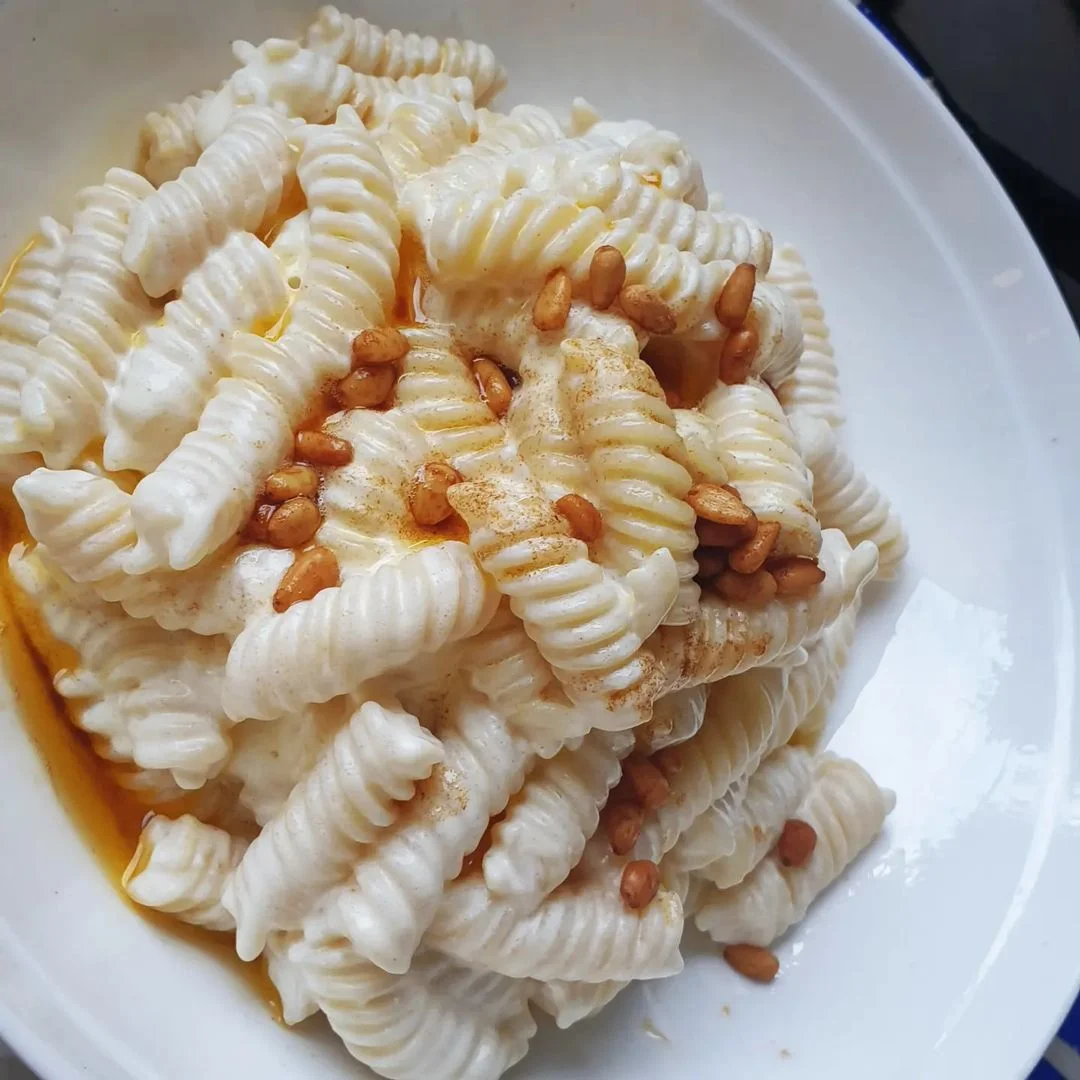
Makaroneh bi Laban pairs pasta with creamy yoghurt, garlic and a warm topping of toasted pine nuts in ghee. It is a simple, comforting dish that comes together with a few everyday ingredients.
Ingredients
- 500 gpasta of choice
- 500 gGreek-style yoghurt
- 30 ml (2 tbsp)butter
- to tastepine nuts
- 30 ml (2 tbsp)vegetable ghee
- to tastegarlic
- to tastesalt
Instructions
- 1
Boil the pasta
Bring a pot of water to the boil and cook the pasta according to the packet instructions.
- 2
Add butter and garlic
Drain the pasta, then add 30 ml (2 tbsp) butter and crushed garlic. Mix until evenly coated.
- 3
Stir in yoghurt
Add the yoghurt and salt, then mix them through the pasta.
- 4
Toast the pine nuts
Warm 30 ml (2 tbsp) vegetable ghee in a small saucepan. Add the pine nuts and fry until golden brown, then pour them over the pasta.
- 5
Serve the pasta
Serve straight away. Adjust the ingredients to suit your taste.
What is Makaroneh bi Laban?
Makaroneh bi Laban is pasta served with laban, or yoghurt. The name and style are associated with Levantine home cooking, where yoghurt brings a cool, tangy contrast to warm pasta.
This version keeps the method straightforward: butter and garlic coat the pasta, while pine nuts fried in ghee add a rich, toasted finish.
Nutrition and macros by portion
The nutrition label shows one serving as written: 685 calories, 24g protein, 93g carbs, 22g fat.
| Portion | Adjustment | kcal | Protein | Carbs | Fat |
|---|---|---|---|---|---|
| Lighter | Less butter and ghee | 479 kcal | 17g | 65g | 15g |
| This serving | As written | 685 kcal | 24g | 93g | 22g |
| Hungry | A larger pasta portion | 1028 kcal | 36g | 140g | 33g |
Most of the carbohydrates come from the pasta, while butter, ghee and pine nuts contribute much of the fat. The yoghurt adds protein, with smaller amounts from the pasta and pine nuts. Serve it with a generous salad or vegetables to add freshness and round out the plate.
Choose the pasta and yoghurt
Pasta shape: Any shape works, though twists and ridged pieces catch the yoghurt well. Cook it to the packet directions so it stays intact when mixed.
Yoghurt: Greek-style yoghurt gives the sauce a thick, creamy body. Stir it in after draining the pasta rather than boiling it with the sauce.
Build the garlic flavour
Garlic: Crush it so its flavour spreads evenly through the pasta. The recipe adds it with the butter after draining, so the warmth of the pasta takes the raw edge off without a separate frying step.
Butter: Mix it through while the pasta is still hot. This helps it coat the noodles before the yoghurt goes in.
Get the pine nuts golden
Low attention: Pine nuts can colour quickly, so watch them closely as they fry in the ghee. Take the pan off the heat once they are golden brown.
Even topping: Pour the hot ghee and nuts over the pasta so the toasted flavour reaches more than just the top layer.
Mix for a creamy finish
Gentle mixing: Fold the yoghurt through until the pasta is coated, taking care not to break delicate shapes. Add salt gradually and taste as you go.
Serving temperature: Serve promptly while the pasta is warm and the toasted topping is freshly made. The yoghurt gives the dish a creamy, tangy finish rather than a cooked, thickened sauce.
Serve it as a meal
Fresh contrast: A crisp salad or sliced cucumber can balance the rich butter and ghee with freshness. Keep the side simply dressed so it does not compete with the yoghurt.
For a fuller plate: Add a vegetable side or a source of protein if you want a more substantial meal.
Recipe notes & tips
- Salt the pasta water before adding the pasta.
- Crush the garlic finely so it mixes evenly into the butter-coated pasta.
- Stir the yoghurt in once the pasta is drained rather than returning it to a hard boil.
- Keep the pine nuts moving in the pan and remove them as soon as they turn golden.
- Taste before serving and add salt gradually, since the yoghurt and pasta may already have some seasoning.
Variations
- Use another pasta: Choose a short or long shape according to what you have in the cupboard.
- Add black pepper: Grind a little over the finished pasta for gentle warmth.
- Use fresh herbs: Scatter chopped parsley over the dish just before serving.
- Add lemon: Serve with a little lemon juice for extra tang alongside the yoghurt.
- Include vegetables: Serve with cooked greens or a fresh salad on the side.
Common mistakes to avoid
- Overcooking the pasta: Follow the packet timing and check it near the end so it keeps its shape.
- Boiling the yoghurt: Mix it through the drained pasta instead of cooking it over high heat.
- Burning the pine nuts: Watch them continuously and take the pan off the heat once golden.
- Adding garlic in large pieces: Crush it well so the flavour is distributed through the pasta.
- Seasoning all at once: Add salt in stages and taste before serving.
How to store
Refrigerate leftovers in a covered container and use within 2 days. Reheat gently in a pan or microwave, stirring in a small splash of water if the pasta has thickened; the pine nuts are best freshly toasted.
Frequently asked questions
Can I use a different kind of pasta?
Yes. The recipe allows for any pasta shape, so use what you have and cook it according to its packet instructions.
Can I use plain yoghurt instead of Greek-style yoghurt?
Yes, though the sauce will be thinner. If it seems loose, add the yoghurt gradually until the pasta is coated as you like.
Should the yoghurt be cooked?
The method stirs it into the drained pasta rather than boiling it. Mix gently while the pasta is warm.
How do I know when the pine nuts are ready?
They should be golden brown. Keep a close eye on them because they can darken quickly.
Can I make this ahead?
It is best served soon after mixing, with the pine nuts freshly toasted. You can cook the pasta ahead, but the yoghurt and topping are best added close to serving.
Cook it from the original
This recipe comes from fooooods.com. Their page has the author’s own photos, notes and tips — the best place to cook it from.
Open the recipe on fooooods.com