
Roasted Asparagus and Carrots
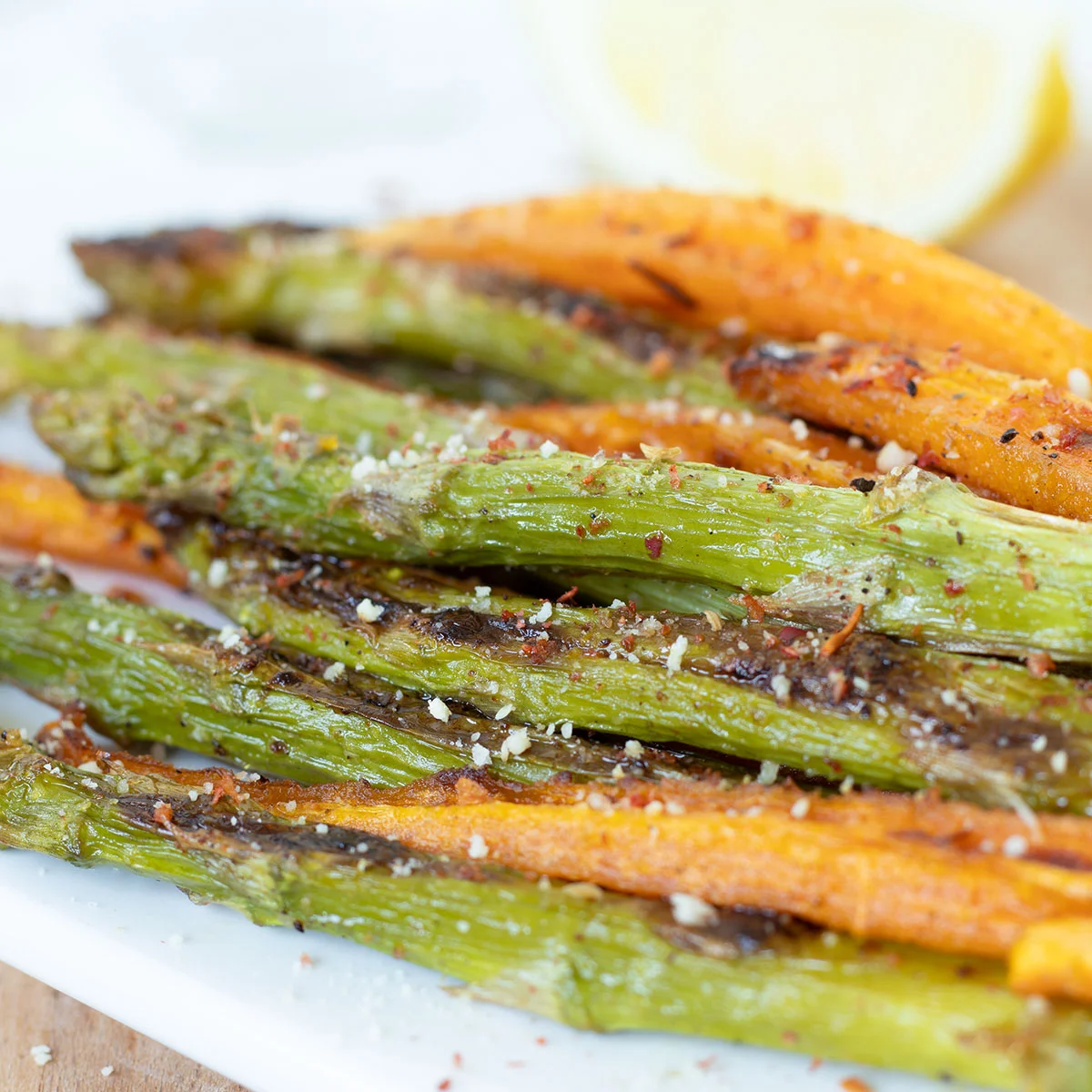
Roasted asparagus and carrots make a quick, colourful side with tender centres and lightly browned edges. Roast them with a simple seasoning for an easy accompaniment to spring meals.
Ingredients
- 1 bunch (425 g; 15 oz)thin fresh asparagus, trimmed
- 4–5 tbspcarrots, sliced into long thin pieces
- 1 tbspolive oil or any vegetable oil
- ½ tspsalt
- ¼ tspgarlic powder
- ¼ tsp (optional)onion powder
- 1 pinchfreshly ground black pepper
Instructions
- 1
Prepare the asparagus
Heat the oven to 220°C (425°F) and line a baking sheet with parchment paper. Remove the asparagus's tough ends by cutting them off or snapping each stalk at its natural breaking point.
- 2
Slice the carrots
Cut the carrots into long, thin pieces about the same size as the asparagus.
- 3
Season the vegetables
Arrange the asparagus and carrots evenly on the prepared baking sheet. Drizzle with olive oil, add the salt, garlic powder, onion powder and black pepper, then gently toss everything on the sheet to coat.
- 4
Roast until tender
Roast for 15–17 minutes, until the vegetables are tender and lightly browned. Serve warm with a sprinkle of vegan parmesan and a squeeze of lemon juice.
What is roasted asparagus and carrots?
This is a simple oven-roasted vegetable side: asparagus and thinly cut carrots are seasoned and cooked until tender, with a little colour at the edges. Roasting is a straightforward way to bring out vegetables' natural sweetness without a complicated sauce.
This version pairs spring asparagus with carrots and a restrained mix of oil, salt, garlic and pepper. The thin cuts help both vegetables cook in roughly the same window.
Nutrition and macros by portion
The nutrition label shows one serving as written: 61 calories, 3g protein, 6g carbs, 4g fat.
| Portion | Adjustment | kcal | Protein | Carbs | Fat |
|---|---|---|---|---|---|
| Lighter | Use less oil | 43 kcal | 2g | 4g | 3g |
| This serving | As written | 61 kcal | 3g | 6g | 4g |
| Hungry | Serve a larger portion | 92 kcal | 5g | 9g | 6g |
The carrots contribute most of the carbohydrate, while the olive oil supplies most of the fat; asparagus adds some protein along with fibre. For a more substantial plate, pair a serving with a protein-rich main and a grain or potato.
Choosing and preparing the vegetables
Asparagus: Thin stalks suit the short roasting time. Trim away the woody ends, either with a knife or by snapping each stalk where it naturally gives way.
Carrots: Slice them into long, narrow pieces close in size to the asparagus. Even cuts make it easier for both vegetables to become tender together.
Seasoning on the tray
Oil and spices: Toss the vegetables on the lined baking sheet with the olive oil, salt, garlic powder, optional onion powder and pepper. A gentle, even coating helps the seasoning reach the vegetables without requiring a separate bowl.
Spacing: Spread the vegetables evenly across the sheet before roasting. If they are piled up, they may soften from trapped steam rather than brown at the edges.
How to judge doneness
Tenderness: Begin checking at 15 minutes. The asparagus should be tender when pierced, while the carrots should have lost their raw crunch but still hold their shape.
Colour: A little browning is the cue given in the recipe. Thicker asparagus or wider carrot pieces may need longer than thin, evenly cut vegetables.
Timing and serving
Roasting: The vegetables cook for 15–17 minutes in an oven preheated to 220°C. Keep an eye on the thinner asparagus tips towards the end so they do not overcook.
To serve: Bring the vegetables to the table warm, with vegan parmesan and lemon juice if desired. The savoury seasoning and fresh citrus make them an easy match for a range of mains.
What to serve alongside
Pairing: Serve the vegetables with a grain, potatoes or a protein-rich main to make a more filling plate. Their simple seasoning works well alongside roasted or grilled dishes.
Finishing: Add the optional vegan parmesan and lemon juice just before serving. Both are serving suggestions in the method rather than part of the listed ingredient quantities.
Recipe notes & tips
- Choose asparagus stalks of similar thickness so they roast at a similar rate.
- Snap or trim the woody asparagus ends before arranging the stalks on the tray.
- Cut the carrots thinly and evenly to match the asparagus as closely as practical.
- Spread the vegetables out in a single layer to encourage browning.
- Check the vegetables at 15 minutes and roast for up to 17 minutes as needed.
- Add the lemon juice and vegan parmesan at the end, just before serving.
Variations
- Add lemon: Finish with a squeeze of lemon juice for a fresh, tangy note.
- Add vegan parmesan: Sprinkle it over the warm vegetables just before serving.
- Change the oil: Use another vegetable oil in place of olive oil.
- Skip the onion: Leave out the optional onion powder for a simpler seasoning.
- Adjust the pepper: Add more freshly ground black pepper to taste.
Common mistakes to avoid
- Leaving tough ends on: Trim or snap off the woody asparagus ends before roasting.
- Cutting carrots too thick: Slice them into long, thin pieces so they can cook alongside the asparagus.
- Crowding the tray: Spread the vegetables out evenly so they can roast rather than steam.
- Adding oil unevenly: Toss the vegetables gently on the tray until the seasoning and oil are distributed.
- Roasting without checking: Start testing at 15 minutes and remove the vegetables when tender and lightly browned.
How to store
Refrigerate leftovers in an airtight container and use within 3–4 days. Reheat in a 180°C oven until warmed through, or briefly in a frying pan; the vegetables will be softer after storage.
Frequently asked questions
Can I use thicker asparagus?
Yes, but thicker stalks may take longer to become tender. Check them at the end of the stated 15–17 minutes and continue roasting if needed.
Can I prepare the vegetables ahead?
You can trim the asparagus and slice the carrots ahead, then refrigerate them separately. Toss with the oil and seasonings just before roasting.
Can I leave out the onion powder?
Yes. The recipe marks it as optional, so you can omit it without changing the basic method.
How do I know when the vegetables are done?
They should be tender when pierced and slightly browned. Start checking at 15 minutes, as thin vegetables can cook quickly.
What can I use instead of olive oil?
The recipe allows any vegetable oil in its place. Use the same amount and toss to coat the vegetables.
What should I serve with these vegetables?
They work as a side with a protein-rich main, grains or potatoes. The recipe also suggests finishing them with vegan parmesan and lemon juice.
Cook it from the original
This recipe comes from goeatgreen.com. Their page has the author’s own photos, notes and tips — the best place to cook it from.
Open the recipe on goeatgreen.com