
Garlic Parmesan Focaccia Bread Recipe
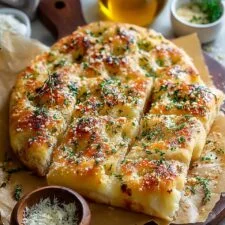
This Italian-style focaccia has a crisp, olive-oil-rich crust and a soft, airy centre, finished with garlic, Parmesan and herbs. Serve it warm alongside soup or salad, or cut it into pieces for a savoury snack.
Ingredients
- 500 g (4 cups)plain flour
- 7 g (2¼ teaspoons; 1 sachet)instant yeast
- 1½ teaspoonssalt
- 360 ml (1½ cups), warm, about 43°C (110°F)water
- 1 tablespoonsugar
- 60 ml (¼ cup), plus extra for greasingextra-virgin olive oil
- 3–4 clovesgarlic, minced
- 50 g (½ cup)freshly grated Parmesan
- 1 teaspoondried Italian herbs or chopped rosemary (optional)
- to tasteflaky sea salt, for topping
Instructions
- 1
Mix dry ingredients
In a large bowl, stir together the flour, instant yeast, salt and sugar so they are evenly combined.
- 2
Add liquids
Pour in the warm water, about 43°C (110°F), and 60 ml (¼ cup) olive oil. Stir with a wooden spoon or dough hook until a sticky dough forms.
- 3
Knead the dough
Turn the dough onto a floured surface and knead for 8–10 minutes, until smooth and elastic. If using a stand mixer, knead with the dough hook at medium speed for 6–7 minutes.
- 4
Let dough rise
Lightly oil a large bowl, add the dough and turn it once to coat. Cover with a clean tea towel or cling film and leave in a warm, draught-free place for 1–1½ hours, until doubled in size.
- 5
Oil the pan
Generously coat a large baking sheet or rectangular tin with olive oil to help prevent sticking and encourage a crisp crust.
- 6
Shape the dough
Gently press down the risen dough and transfer it to the oiled pan. Stretch and press it evenly to fill the pan, then make dimples all over with your fingertips.
- 7
Add the toppings
Drizzle a little olive oil over the dough. Scatter on the minced garlic, grated Parmesan and, if using, the dried herbs or rosemary. Finish with flaky sea salt.
- 8
Rise again
Loosely cover the pan with a tea towel or cling film and leave the dough to rise for 20–30 minutes, until puffy.
- 9
Bake until golden
Heat the oven to 220°C (425°F). Bake the focaccia on the centre shelf for 20–25 minutes, until the top is golden brown and the crust is crisp.
- 10
Cool and serve
Take the focaccia out of the oven and let it cool slightly in the pan. Cut into pieces and serve warm or at room temperature.
What is focaccia?
Focaccia is an Italian flatbread, typically baked with olive oil and dimpled before it goes into the oven. Its roots are often associated with Liguria, where the bread is known for its tender crumb and generous use of oil.
This version layers garlic, Parmesan and herbs over the dough for a savoury, aromatic finish. The oil in the dough and on the pan helps give the base a crisp edge while the inside stays soft.
Nutrition and macros by portion
The nutrition label shows one serving as written: 211 calories, 6g protein, 32g carbs, 6g fat.
| Portion | Adjustment | kcal | Protein | Carbs | Fat |
|---|---|---|---|---|---|
| Lighter | Smaller bread portion | 148 kcal | 4g | 22g | 4g |
| This serving | As written | 211 kcal | 6g | 32g | 6g |
| Hungry | Larger bread portion | 317 kcal | 9g | 48g | 9g |
The flour supplies most of the carbohydrates, while olive oil contributes much of the fat and Parmesan provides some protein and additional fat. Pair a slice with a generous serving of salad or vegetables and a protein-rich dish for a more balanced plate.
The dough ingredients
Flour and yeast: Plain flour gives the dough its structure, while instant yeast makes it rise. Mix them thoroughly with the salt and sugar before adding liquid so they are distributed throughout.
Warm water: Water at about 43°C (110°F) helps bring the dough together and activate the yeast. Avoid using water that feels hot, as excessive heat can interfere with the rise.
Olive oil: The oil adds richness to the dough and helps the crust brown. Keep some extra for coating the bowl and pan, as well as drizzling over the shaped dough.
Kneading and the first rise
By hand: Knead for 8–10 minutes, until the dough feels smoother and stretches without tearing easily. A little stickiness is normal; use a lightly floured surface rather than adding lots of extra flour.
For the rise: Set the covered bowl somewhere warm and free from draughts. Use the dough's doubled size as the main cue, since the exact time can vary with room temperature.
Dimpling and topping
Gentle shaping: Press the dough down lightly after its first rise, then stretch it to fill the oiled pan. If it springs back, let it rest briefly before stretching again.
Deep dimples: Press your fingertips across the surface to form plenty of indentations. They help hold the oil and toppings and give focaccia its characteristic uneven surface.
Even coverage: Scatter the garlic and Parmesan across the dough, rather than piling them in one place. Add the optional herbs and flaky salt last so each piece gets a little of the topping.
The second rise and bake
The short second rise, 20–30 minutes, lets the shaped dough become puffy before baking. Cover it loosely so the surface does not dry out.
Bake on the centre shelf at 220°C (425°F) for 20–25 minutes. Look for a golden top and crisp crust, and allow a little extra time if the bread still looks pale.
Choosing the toppings
Garlic: Minced garlic spreads its flavour across the surface. Keep it in an even layer so it is less likely to gather and brown too quickly in one spot.
Parmesan: Freshly grated cheese melts into the top and adds a salty, savoury note. Since Parmesan is already salty, use the flaky sea salt with a light hand.
Herbs: Dried Italian herbs or chopped rosemary are optional, so choose one or leave them out. Rosemary gives a more distinct herbal flavour, while an Italian herb blend is more rounded.
Serving ideas
Serve slices warm with soup or a crisp salad, or set them out as a snack on their own. Focaccia also works well alongside a meal when you want bread for scooping up sauces.
For the best contrast between crust and crumb, let the bread cool just enough to handle before cutting. It can also be served at room temperature.
Recipe notes & tips
- Measure the warm water with a thermometer if you are unsure of its temperature.
- Keep a light touch with extra flour while kneading so the focaccia stays soft.
- Oil the pan generously, including the corners, to help the base brown and release cleanly.
- If the dough resists stretching, pause briefly and let it relax before continuing.
- Grate the Parmesan shortly before topping the dough for an even scatter.
- Let the loaf cool slightly before cutting to help the soft crumb hold its shape.
Variations
- Rosemary finish: Use chopped rosemary instead of dried Italian herbs for a more pronounced herbal note.
- Herb-free topping: Leave out the optional herbs and keep the garlic and Parmesan as the main flavours.
- Extra garlic: Use four cloves for a stronger garlic flavour, spreading them evenly over the dough.
- Cheese-forward: Add a little more Parmesan over the surface, keeping the topping in a fairly even layer.
- Simple focaccia: Omit the garlic and Parmesan and top with olive oil, herbs and flaky sea salt.
Common mistakes to avoid
- Water too hot: Very hot water can hinder the yeast; use warm water at about 43°C (110°F).
- Too much extra flour: A heavily floured dough can bake up dense; add only enough to make kneading manageable.
- Rushing the first rise: The dough needs time to double; judge its size rather than relying only on the clock.
- Shallow dimples: Press your fingertips firmly across the surface so the dough has distinct indentations.
- Crowded toppings: Piles of garlic or cheese can brown unevenly; scatter them over the whole surface.
- Taking it out too soon: A pale, soft crust needs more time; bake until the top is golden and the edges are crisp.
How to store
Once completely cool, store the focaccia in an airtight container at room temperature for up to 2 days. Reheat briefly in a 180°C oven until warmed through, or freeze well-wrapped pieces for up to 2 months and thaw before reheating.
Frequently asked questions
Can I make the dough ahead?
Yes. Cover the dough and refrigerate it after kneading, then bring it back towards room temperature before shaping and continuing with the rises. The rise times may need to be adjusted until the dough is puffy.
How do I know when the dough has risen enough?
After the first rise, it should be about doubled in size. After the second rise in the pan, look for a noticeably puffy surface.
Can I use active dry yeast instead?
This recipe specifies instant yeast. Active dry yeast can be used, but it may need to be dissolved in some of the warm water first and the rise may take longer.
What pan should I use?
Use a large baking sheet or rectangular baking tin, as specified in the method. The dough should stretch out to fill the pan without being forced thin.
Can I leave out the herbs?
Yes. The herbs or rosemary are optional, so you can omit them and keep the garlic, Parmesan and flaky salt.
How can I tell when the focaccia is baked?
The top should be golden brown and the crust crisp after 20–25 minutes at 220°C (425°F). If it is still pale, give it a little more time.
Cook it from the original
This recipe comes from busyrecipe.com. Their page has the author’s own photos, notes and tips — the best place to cook it from.
Open the recipe on busyrecipe.com