
Soft Crescent Rolls
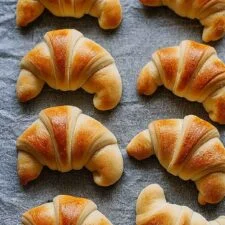
These soft crescent rolls have a fluffy crumb and a buttery finish. Serve them with soup, use them for sandwiches or enjoy them warm on their own.
Ingredients
- 400 gflour
- 7 ginstant yeast
- 15 ggranulated sugar
- 7 gsalt
- 35 mlsunflower oil
- 225 mlwater
- 40 gbutter
- 1egg
Instructions
- 1
Make the dough
Combine the flour, instant yeast, sugar, salt, sunflower oil and water in a bowl. Knead until the dough is smooth, then leave it to rise until doubled in size.
- 2
Shape the rolls
Divide the dough into portions and roll each into a crescent shape. Arrange the rolls on a baking sheet.
- 3
Brush and bake
Brush the rolls with butter and egg wash. Bake until golden brown.
What are crescent rolls?
Crescent rolls are small, curved bread rolls with a soft, airy texture. This version uses a straightforward yeasted dough enriched with oil, then gets a buttery, egg-washed finish.
The crescent shape is a familiar style of roll rather than a cue to add a filling. Their mild flavour makes them easy to serve with a range of meals.
Nutrition and macros by portion
The nutrition label shows one serving as written: 180 calories, 4g protein, 23g carbs, 8g fat.
| Portion | Adjustment | kcal | Protein | Carbs | Fat |
|---|---|---|---|---|---|
| Lighter | Serve a smaller roll | 126 kcal | 3g | 16g | 6g |
| This serving | As written | 180 kcal | 4g | 23g | 8g |
| Hungry | Serve an extra roll | 270 kcal | 6g | 35g | 12g |
The flour supplies most of the carbohydrates, while sunflower oil and butter contribute much of the fat; the flour and egg provide some protein. Pair a roll with soup and a source of protein, such as beans or eggs, for a more rounded plate.
The dough ingredients
Flour and yeast: flour gives the rolls their structure, while instant yeast raises the dough. Sugar adds a little sweetness, and salt rounds out the flavour.
Oil and water: sunflower oil contributes softness, while water brings the dough together. Knead until smooth before leaving it to rise.
Shaping the crescents
Portions: divide the risen dough into pieces, keeping them reasonably similar in size so they bake evenly. Roll each piece into a crescent and place it on the baking sheet.
Handling: work gently so the dough keeps some of the air developed during rising. The recipe does not specify a particular rolling or shaping technique.
The butter and egg finish
Butter: brushing the rolls with butter adds flavour and helps give the surface a rich finish. Use the listed 40 g for this step.
Egg wash: brush the dough with the egg before baking for a more polished, golden surface. Apply it gently so you do not flatten the shaped rolls.
Rising and baking cues
Rise: wait until the dough has doubled in size before shaping; the recipe gives this visual cue rather than a fixed rising time. The time needed can vary with room conditions.
Bake: look for a golden-brown surface as the doneness cue. No oven temperature or baking duration is specified in the recipe.
How to serve them
With a meal: serve the rolls alongside soup or other dishes where a soft bread roll is welcome. Their mild flavour also suits a sandwich filling.
On their own: enjoy them plain, particularly while fresh. Set them out in a basket so everyone can take one at the table.
Recipe notes & tips
- Measure the water and oil before combining the dough ingredients.
- Knead until the dough feels smooth before setting it aside to rise.
- Use the doubled-in-size cue to judge the rise rather than relying only on the clock.
- Shape the dough portions gently to avoid pressing out too much air.
- Brush the butter and egg wash over the rolls without flattening them.
- Watch for a golden-brown surface, as the recipe does not give a baking time.
Variations
- Herb finish: mix chopped herbs into softened butter before brushing the rolls.
- Garlic butter: add finely grated garlic to the butter for a savoury finish.
- Seeded tops: scatter seeds over the egg-washed rolls before baking.
- Wholemeal swap: replace some of the flour with wholemeal flour, bearing in mind that the texture may be denser.
- Sandwich rolls: shape the portions a little less curved for easier filling.
Common mistakes to avoid
- Under-kneading: the dough may not become smooth; keep kneading until it does.
- Rushing the rise: shaping before the dough doubles can leave the rolls less airy; wait for the stated cue.
- Uneven portions: rolls of very different sizes may bake unevenly; divide the dough as consistently as you can.
- Pressing out the air: rough shaping can reduce the dough's lightness; handle it gently.
- Skipping the wash: without the butter and egg wash, the rolls miss the specified buttery finish and golden surface.
How to store
Keep cooled rolls in an airtight container at room temperature and eat within 2 days for the best texture. Reheat briefly in a low oven until warmed through, or freeze them for longer storage and thaw before reheating.
Frequently asked questions
How do I know when the dough has risen enough?
It is ready to shape when it has doubled in size. The recipe does not give a fixed rising time.
What does the egg wash do?
It helps give the rolls a golden, finished surface. Brush it on gently after shaping.
What oven temperature should I use?
The recipe does not specify an oven temperature. Follow the temperature guidance from the original recipe source if available.
How long should the rolls bake?
A baking time is not provided; use the golden-brown colour as the stated doneness cue.
Can I make the dough ahead?
The method does not include make-ahead instructions. For best results, follow the rise and bake steps as written.
What can I serve with crescent rolls?
They work alongside soup, as sandwich bread or on their own.
Cook it from the original
This recipe comes from busyrecipe.com. Their page has the author’s own photos, notes and tips — the best place to cook it from.
Open the recipe on busyrecipe.com