
Indonesian Beef Rendang
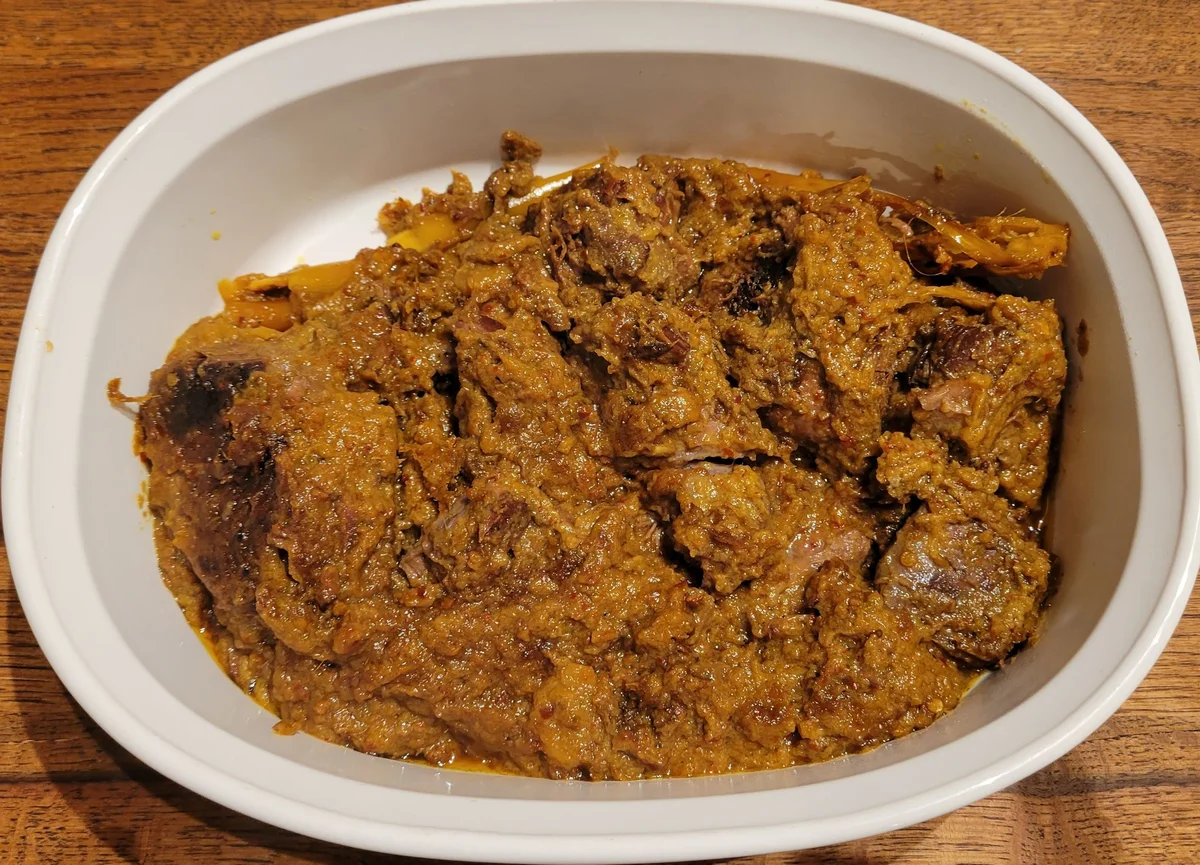
Indonesian beef rendang is a slow-cooked, richly spiced beef dish in which coconut milk reduces into a dark, concentrated sauce. This version takes time but relies on a fragrant spice paste and patient cooking for tender beef and deep flavour.
Ingredients
- 907 g (2 lb)beef shank
- 45 ml (3 tbsp)coconut oil or vegetable oil
- 1 pinchsalt and black pepper
- 5 ml (1 tsp)ground coriander
- 2.5 ml (½ tsp)turmeric
- 10 ml (2 tsp)chilli flakes
- 8 clovesgarlic
- 1jalapeño
- 5shallots
- 5 cm (2 inches)fresh ginger
- 2.5 cm (1 inch); or use 5 cm (2 inches) extra gingergalangal
- 4kaffir lime leaves
- 2 stalkslemongrass
- 5 ml (1 tsp)salt
- 15 ml (1 tbsp)brown sugar
- 1 can, 400 g (14 oz)coconut milk
- 1star anise
- 1cinnamon stick
Instructions
- 1
Cut the beef
Cut the beef shank into large chunks.
- 2
Heat the oil
Warm the coconut oil in a pot.
- 3
Season the beef
Add the beef chunks and season them lightly with salt and pepper.
- 4
Brown the beef
Brown the beef on all sides.
- 5
Set the beef aside
Transfer the browned beef to a plate.
- 6
Prepare the paste
Put the chopped shallots, jalapeño, garlic, 5 cm (2 inches) ginger, turmeric, salt, chilli flakes and coriander powder in a food processor.
- 7
Blend the paste
Blend to make a spice paste, scraping down the sides of the processor a few times.
- 8
Add the aromatics
In the same pot, add the bruised white part of the lemongrass, kaffir lime leaves and galangal cut into coins.
- 9
Sauté briefly
Sauté the aromatics for a few minutes.
- 10
Set aromatics aside
Remove them from the pot and put them on the plate with the beef.
- 11
Add the spice paste
Pour the spice paste into the pot.
- 12
Cook the paste
Cook over medium heat until the paste starts to dry, stirring often and taking care not to let it burn. This will take about 15 minutes.
- 13
Add coconut milk
Stir in the coconut milk and brown sugar until the mixture forms a consistent curry. Add the star anise and cinnamon stick.
- 14
Return the beef
Add the beef and its plate juices to the pot.
- 15
Cook until tender
Cover and cook over low heat for 3 hours.
- 16
Reduce the curry
Uncover the pot and turn the heat to medium-high to dry out the curry, stirring regularly so it does not burn.
- 17
Set the consistency
Continue cooking until the curry has reduced to your preferred consistency.
- 18
Serve or rest
When the rendang is ready, transfer it to a serving dish. The flavour is deeper if you leave it until the next day.
- 19
Choose a side
Serve with basmati rice or naan bread.
What is beef rendang?
Rendang is an Indonesian slow-cooked meat dish associated with the Minangkabau people of West Sumatra, and it is also widely enjoyed elsewhere in Indonesia. Beef is cooked with coconut milk and a spice paste until the liquid reduces and the meat becomes tender.
This version builds flavour by browning the beef, cooking the paste until it dries, then simmering the mixture before reducing it further. The result is a thick, aromatic curry rather than a thin sauce.
Nutrition and macros by portion
The nutrition label shows one serving as written: 610 calories, 42g protein, 10g carbs, 44g fat.
| Portion | Adjustment | kcal | Protein | Carbs | Fat |
|---|---|---|---|---|---|
| Lighter | Use less coconut milk | 427 kcal | 29g | 7g | 31g |
| This serving | As written | 610 kcal | 42g | 10g | 44g |
| Hungry | Serve with extra rice | 915 kcal | 63g | 15g | 66g |
The beef supplies most of the protein, while the coconut milk and cooking oil contribute much of the fat and saturated fat. Coconut milk, brown sugar and the optional rice or naan contribute carbohydrates; serve with vegetables alongside and choose a moderate portion of the bread or rice to balance the plate.
Build the spice paste
Paste ingredients: Shallots, garlic, jalapeño, ginger and ground spices are blended together to distribute their flavour throughout the pot. Scrape down the processor as needed so the mixture blends evenly.
Heat: Give the paste its full 15 minutes over medium heat, stirring frequently. It should become drier and fragrant; keep it moving to prevent scorching.
Choose and brown the beef
Beef shank: This cut has connective tissue that softens during the long, gentle cook. Cut it into generously sized chunks so it can hold together as it becomes tender.
Browning: Sear the pieces on all sides before setting them aside. This adds colour and flavour to the pot; avoid crowding the beef if the pieces cannot brown properly.
Handle the aromatics
Lemongrass: Use only the white part of the stalks, as directed, and bruise it to help release its aroma. The stalks are removed from the pot before the paste is cooked.
Galangal and lime leaves: Slice the galangal into coins and briefly sauté it with the lemongrass and kaffir lime leaves. If galangal is unavailable, the recipe allows extra ginger instead.
Watch the reduction
Covered cooking: Keep the pot covered over low heat for 3 hours so the beef can become tender in the coconut mixture. Check that the heat remains gentle rather than letting the base boil aggressively.
Final stage: Once uncovered, stir often as the curry reduces over medium-high heat. Stop when it has dried to your liking, keeping in mind that a thicker mixture can catch on the bottom more easily.
Check texture and flavour
Beef: The chunks should be tender after the long cook, but still hold their shape. If they are not ready, continue cooking gently until they reach that texture.
Sauce: The finished curry should be concentrated and cling to the beef rather than remain very liquid. Remove the cinnamon stick, star anise and any large aromatic pieces before serving if desired.
Plan the serving
Rice: Basmati rice is a straightforward partner that catches the rich sauce. Serve it alongside the rendang rather than stirring it into the pot.
Naan: Naan is the other suggested option and works well for scooping up the thick curry. Add a simple vegetable side if you want more freshness and contrast.
Recipe notes & tips
- Cut the beef into similarly sized chunks so they cook at a similar rate.
- Scrape down the food processor several times to make a more even spice paste.
- Stir frequently while cooking the paste, especially as it begins to dry.
- Keep the covered simmer low and steady during the 3-hour cook.
- Stir continuously or very frequently during the final reduction to help prevent sticking and burning.
- Make the rendang a day ahead if convenient, as the recipe notes that resting deepens its flavour.
Variations
- Use vegetable oil: Swap it for the coconut oil as the recipe allows.
- Replace galangal: Use an extra 5 cm (2 inches) of ginger instead.
- Adjust the heat: Use fewer chilli flakes or less jalapeño for a milder curry.
- Add vegetables: Serve cooked greens or another simple vegetable on the side for freshness.
- Choose naan: Serve with naan instead of basmati rice, as suggested.
Common mistakes to avoid
- Crowding the beef: Brown it in batches if needed so the pieces can colour on all sides.
- Skipping the paste reduction: Cook it for about 15 minutes, stirring, until it starts to dry.
- Scorching the paste: Keep it moving over medium heat and do not leave the pot unattended.
- Boiling too hard: Keep the covered 3-hour cook over low heat for a gentler simmer.
- Leaving the pot unstirred: Stir often during the final reduction because the thickening curry can burn.
- Reducing too far: Stop when the curry reaches the consistency you prefer.
How to store
Cool leftovers promptly and refrigerate in a covered container for up to 3 days. Reheat gently in a saucepan, stirring and adding a small splash of water if the curry has become too thick.
Frequently asked questions
Can I make beef rendang ahead?
Yes. The recipe recommends serving it the next day, when the flavour has had time to deepen. Refrigerate it once cooled and reheat gently.
What can I use instead of galangal?
Use an additional 5 cm (2 inches) of ginger, as specified in the ingredients.
How do I know when the beef is tender?
After the covered 3-hour cook, the beef should be tender while still holding its shape. If it is not there yet, continue cooking gently until it is.
How thick should the curry be?
Reduce it uncovered until it reaches your preferred consistency. Stir often as it thickens so it does not catch on the bottom of the pot.
What should I serve with rendang?
The recipe suggests basmati rice or naan bread. A simple vegetable side can add freshness to the plate.
Can I make it less spicy?
Use fewer chilli flakes or reduce the jalapeño. The paste will still include the aromatics and other spices.
Cook it from the original
This recipe comes from boatsrecipechest.com. Their page has the author’s own photos, notes and tips — the best place to cook it from.
Open the recipe on boatsrecipechest.com