
Coconut Mango Sago Tapioca pudding
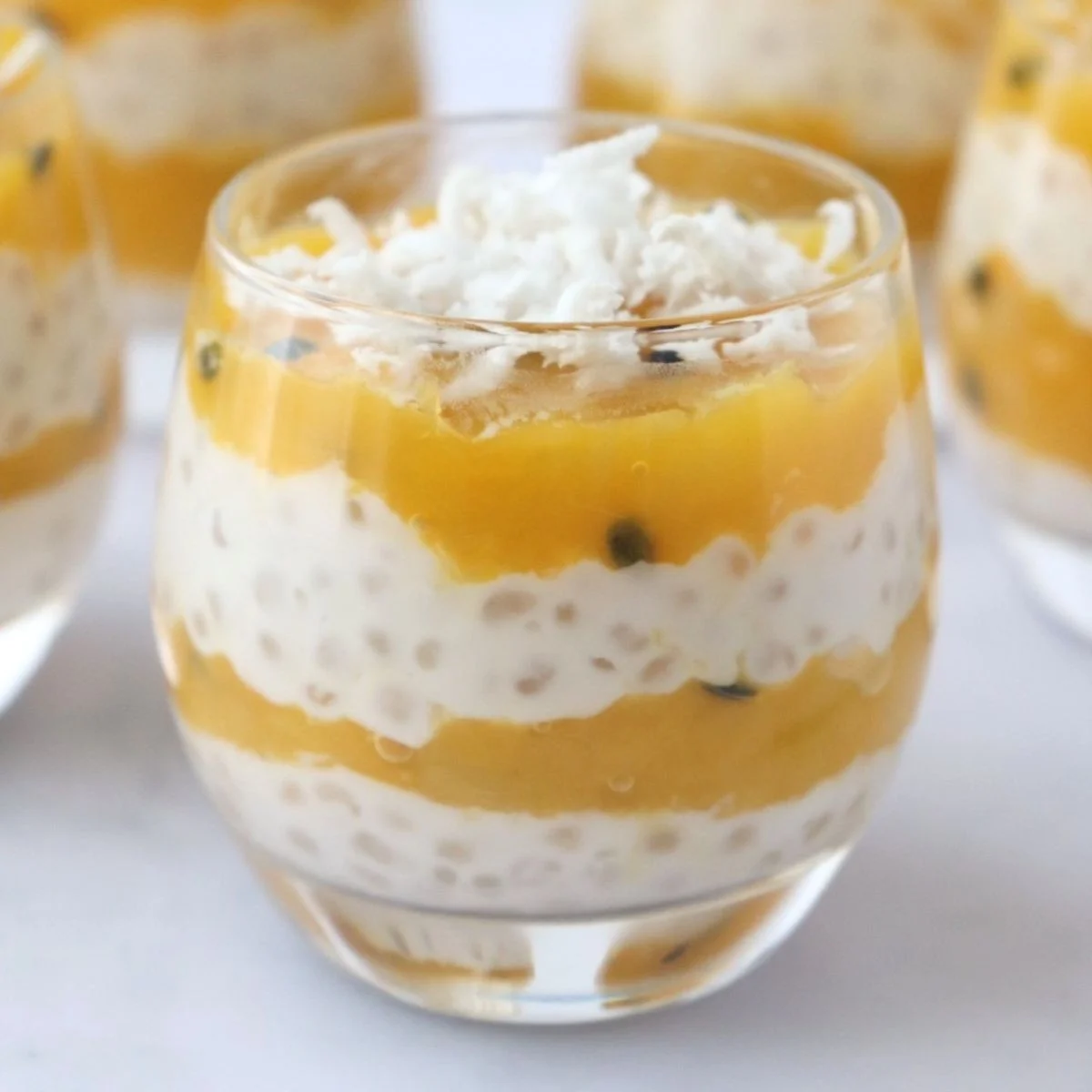
This Asian-inspired dessert layers creamy coconut tapioca with mango and passion fruit purée. It is a refreshing make-ahead pudding, finished with coconut flakes for a little extra texture.
Ingredients
- 80 gtapioca pearls
- 500 mlcoconut milk
- 500 mlwater
- 2 tablespoonsmaple syrup
- 1 teaspoonvanilla extract
- 400 gmango
- 2passion fruit
- 1 pinchsalt
- to tastecoconut flakes
Instructions
- 1
Prepare the mango
Peel the mango and cut it into bite-sized pieces.
- 2
Scoop the fruit
Halve the passion fruits and scoop out the pulp with a spoon.
- 3
Combine the fruit
Put the mango pieces and passion fruit pulp in a saucepan with 1 tablespoon of maple syrup.
- 4
Cook the purée
Stir and cook over medium heat for about 20 minutes, until the fruit has a purée-like consistency.
- 5
Heat the liquids
Meanwhile, pour the water and coconut milk into a large saucepan and bring to the boil over high heat.
- 6
Season the milk
Add 1 tablespoon of maple syrup, the vanilla extract and the salt.
- 7
Add the tapioca
When the coconut milk is boiling, add the tapioca pearls and reduce the heat.
- 8
Simmer until clear
Stir frequently to prevent sticking and simmer for 15–20 minutes, or until the tapioca pearls are translucent.
- 9
Layer and chill
Spoon the tapioca pudding into five 15 cl (5 oz) glasses. Add a layer of mango and passion fruit purée, then continue layering. Refrigerate for at least 2 hours to set. Sprinkle with coconut flakes or grated coconut just before serving.
What is mango sago?
Mango sago is an Asian-inspired chilled dessert built around small tapioca pearls and fruit. Versions vary, but mango and coconut milk are a familiar pairing that gives it a creamy, tropical character.
Here, passion fruit adds a sharp, fragrant note to the sweet mango. Cooking the fruit into a purée makes distinct layers that contrast with the soft tapioca.
Nutrition and macros by portion
The nutrition label shows one serving as written: 351 calories, 3g protein, 42g carbs, 21g fat.
| Portion | Adjustment | kcal | Protein | Carbs | Fat |
|---|---|---|---|---|---|
| Lighter | Use less coconut milk | 246 kcal | 2g | 29g | 15g |
| This serving | As written | 351 kcal | 3g | 42g | 21g |
| Hungry | Serve a larger glass | 527 kcal | 5g | 63g | 32g |
The tapioca and maple syrup provide most of the carbohydrates, while coconut milk is the main source of fat. Mango contributes some carbohydrate, and the pudding has relatively little protein overall; serve it after a meal with a protein-rich main course for a more balanced plate.
The fruit layer
Mango: Use ripe fruit for a naturally sweet purée, and cut it into small pieces so it softens evenly in the pan.
Passion fruit: Its tart pulp balances the richness of the coconut milk. Scoop out all the pulp and seeds; they bring both flavour and texture.
Cooking the tapioca
Stirring: Tapioca can settle and stick as it cooks, so stir frequently, especially across the bottom of the saucepan.
Doneness: The pearls are ready when they look translucent. Keep the heat low enough for a steady simmer rather than a hard boil.
Getting the layers right
Let the fruit cook until it has a purée-like texture, as directed, so it is easy to spoon between the tapioca layers. If the two mixtures are very hot when assembled, handle the glasses carefully.
Divide the pudding and fruit between five glasses, building layers as you go. Chilling for at least 2 hours helps the pudding set before serving.
Choosing coconut milk
Coconut milk forms the creamy base, while the water keeps the mixture pourable as the tapioca cooks. Stir the coconut milk before measuring if it has separated in the tin.
The recipe uses coconut milk rather than a lighter coconut drink, so the finished pudding has a distinctly rich texture.
Serving the pudding
Serve the glasses chilled, with coconut flakes or grated coconut scattered over the top just before eating. The topping adds a dry, delicate contrast to the soft pudding.
These individual portions are convenient for serving after a meal, and the layered fruit makes each glass look appealing without extra decoration.
Recipe notes & tips
- Stir the coconut milk well before measuring if the cream and liquid have separated.
- Use a large saucepan for the coconut milk and water to leave room for stirring.
- Stir regularly during the simmer so the pearls do not stick to the pan.
- Check that the pearls are translucent before taking them off the heat.
- Add the coconut flakes just before serving so they keep their texture.
Variations
- Extra mango: Reserve a few fresh mango pieces to add on top when serving.
- More passion fruit: Spoon extra fresh passion fruit pulp over the finished glasses.
- Grated coconut: Use grated coconut instead of flakes for a finer topping.
- Less sweet: Reduce the maple syrup to taste while keeping the fruit and tapioca method the same.
- Vanilla note: Adjust the vanilla extract to suit your preference.
Common mistakes to avoid
- Skipping the stirring: Tapioca can stick to the bottom, so stir frequently throughout the simmer.
- Boiling too vigorously: A hard boil can make the mixture harder to manage; lower the heat once the tapioca is added.
- Stopping too soon: Pearls that are still opaque need more simmering; cook until they turn translucent.
- Using the fruit before it softens: Keep cooking until it becomes purée-like so it layers neatly.
- Serving without chilling: Give the glasses at least 2 hours in the fridge to set before serving.
How to store
Cover the glasses and refrigerate them for up to 2 days. Serve cold; the pudding is best enjoyed chilled rather than reheated.
Frequently asked questions
How do I know when the tapioca is cooked?
The pearls should be translucent after simmering for 15–20 minutes. Stir often and continue cooking if they remain opaque.
Can I make this pudding ahead?
Yes. Assemble the layers and refrigerate for at least 2 hours, as the recipe directs. Keep the glasses covered until serving.
Can I use frozen mango?
Yes, thaw it before cooking and cut it into pieces if needed. Cook it with the passion fruit and maple syrup until purée-like.
Can I use a different topping?
The recipe suggests coconut flakes or grated coconut. You can also leave the topping off if you prefer.
Why does the tapioca need frequent stirring?
The pearls can settle and stick to the base of the pan as they simmer. Regular stirring helps them cook evenly.
Cook it from the original
This recipe comes from gohealthywithbea.com. Their page has the author’s own photos, notes and tips — the best place to cook it from.
Open the recipe on gohealthywithbea.com