
Easy Biryani (Beef, Chicken or Salmon) Instantpot
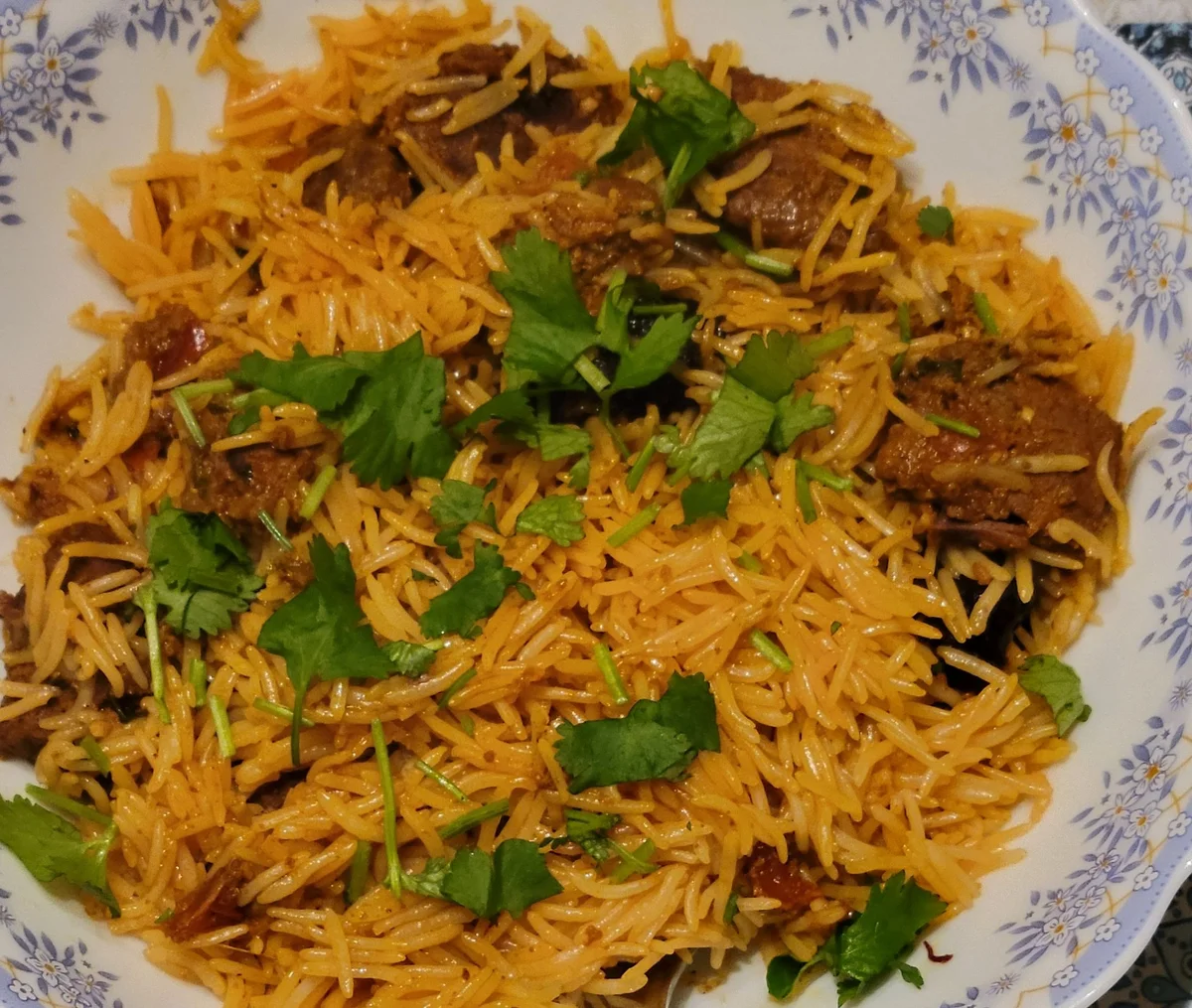
This Instant Pot biryani layers spiced, yoghurt-marinated meat with basmati rice, herbs and aromatic whole spices. Choose beef, chicken or firm fish, then adjust the first pressure-cooking stage to suit your protein.
Ingredients
- 907 g (2 lb)boneless beef cubes, or boneless chicken breasts or thighs, or firm fish such as salmon or cod
- 180 ml (¾ cup)yoghurt
- 15 g (¼ cup)chopped fresh coriander
- 10 g (¼ cup)chopped mint leaves
- 1chopped jalapeño
- 1chopped Roma tomato
- 1 tspsalt
- 2 tspgaram masala
- 2 tspKashmiri chilli powder
- ½ tspturmeric
- 2 tbsplemon juice
- 1 tbspcrushed garlic
- 1 tbspginger paste
- 1 tspfennel seeds
- 1star anise
- 2bay leaves
- 6black peppercorns
- 4whole cloves
- 1black cardamom pod
- 6green cardamom pods
- 1 mediumonion, fried until crisp (prepare in advance)
- 8 (optional)prunes (dried plums)
- 380 g (2 cups)basmati rice
- ⅛ tsp (optional)orange food colouring
- 8 strands (optional)saffron
- 1½ tspsalt, for adding with the rice
- 2 tbspcooking oil
- 120 ml (½ cup)water, for mixing with the rice-seasoning mixture
Instructions
- 1
Soak the rice
Soak the basmati rice for 2 hours before cooking.
- 2
Marinate the meat
Mix the meat with the yoghurt, chopped coriander and mint, jalapeño, tomato, 1 tsp salt, garam masala, Kashmiri chilli powder, turmeric, lemon juice, garlic, ginger paste and whole spices. Refrigerate for up to 2 hours if you like; this is optional. If using fish, marinate it for no more than 20 minutes.
- 3
Heat the pot
Set the Instant Pot to medium Sauté.
- 4
Separate spices
Separate out the whole spices.
- 5
Warm the oil
When the pot is hot, add 2 tbsp cooking oil and sauté for about 1 minute.
- 6
Add the marinade
Add the meat and marinade to the pot, mix well and cover.
- 7
Pressure-cook meat
Pressure-cook beef for 8 minutes or chicken for 6 minutes. If using fish, skip this step.
- 8
Release pressure
When the cooking time ends, release the pressure.
- 9
Add the onions
Open the lid, add the crispy fried onion and mix it through.
- 10
Add the prunes
Arrange the prunes on top of the meat mixture.
- 11
Layer the rice
Drain the soaked rice and spread it over the meat mixture.
- 12
Season the water
Dissolve the rice-stage salt in ½ cup water, then stir in the food colouring and saffron strands.
- 13
Pour over rice
Pour the seasoned water over the rice, stopping once the water just covers it. Do not add all the water if the rice is already covered.
- 14
Cook the rice
Cover the pot and cook at high pressure for 6 minutes.
- 15
Release pressure
When the time is up, release the pressure, or allow it to release naturally.
- 16
Serve the biryani
Serve the biryani garnished with coriander.
What is biryani?
Biryani is a South Asian rice dish, commonly associated with Indian cooking, in which rice is cooked with seasoned meat or vegetables and fragrant spices. This version uses an Instant Pot to cook the protein first, then steams the rice in layers above it.
The method keeps the rice separate from the meat until the final stage, while herbs, yoghurt, whole spices and optional saffron build a deeply aromatic result.
Nutrition and macros by portion
The nutrition label shows one serving as written: 700 calories, 48g protein, 80g carbs, 19g fat.
| Portion | Adjustment | kcal | Protein | Carbs | Fat |
|---|---|---|---|---|---|
| Lighter | More salad, less rice | 490 kcal | 34g | 56g | 13g |
| This serving | As written | 700 kcal | 48g | 80g | 19g |
| Hungry | Larger biryani portion | 1050 kcal | 72g | 120g | 29g |
Basmati rice supplies most of the carbohydrate, while beef, chicken or fish provides most of the protein. The meat, yoghurt and cooking oil contribute much of the fat; serve a moderate portion with a fresh salad or extra vegetables to balance the plate.
Choose your protein
Beef: The recipe gives beef the longest first pressure-cooking time, 8 minutes, before adding the rice.
Chicken: Use boneless breast or thigh and cook it for 6 minutes in the first pressure stage.
Fish: Choose a firm fish such as salmon or cod, keep its marinade to 20 minutes or less, and skip the first pressure-cooking stage.
Build the marinade
Yoghurt and lemon: These coat the protein and carry the ground spices, garlic and ginger throughout the mixture. Stir everything together thoroughly so the seasoning is distributed evenly.
Fresh herbs and spices: Coriander, mint and jalapeño add freshness, while the whole spices give the dish its fragrant base. The optional saffron adds another aromatic note.
Layer without stirring
Crispy onion: Stir the fried onion into the cooked meat mixture before adding the rice. This spreads its savoury flavour through the lower layer.
Rice: Drain it well, then arrange it over the meat and prunes. Keep the layers in place rather than mixing them together at this point.
Check the water level
Seasoned water: Dissolve the salt in ½ cup water, then add the optional food colouring and saffron. Pour it over the rice gradually rather than tipping in the full amount automatically.
Coverage: The water should just cover the rice. If it is already covered before you have used all the seasoned water, stop pouring.
Know when it is ready
Timing: The recipe specifies 8 minutes of first-stage pressure cooking for beef or 6 minutes for chicken, followed by a separate 6-minute high-pressure rice stage. Fish skips the first stage.
Pressure release: After the final 6 minutes, use a pressure release or let the pressure come down naturally, as the recipe allows. Open the lid only once the pressure has released.
Serve it with
Finish the biryani with fresh coriander and serve it hot. A simple cucumber salad or plain yoghurt on the side can balance the rice and warm spices without competing with them.
Recipe notes & tips
- Soak the rice for the full 2 hours, then drain it well before layering.
- Prepare the crispy fried onion in advance so it is ready when the meat stage is done.
- Keep the fish marinade to 20 minutes or less.
- Add the seasoned water gradually and stop when it just covers the rice.
- Use the protein-specific first-stage time: 8 minutes for beef, 6 minutes for chicken, and none for fish.
Variations
- Use chicken: Swap the beef for boneless chicken breast or thigh and pressure-cook it for 6 minutes before adding the rice.
- Use firm fish: Choose salmon or cod, marinate for no more than 20 minutes and skip the first pressure-cooking stage.
- Leave out the prunes: Omit them for a less sweet biryani.
- Add saffron: Use the optional strands in the seasoned water for extra fragrance.
- Add colour: Stir the optional orange food colouring into the water before pouring it over the rice.
Common mistakes to avoid
- Over-marinating fish: Keep the fish in the marinade for no more than 20 minutes.
- Using the beef timing for chicken: Pressure-cook chicken for 6 minutes, not 8.
- Adding too much water: Pour only until the rice is just covered, even if some seasoned water remains.
- Skipping the rice soak: Soak for 2 hours, then drain before layering.
- Mixing the rice into the meat: Spread it on top in a separate layer for the final pressure-cooking stage.
How to store
Cool leftovers promptly, refrigerate in a sealed container and eat within 2 days. Reheat until piping hot throughout, adding a small splash of water if the rice seems dry.
Frequently asked questions
Can I use chicken instead of beef?
Yes. Use boneless chicken breast or thigh and pressure-cook it for 6 minutes in the first stage.
Can I make this with salmon or cod?
Yes, use firm fish and marinate it for no more than 20 minutes. Skip the first pressure-cooking stage and continue with the rice layers.
How long should I soak the rice?
Soak the basmati rice for 2 hours before cooking, then strain it before layering.
Do I have to use prunes?
No. They are optional, so you can leave them out if you prefer a less sweet version.
How much water should I add?
The recipe mixes the salt with ½ cup water, but you should pour only enough to just cover the rice. Leave any excess aside if the rice is already covered.
Can I let the pressure release naturally?
Yes. After the final 6-minute high-pressure rice stage, the recipe allows either a pressure release or a natural release.
Cook it from the original
This recipe comes from boatsrecipechest.com. Their page has the author’s own photos, notes and tips — the best place to cook it from.
Open the recipe on boatsrecipechest.com