
Raw Miso Soup
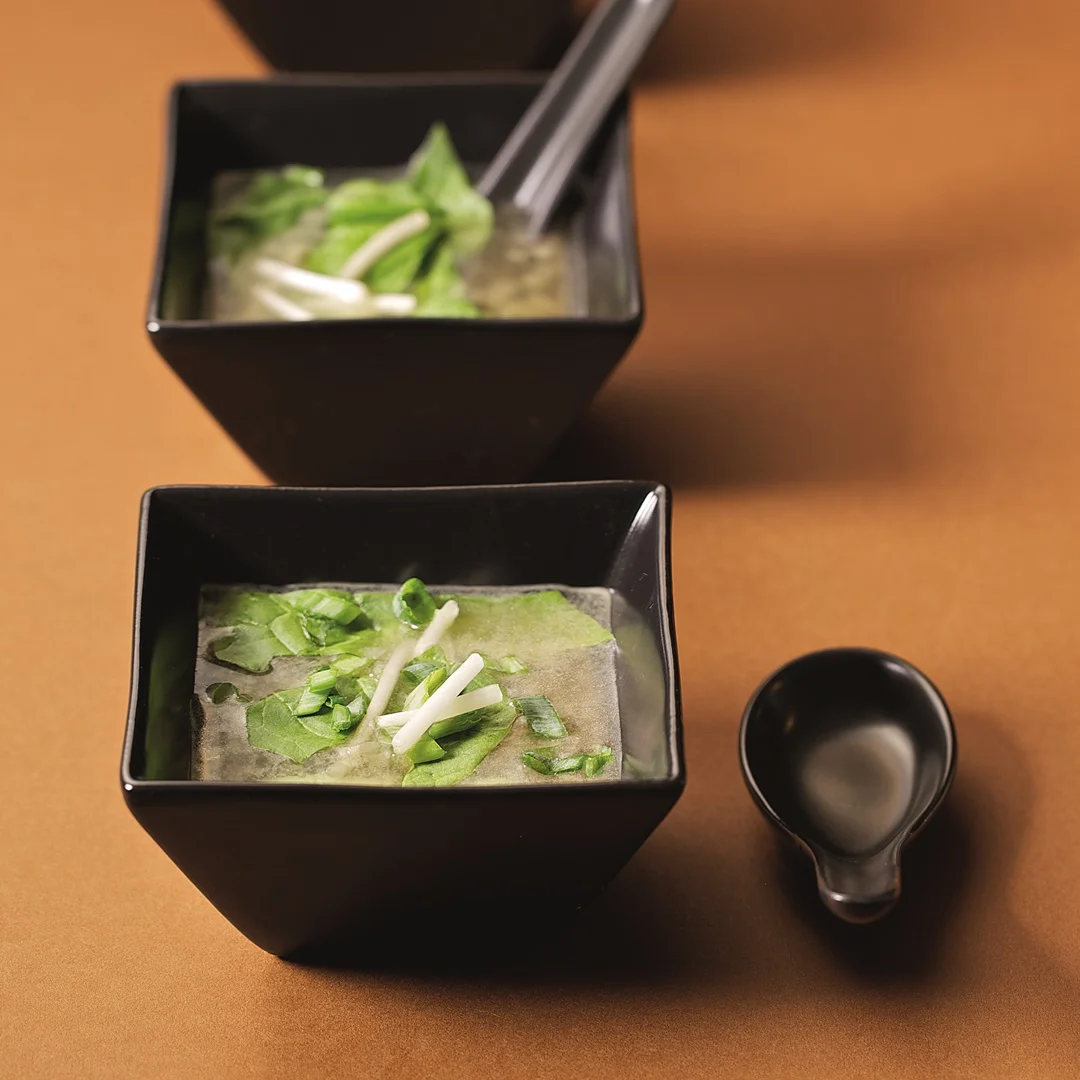
This quick raw miso soup pairs a mild, whisked miso broth with olive-oil-marinated mung bean sprouts and spinach. It is a fresh option when you want soup without bringing the miso to a boil.
Ingredients
- 100 g (1 cup)mung bean sprouts
- 60 g (2 cups), washed and coarsely choppedspinach
- 30 ml (2 tablespoons)extra-virgin olive oil
- 45 ml (3 tablespoons)unpasteurised miso, any colour
- 720 ml (3 cups)water
- 30 ml (2 tablespoons)extra-virgin olive oil
- 5 ml (1 teaspoon)minced garlic
- 30 ml (2 tablespoons)diced spring onion
Instructions
- 1
Marinate the greens
Toss the mung bean sprouts and spinach with 30 ml (2 tablespoons) of the olive oil. Set them aside to soften.
- 2
Whisk the broth
Whisk the miso with a small amount of the water until smooth. Gradually whisk in the remaining water, the other 30 ml (2 tablespoons) of olive oil and the garlic. Blend the mixture instead if you prefer.
- 3
Assemble the bowls
Divide the broth between four serving bowls. Top with the marinated sprouts and spinach, then garnish with the spring onion. Serve immediately.
- 4
Store leftover broth
The broth can be kept separately in the fridge for 4 to 5 days.
What is raw miso soup?
Miso soup is a Japanese dish built around miso, a fermented paste usually made from soybeans and grains. This version keeps the broth unheated and adds fresh sprouts and spinach for crunch and colour.
Whisking miso into water rather than boiling it suits the recipe’s raw approach. Unpasteurised miso is specified, while the greens are dressed separately so they stay distinct from the broth.
Nutrition and macros by portion
The nutrition label shows one serving as written: 165 calories, 5g protein, 8g carbs, 14g fat.
| Portion | Adjustment | kcal | Protein | Carbs | Fat |
|---|---|---|---|---|---|
| Lighter | Use less olive oil | 115 kcal | 4g | 6g | 10g |
| This serving | As written | 165 kcal | 5g | 8g | 14g |
| Hungry | Add rice or noodles | 248 kcal | 8g | 12g | 21g |
Most of the energy and fat come from the two measures of olive oil, while the miso contributes much of the soup’s protein and sodium. The spinach and sprouts add a small amount of carbohydrate; serve the soup with rice or another filling side for a more balanced plate.
Choosing the miso
Unpasteurised miso: use the kind called for in the recipe, in any colour. Its saltiness and depth can vary, so taste the broth before serving and adjust only if needed.
Smooth base: first whisk the miso with a little water to loosen it. Adding the rest gradually helps it disperse evenly rather than leaving dense pockets.
Marinating the greens
Oil coating: toss the sprouts and spinach thoroughly with the first measure of olive oil so the leaves are lightly coated. Leave them to soften while you make the broth.
Fresh texture: the greens are added on top rather than stirred into the broth. This keeps their texture noticeable in each bowl.
Keeping the broth gentle
No boiling: the recipe is designed to be served raw, and its description recommends adding miso to warm, not boiling, water. The method itself does not specify a water temperature, so avoid heating the finished broth to a boil.
Blending option: whisking gives you a simple broth with the garlic distributed through it. Blending is an alternative if you want a more thoroughly combined mixture.
Serving and timing
Quick assembly: the stated total time is 15 minutes, with no cooking stage. Marinate the greens first, then prepare the broth while they soften.
Serve promptly: divide the broth into four bowls, add the greens and finish with spring onion just before eating. The contrast between the broth and the fresh topping is part of the dish.
What to serve alongside
A bowl of this soup can be served as a light starter or alongside a more substantial meal. Rice or noodles make a simple pairing, while tofu can add a more filling element without changing the soup itself.
Recipe notes & tips
- Use unpasteurised miso, as specified in the recipe.
- Whisk the miso with a little water first to make a smooth base.
- Add the remaining water gradually while whisking.
- Coat the sprouts and spinach evenly so they soften consistently.
- Add the greens and spring onion just before serving for a fresher texture.
Variations
- Swap the sprouts: use alfalfa sprouts if mung bean sprouts are unavailable.
- Change the greens: replace the spinach with another tender leafy green.
- Use a different miso: choose any colour of unpasteurised miso, as the recipe allows.
- Make it more filling: serve with cooked rice or noodles on the side.
- Add tofu: place cubes of tofu in the bowls before pouring in the broth.
Common mistakes to avoid
- Boiling the broth: avoid bringing it to a boil; the recipe is intended to keep the miso raw.
- Adding all the water at once: whisk in a small amount first, then gradually add the rest for a smoother broth.
- Skipping the marinade: toss the sprouts and spinach with the oil and let them soften before serving.
- Mixing the topping into the broth too early: add it to each bowl at the end to preserve its texture.
- Storing the greens in the broth: keep leftover broth separate as directed so the topping does not sit in it.
How to store
Store leftover broth separately in a covered container in the fridge for 4 to 5 days. The recipe does not give a storage time for the marinated greens, so prepare those fresh where possible.
Frequently asked questions
Can I use another kind of sprout?
Yes. The recipe suggests alfalfa sprouts if mung bean sprouts are unavailable.
Does the water need to be warm?
The method does not state a temperature, but the description recommends warm water rather than boiling water. Keep the broth from reaching a boil.
Can I use pasteurised miso?
The recipe specifically calls for unpasteurised miso, in any colour.
Can I blend the broth?
Yes. Blending is offered as an alternative to whisking the miso, water, oil and garlic together.
Can I make the broth ahead?
Yes. The broth can be stored separately in the fridge for 4 to 5 days. Add the sprouts, spinach and spring onion when serving.
How many servings does this make?
The recipe makes four servings.
Cook it from the original
This recipe comes from godairyfree.org. Their page has the author’s own photos, notes and tips — the best place to cook it from.
Open the recipe on godairyfree.org