
Air Fryer Winter Squash
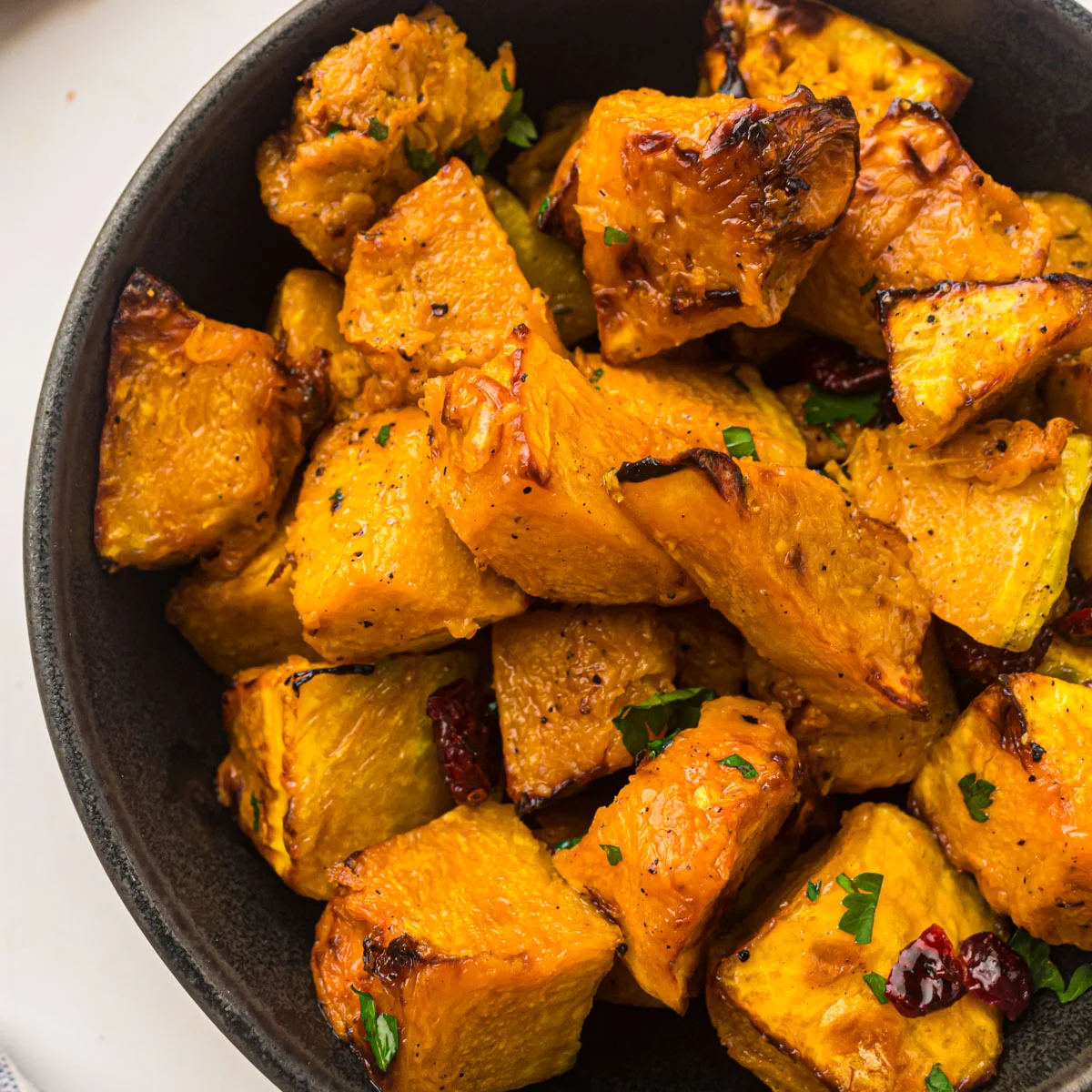
Air-fried winter squash has tender, sweet centres and lightly crisp, caramelised edges, with olive oil, salt and pepper keeping the seasoning simple. It is an easy side dish to make in about 30 minutes, and you can add herbs or spices to suit the rest of the meal.
Ingredients
- 950–1,200 ml (4–5 cups)winter squash, such as kabocha or butternut, peeled, deseeded and cut into 2.5 cm cubes (1-inch cubes)
- 30 ml (2 tablespoons)olive oil
- 2.5 ml (1/2 teaspoon), plus more to tastekosher salt
- 1.25 ml (1/4 teaspoon), plus more to tastefreshly ground black pepper
Instructions
- 1
Preheat the air fryer
Preheat the air fryer to 190°C (375°F).
- 2
Season the squash
Put the squash cubes in a large bowl. Drizzle over the olive oil, add the salt and pepper, and mix until the pieces are evenly coated.
- 3
Arrange in basket
Spread the squash in a single layer in the air fryer basket, taking care not to crowd it.
- 4
Air fry until tender
Air fry for 18–19 minutes, shaking the basket halfway through, until the squash is tender and lightly crisp on the outside. Serve.
What is air fryer winter squash?
Winter squash is a broad group of firm-fleshed squashes, including butternut and kabocha. This preparation is a straightforward modern take on serving squash as a savoury side: cubes are coated with oil and seasoning, then cooked until their edges brown.
The method works because the pieces cook in a hot, circulating airflow, while a single layer gives their surfaces room to colour. The result contrasts a soft interior with a lightly crisp exterior.
Nutrition and macros by portion
The nutrition label shows one serving as written: 169 calories, 2g protein, 28g carbs, 7g fat.
| Portion | Adjustment | kcal | Protein | Carbs | Fat |
|---|---|---|---|---|---|
| Lighter | Use less olive oil | 118 kcal | 1g | 20g | 5g |
| This serving | As written | 169 kcal | 2g | 28g | 7g |
| Hungry | Serve a larger portion | 254 kcal | 3g | 42g | 11g |
The squash supplies most of the carbohydrates, while the olive oil accounts for most of the fat; this side dish provides little protein. Pair it with a protein-rich main such as beans, lentils or chicken, plus a green vegetable, to make a more balanced plate.
Choosing and preparing the squash
Squash choice: Butternut is gently sweet and easy to find, while kabocha has a dense, rich texture. Either works here; peel, remove the seeds and cut the flesh into evenly sized 2.5 cm cubes.
Coating each piece
Even coverage: Toss the cubes thoroughly with the olive oil, salt and pepper before they go into the basket. The oil helps the surfaces brown, and distributing the seasoning in the bowl avoids overly salty or unseasoned patches.
Keeping the edges crisp
Single layer: Arrange the cubes with space around them rather than piling them up. If the basket is crowded, the squash is more likely to soften without browning evenly; cook in batches if needed.
Midway shake: Shake the basket halfway through the 18–19 minutes so the pieces can cook and colour on different sides.
Checking for doneness
Texture cue: The squash should be tender inside and lightly crisp outside when it is ready. If the cubes are still firm, continue cooking and check them again rather than relying on colour alone.
What to serve with it
Meal pairing: Serve the squash alongside roast chicken, beans or lentils, or add it to a grain bowl. A fresh green salad or another crisp vegetable makes a useful contrast to its soft, sweet flesh.
Recipe notes & tips
- Cut the squash into similar-sized cubes so they finish cooking at about the same time.
- Dry the peeled squash if its surface is wet before tossing it with the oil.
- Arrange the cubes in a single layer and cook in batches if your air fryer basket is small.
- Shake the basket halfway through cooking to help the pieces brown more evenly.
- Taste before serving and add extra salt or pepper if needed.
Variations
- Add herbs: Toss the cooked squash with chopped sage or thyme before serving.
- Add warm spice: Dust the cubes with paprika or ground cumin along with the salt and pepper.
- Add garlic: Mix a little garlic powder into the oil before coating the squash.
- Add chilli: Include a pinch of chilli flakes for a gentle heat.
- Finish with acidity: Add a squeeze of lemon juice just before serving to balance the squash's sweetness.
Common mistakes to avoid
- Uneven cubes: Pieces of different sizes cook at different speeds; cut them to roughly 2.5 cm.
- Crowded basket: Overlapping pieces brown less readily; spread them out or cook in batches.
- Patchy seasoning: Oil and seasonings can collect at the bottom of the bowl; toss thoroughly before air frying.
- Skipping the shake: The pieces may brown unevenly; shake the basket halfway through.
- Expecting colour alone: A browned surface does not guarantee a tender centre; check the texture before serving.
How to store
Cool leftovers and refrigerate them in an airtight container for up to 3–4 days. Reheat in the air fryer until hot, which can help restore some crispness; the microwave works too, though the squash will be softer.
Frequently asked questions
Can I use butternut or kabocha squash?
Yes. Both are suitable; peel, deseed and cut either variety into evenly sized cubes.
Do I need to peel the squash?
This recipe calls for peeled squash. Some varieties have edible skin, but peeling gives the cubes the intended tender texture.
Should I cook the squash in batches?
Cook in batches if the basket cannot hold the pieces in a single layer. Leaving space around the cubes helps them brown rather than steam.
How can I tell when the squash is done?
It should be tender inside with a lightly crisp exterior. If it is still firm, continue air frying and check again.
Can I add other seasonings?
Yes. Add dried spices or herbs when tossing the cubes with the oil, or finish with fresh herbs after cooking.
Cook it from the original
This recipe comes from goodgourds.com. Their page has the author’s own photos, notes and tips — the best place to cook it from.
Open the recipe on goodgourds.com