
General TSO's Chicken w Cauliflower Rice
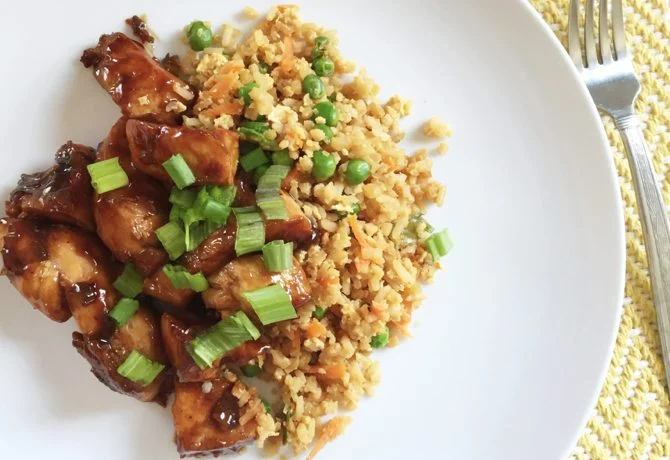
This take on General Tso’s chicken pairs bite-size chicken in a sweet, savoury and gently spicy sauce with cauliflower fried rice. It’s a colourful one-pan-style meal, with the rice and chicken cooked separately before serving together.
Ingredients
- 1 mediumcauliflower
- 1 tbspolive oil
- 1 cupbell pepper, cubed
- 2 clovesgarlic, minced
- 1 cupedamame
- 2 largeeggs (or scrambled tofu for a vegan version)
- 3 tbspsoy sauce (or tamari for a gluten-free version)
- 6 mediumgreen onions, minced
- 1 lb (454 g)skinless chicken breasts, cut into bite-size pieces
- 1/4 cup (60 ml), dividedsoy sauce
- 1/4 cup (30 g), dividedcornstarch
- 1 largeegg white
- 1 piece, 1 inch (2.5 cm)ginger
- 2 clovesgarlic
- 2 mediumscallions, whites and greens separated
- 1 cup (240 ml)chicken broth
- 1 tsp, plus more for servingsriracha
- 3 tbsphoisin sauce
- 1 tspsesame oil
- 1 tspsesame seeds, for garnish
Instructions
- 1
Rice the cauliflower
Grate the cauliflower on the largest holes of a grater, or pulse roughly chopped pieces in a food processor until they resemble small grains of rice.
- 2
Stir-fry the rice
Heat 1 tablespoon sesame oil in a large frying pan over medium-low heat. Add the carrots and garlic and stir-fry until fragrant, about 5 minutes. Add the cauliflower, edamame and remaining sesame oil; stir-fry briefly, until the cauliflower is soft but not mushy.
- 3
Finish the rice
Make a well in the middle of the pan and lower the heat. Add the eggs and stir gently and continuously until fully cooked. Stir in the soy sauce and green onions just before serving.
- 4
Coat the chicken
In a medium bowl, combine the chicken with 2 tablespoons soy sauce, 3 tablespoons cornstarch and the egg white. Toss to coat and leave to stand while you prepare the vegetables.
- 5
Prepare aromatics
Mince the garlic and ginger and chop the scallions. Separate the scallion whites from the greens, setting the greens aside for garnish.
- 6
Make the sauce
Set a small saucepan over medium heat. Add 1 teaspoon sesame oil, the ginger, garlic and scallion whites, and sauté for 1 minute. Add the chicken broth, remaining 2 tablespoons soy sauce, sriracha and hoisin sauce, then whisk to combine. Whisk in the remaining 1 tablespoon cornstarch and cook until the sauce begins to thicken, about 2 minutes. Turn the heat to low and keep the sauce warm.
- 7
Cook the chicken
Heat a large wok or non-stick frying pan over medium-high heat. Cook the chicken in two batches to prevent sticking, adding 1/2 tablespoon sesame oil and half the chicken for each batch. Cook each batch for 3–4 minutes, until browned at the edges, then turn and cook for another 2–3 minutes, or until cooked through. Transfer to a plate between batches.
- 8
Toss and serve
Return all the chicken to the wok or pan and add the sauce, tossing to coat. Scatter over the scallion greens and sesame seeds. Serve straight away, with extra sriracha if you like.
What is General Tso’s chicken?
General Tso’s chicken is a Chinese-American dish of chicken served in a savoury, sweet and spicy sauce. It is associated with Chinese-American restaurant cooking rather than being a traditional everyday dish from a single region of China.
This version pairs sauced chicken with cauliflower fried rice instead of a bed of regular rice. The rice gets its texture from finely grated cauliflower, while edamame and egg make it more substantial.
Nutrition and macros by portion
The nutrition label shows one serving as written: 425 calories, 41g protein, 33g carbs, 15g fat.
| Portion | Adjustment | kcal | Protein | Carbs | Fat |
|---|---|---|---|---|---|
| Lighter | Use less sesame oil | 298 kcal | 29g | 23g | 11g |
| This serving | As written | 425 kcal | 41g | 33g | 15g |
| Hungry | Add more edamame | 638 kcal | 62g | 50g | 23g |
The chicken and egg white provide most of the protein, while the cauliflower, edamame and cornstarch contribute carbohydrates. The oils, egg yolk and sesame seeds supply much of the fat, with additional flavour and sodium from soy sauce, hoisin and broth. For a balanced plate, serve the chicken and cauliflower rice with an extra portion of non-starchy vegetables.
The chicken coating
Chicken pieces: cutting the breast into bite-size chunks helps them cook quickly and makes them easy to coat in sauce. Keep the pieces similar in size so they finish cooking at about the same time.
Cornstarch and egg white: the coating helps the chicken brown and gives the sauce something to cling to. Separate the measured cornstarch as directed, since some is used on the chicken and the rest thickens the sauce.
Getting the cauliflower texture right
Small grains: grate or pulse the cauliflower until it resembles rice, stopping before it turns into a paste. A food processor works best in short pulses so you can check the texture as you go.
Quick cooking: stir-fry the cauliflower just until soft, not mushy. A roomy pan helps moisture escape rather than steam the vegetables.
Building the sauce
Aromatics: briefly sauté the ginger, garlic and scallion whites to bring out their fragrance before adding the liquids. Keep them moving so the garlic does not scorch.
Thickness: whisk the cornstarch into the sauce and cook until it begins to thicken, about 2 minutes. Keep the sauce on low heat while the chicken cooks, and toss everything together at the end.
Cooking in batches
First batch: give the chicken pieces space in the hot wok or pan so they can brown at the edges. Crowding the pan can make them release moisture and cook less evenly.
Second batch: repeat with the remaining oil and chicken, then return all the cooked pieces to the pan for saucing. Check that the chicken is cooked through before serving.
Serving the meal
Cauliflower rice: serve it alongside the chicken so it can catch the sauce without becoming soggy in the pan. The recipe’s finishing step adds soy sauce and green onions to the rice just before serving.
Garnishes: scatter the reserved scallion greens and sesame seeds over the chicken, and offer extra sriracha at the table. A simple vegetable side can add another fresh element to the plate.
Recipe notes & tips
- Cut the chicken into evenly sized pieces for more consistent cooking.
- Pulse the cauliflower in short bursts so it stays grainy rather than turning to purée.
- Have the sauce ingredients measured before you start cooking the chicken.
- Cook the chicken in two batches, as directed, to give it room to brown.
- Keep the cauliflower rice on the heat only until tender so it does not become mushy.
- Add extra sriracha at the table to let everyone adjust the heat.
Variations
- Make it gluten-free: use tamari in place of soy sauce and check that the hoisin sauce is gluten-free.
- Make it vegan: use scrambled tofu instead of the eggs and replace the chicken with firm tofu.
- Adjust the heat: use less sriracha in the sauce and serve more separately.
- Add vegetables: include extra diced bell pepper in the cauliflower rice.
- Use chicken thighs: cut boneless, skinless thighs into bite-size pieces and cook until done.
Common mistakes to avoid
- Over-processing cauliflower: it turns wet and pasty; pulse in short bursts and stop at rice-sized pieces.
- Crowding the pan: the chicken may steam instead of browning; cook it in the two batches specified.
- Burning the garlic: it can turn bitter; stir it with the ginger and scallion whites only briefly.
- Adding all the cornstarch at once: the sauce and chicken need separate amounts; divide it before cooking.
- Overcooking the cauliflower: it loses its rice-like texture; stir-fry only until soft but not mushy.
How to store
Refrigerate leftovers in an airtight container for up to 3 days. Reheat thoroughly in a frying pan or microwave, adding a small splash of water if the sauce has thickened too much.
Frequently asked questions
Can I make the cauliflower rice ahead?
You can grate or pulse the cauliflower ahead and refrigerate it in a covered container. For the best texture, cook it shortly before serving.
How do I know the chicken is cooked through?
The pieces should be browned and cooked all the way through, with no raw-looking centre. Cut into a larger piece to check if needed.
Can I use frozen cauliflower rice?
Yes, though it may release more moisture than freshly grated cauliflower. Cook it in a wide pan and allow excess moisture to evaporate.
Can I make this without egg?
For the cauliflower rice, the recipe suggests scrambled tofu instead of eggs for a vegan version. The chicken coating also uses egg white, so a vegan version needs a different coating and a plant-based replacement for the chicken.
Can I adjust the spice level?
Yes. Use less sriracha in the sauce, then put extra on the table for anyone who wants more heat.
What can I serve with it?
The cauliflower rice is the recipe’s suggested accompaniment. You could also add a simple vegetable side or serve extra green onions alongside.
Cook it from the original
This recipe comes from goodcleaneats.com. Their page has the author’s own photos, notes and tips — the best place to cook it from.
Open the recipe on goodcleaneats.com