
Vegan Tuna Salad With Chickpeas (High-Protein & Fish-Free)
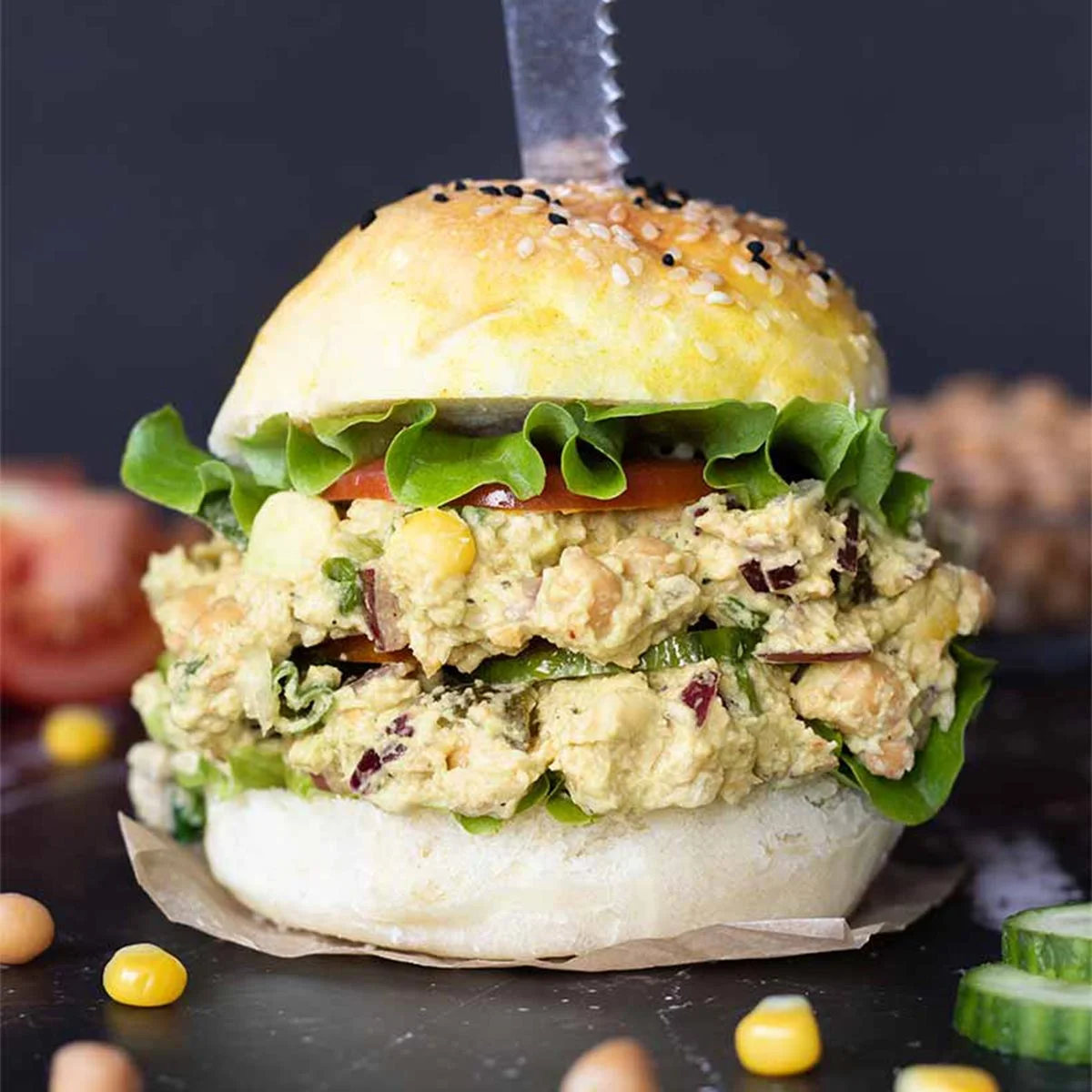
This fish-free vegan tuna salad combines mashed chickpeas with avocado, crunchy vegetables, pickles and a creamy ranch dressing. It comes together in one bowl and works as a filling lunch, dinner or side dish.
Ingredients
- 240 gchickpeas (garbanzo beans), canned or home-cooked, rinsed, drained and mashed
- 80 mlhomemade vegan ranch dressing
- 1 mediumripe avocado, diced
- 1 smallred onion, finely diced
- 2spring onions, finely chopped
- 55 gcorn, frozen or canned
- 2 smallpickles, finely diced
- 1½ tspmustard
- 22 mlfreshly squeezed lemon juice
- to tastesalt
- to tastedried garlic
- to tasteground black pepper
Instructions
- 1
Mash the chickpeas
Mash the chickpeas with a fork or potato masher, or pulse them a few times in a blender or food processor. Leave some whole for a little texture.
- 2
Combine the salad
Put the mashed chickpeas in a bowl with the diced avocado, spring onions, red onion, pickles, corn, mustard, lemon juice and spices.
- 3
Season and serve
Mix until everything is well combined. Taste and adjust the seasoning and lemon juice as needed, then serve.
What is vegan tuna salad?
Vegan tuna salad borrows the creamy, savoury feel of tuna salad but uses plant-based ingredients instead of fish. Chickpeas make a hearty base, while pickles, onion and mustard bring the familiar tang and crunch.
This version pairs mashed chickpeas with avocado and vegan ranch dressing. Keeping some chickpeas whole gives the mixture more texture than a completely smooth mash.
Nutrition and macros by portion
The nutrition label shows one serving as written: 444 calories, 19g protein, 60g carbs, 17g fat.
| Portion | Adjustment | kcal | Protein | Carbs | Fat |
|---|---|---|---|---|---|
| Lighter | Use less ranch dressing | 311 kcal | 13g | 42g | 12g |
| This serving | As written | 444 kcal | 19g | 60g | 17g |
| Hungry | Serve with extra bread | 666 kcal | 29g | 90g | 26g |
The chickpeas and corn provide most of the carbohydrates, while the avocado and vegan ranch dressing contribute much of the fat. Chickpeas also supply the main share of the protein. Serve a portion with fresh salad leaves or other vegetables to add more variety to the plate.
Why chickpeas work
Chickpeas: Mash them roughly rather than blending them into a paste. A few whole chickpeas help the finished salad stay pleasantly chunky.
Building the flavour
Pickles and mustard: These add sharp, savoury notes that balance the mild chickpeas and rich avocado. Finely dicing the pickles helps distribute their flavour through each serving.
Lemon and seasoning: Lemon juice brightens the creamy mixture, while salt, dried garlic and pepper let you tune its savouriness. Taste after mixing, since the dressing and pickles may already contribute salt.
Getting the texture right
Avocado: Dice it before folding it into the bowl so it stays in soft pieces rather than disappearing into the mash. Mix gently once it is added.
Vegetables: Finely chopped spring onion and red onion spread evenly through the salad, while the corn adds small pops of sweetness.
A quick one-bowl method
Mash first: Use a fork or potato masher for direct control, or pulse briefly in a blender or food processor. Stop before the chickpeas turn smooth.
Mix second: Combine the ingredients in one bowl, then adjust lemon and seasoning at the end. The recipe takes about 15 minutes from start to serving.
How to serve it
For lunch: Spoon the salad into sandwiches or wraps, or serve it with crisp vegetables and bread. It also makes a substantial side dish alongside a simple green salad.
For a bowl: Add fresh salad leaves or other vegetables on the side for extra variety and colour.
Recipe notes & tips
- Drain and rinse canned chickpeas well before mashing.
- Mash by hand if you want close control over how chunky the chickpeas stay.
- Dice the onion and pickles finely so their flavour is spread through the salad.
- Fold the avocado in gently to keep some diced pieces intact.
- Taste before adding extra salt, as the dressing and pickles may be savoury.
- Add the lemon juice gradually, tasting as you go.
Variations
- More crunch: Serve the salad with crisp lettuce leaves or sliced vegetables.
- Extra tang: Add a little more lemon juice after tasting.
- Smoother texture: Mash the chickpeas more thoroughly before combining them with the other ingredients.
- Chunkier texture: Leave more chickpeas whole and fold the mixture gently.
- Milder onion: Use less finely diced red onion to soften its sharpness.
Common mistakes to avoid
- Over-mashing: The salad can turn pasty; stop while some chickpeas remain whole.
- Adding all the seasoning at once: The dressing and pickles can be salty; taste before adjusting.
- Using an undrained tin: Excess liquid can make the mixture watery; rinse and drain the chickpeas first.
- Mixing too vigorously: The avocado can break down; fold it through gently.
- Skipping the final taste: The balance can vary with the dressing and pickles; adjust lemon and seasoning before serving.
How to store
Keep leftovers in a covered container in the fridge and eat within 1–2 days. The avocado may darken over time; stir before serving and add a little lemon juice if needed. Serve chilled rather than reheating.
Frequently asked questions
Can I use dried chickpeas?
Yes. Cook them until tender, then drain and cool them before measuring and mashing.
Can I make this without a food processor?
Yes. Mash the chickpeas with a fork or potato masher, leaving some whole for texture.
Can I prepare it ahead?
It is best shortly after mixing because the avocado can darken. You can chop and measure the other ingredients ahead, then combine them closer to serving.
What can I serve it with?
Serve it in a sandwich or wrap, with bread, or alongside crisp vegetables or salad leaves.
How can I adjust the flavour?
Taste the finished mixture and add lemon juice, salt, dried garlic or black pepper as needed. Add seasoning gradually, especially if your dressing and pickles are already salty.
Cook it from the original
This recipe comes from goeatgreen.com. Their page has the author’s own photos, notes and tips — the best place to cook it from.
Open the recipe on goeatgreen.com