
Choux Pastry (Pâte à choux)
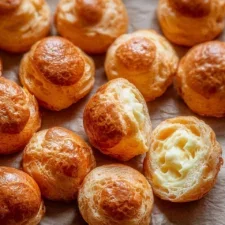
Choux pastry is a light French dough that puffs in the oven to make crisp shells with hollow centres. This straightforward method makes a versatile base for sweet fillings or savoury bites.
Ingredients
- 227 g (1 cup)unsalted butter, cubed
- 480 ml (2 cups)whole milk
- 250 g (2 cups)plain flour
- 1 1/4 teaspoonskosher salt
- 1 teaspoongranulated sugar
- 5 large, plus 1 additional if neededeggs
Instructions
- 1
Bring to a boil
Put the cubed butter, milk, salt and sugar in a saucepan. Bring the mixture to the boil over medium heat.
- 2
Add the flour
Take the pan off the heat and add the flour promptly, stirring until the dough forms a ball and comes away from the sides.
- 3
Beat in eggs
Let the dough cool briefly, then beat in the eggs one at a time until it looks smooth and glossy.
- 4
Check consistency
If the dough is too thick, beat in the additional egg to reach the desired consistency.
- 5
Heat the oven
Preheat the oven to 220°C (425°F) and line a baking sheet with parchment paper.
- 6
Shape the dough
Scoop or pipe the dough onto the lined baking sheet, leaving even gaps between portions.
- 7
Bake until golden
Bake for 20–25 minutes, until the pastries have puffed and turned golden brown. Keep the oven door closed while they bake.
- 8
Cool the pastries
Take the pastries out of the oven and leave them to cool on a wire rack.
What is choux pastry?
Choux pastry, or pâte à choux, is a French cooked dough used for pastries such as profiteroles and éclairs, as well as savoury bites. It relies on moisture in the dough turning to steam in the oven, which helps the shells rise and form a hollow centre.
This version uses milk for its liquid and a simple butter, flour and egg base. Its plain flavour makes it easy to pair with either sweet or savoury fillings.
Nutrition and macros by portion
The nutrition label shows one serving as written: 90 calories, 2g protein, 7g carbs, 6g fat.
| Portion | Adjustment | kcal | Protein | Carbs | Fat |
|---|---|---|---|---|---|
| Lighter | Use smaller pastry portions | 63 kcal | 1g | 5g | 4g |
| This serving | As written | 90 kcal | 2g | 7g | 6g |
| Hungry | Add a few extra shells | 135 kcal | 3g | 11g | 9g |
The flour supplies most of the carbohydrates, while butter and whole milk contribute much of the fat; eggs provide protein as well as some fat. Pair a few shells with a protein-rich filling and fruit or vegetables for a more balanced plate.
Why cook the flour first?
Cooked dough: Stirring the flour into the hot butter-and-milk mixture gives you a cohesive ball that pulls away from the pan. This stage prepares the base to take in the eggs.
Adding the eggs
Cool briefly: Let the dough lose some heat before adding the eggs so they can be beaten in smoothly rather than setting on contact.
One at a time: Incorporate each egg fully before adding the next. The extra egg is optional; use it only if the dough still seems too thick.
How to judge the dough
Smooth and glossy: The method uses this as the cue that the eggs are incorporated. The finished dough should be workable enough to scoop or pipe onto the tray.
Even portions: Space the shapes apart on the baking sheet so they have room to puff as they bake.
Keep the oven closed
Steady heat: Bake at 220°C for 20–25 minutes, watching for puffed, golden pastries. Opening the door during baking can interrupt the rise, so wait until they are ready before checking.
Serving ideas
Sweet: Once cool, fill the shells with whipped cream or custard, or serve them alongside a dessert.
Savoury: Use the unfilled shells as small bites with a savoury filling, or offer them as part of a snack spread.
Recipe notes & tips
- Measure the flour before starting so it is ready to add as soon as the pan comes off the heat.
- Stir firmly after adding the flour until the dough gathers into one ball.
- Let the dough cool briefly before beating in the eggs.
- Add the optional egg gradually if the dough needs loosening.
- Leave space between portions on the lined baking sheet.
- Let the pastries cool on a wire rack so steam can escape.
Variations
- Sweet filling: Pipe whipped cream or custard into the cooled shells.
- Savoury filling: Fill the shells with a savoury mixture after baking and cooling.
- Smaller bites: Pipe smaller portions for bite-sized pastries, checking them as they bake.
- Larger shells: Shape bigger portions for roomier centres, allowing for a longer bake if needed.
Common mistakes to avoid
- Adding eggs to hot dough: Let the dough cool briefly first so the eggs beat in smoothly.
- Adding eggs all at once: Beat them in one by one to keep control of the dough texture.
- Dough too thick: Use the additional egg if needed to reach a workable consistency.
- Crowding the tray: Leave even gaps so the pastries have room to puff.
- Opening the oven: Keep the door closed during baking to avoid interrupting the rise.
- Skipping the rack: Cool the pastries on a wire rack so they do not sit in trapped steam.
How to store
Keep unfilled shells in an airtight container at room temperature for up to 2 days. If they soften, warm them briefly in a 160°C oven and cool before filling; refrigerate filled pastries and eat them within 1–2 days.
Frequently asked questions
Can I make the dough without the extra egg?
Yes. The sixth egg is only for adjusting the consistency if the dough seems too thick after the first five.
How do I know when the pastries are baked?
They should be puffed and golden brown after 20–25 minutes. Avoid opening the oven during baking.
Can I pipe the dough instead of scooping it?
Yes. The method allows either piping or scooping; space the portions evenly on the lined baking sheet.
Can I fill the pastries before baking?
No. Bake the dough as shells first, cool them on a rack, then add a filling.
Can choux pastry be used for savoury dishes?
Yes. The dough is lightly seasoned and can be filled with savoury mixtures once baked and cooled.
Cook it from the original
This recipe comes from cakebakingtips.com. Their page has the author’s own photos, notes and tips — the best place to cook it from.
Open the recipe on cakebakingtips.com