
Rigatoni Alfredo
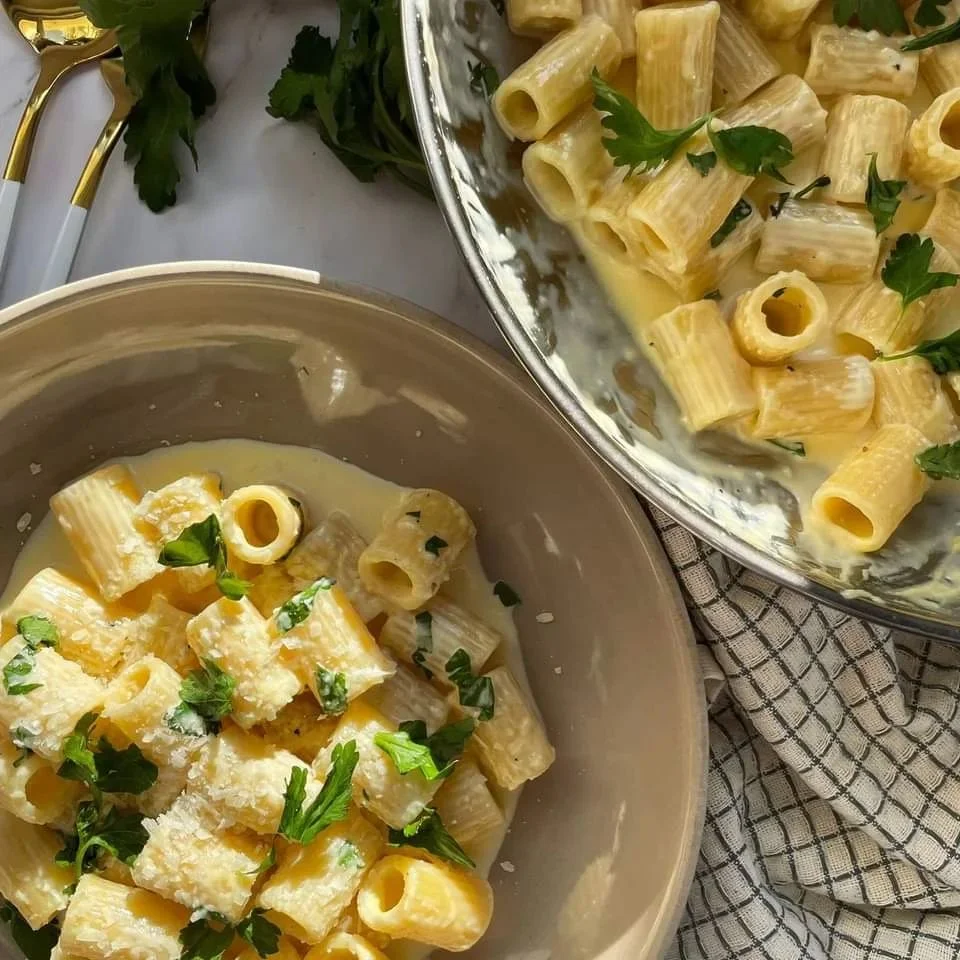
Rigatoni Alfredo pairs ridged pasta with a smooth, buttery cream and Parmesan sauce. It is a comforting meal that comes together on the hob, with a little pasta water helping the sauce cling to each piece.
Ingredients
- 500 gpasta
- to tastesalt
- 30 gbutter
- 2garlic cloves, minced
- 500 mldouble cream
- 70 gParmesan
- to tastesea salt and black pepper
- 75 mlpasta water
- to tasteParmesan, freshly grated
- to tasteparsley, chopped
Instructions
- 1
Boil the pasta
Bring a medium pot of water to the boil over a high heat. Salt the water generously, add the pasta and cook until tender.
- 2
Melt the butter
Set a large pan over a medium heat, add the butter and warm it until it is frothing.
- 3
Cook the garlic
Add the minced garlic and cook for 1–2 minutes.
- 4
Simmer the cream
Pour in the cream and bring it to a simmer.
- 5
Add Parmesan
Stir in 70 g of Parmesan.
- 6
Season the sauce
Season with sea salt and black pepper to taste.
- 7
Add pasta water
Stir in 75 ml of pasta water.
- 8
Combine pasta
Drain the pasta and add it to the sauce.
- 9
Check seasoning
Taste the dish and adjust the seasoning if needed.
- 10
Garnish and serve
Finish with freshly grated Parmesan and chopped parsley, then serve.
What is Rigatoni Alfredo?
Alfredo is associated with Rome, where the original style is made by emulsifying pasta water with butter and cheese. Cream-based versions became popular elsewhere, especially in the United States.
This version uses double cream for a rich, smooth sauce and rigatoni, whose ridges and hollow centres catch plenty of it.
Nutrition and macros by portion
The nutrition label shows one serving as written: 1010 calories, 25g protein, 94g carbs, 56g fat.
| Portion | Adjustment | kcal | Protein | Carbs | Fat |
|---|---|---|---|---|---|
| Lighter | Less cream, more vegetables | 707 kcal | 18g | 66g | 39g |
| This serving | As written | 1010 kcal | 25g | 94g | 56g |
| Hungry | Larger pasta portion | 1515 kcal | 38g | 141g | 84g |
Most of the carbohydrates come from the pasta, while the cream and butter supply much of the fat; Parmesan contributes both fat and protein. For a more balanced plate, serve a portion with a generous side of green vegetables or salad.
Why rigatoni works
Rigatoni: its ridged surface gives the sauce places to cling, while the wide tubes hold it inside as well.
Pasta choice: another short, sturdy shape can work, but cooking times vary, so follow the packet guidance and check for a tender bite.
Build a smooth sauce
Garlic: cooking it briefly in the foaming butter softens its raw edge. Keep the heat moderate so it does not brown or turn bitter.
Cream and cheese: bring the cream only to a simmer, then stir in the Parmesan. Gentle heat helps keep the sauce smooth.
Use pasta water well
Reserve the stated 75 ml before draining, as the recipe relies on it to loosen the sauce. Starchy water helps the sauce coat the pasta rather than sitting separately in the pan.
Add it with the other sauce ingredients, then combine with the drained pasta while everything is hot.
Check the finish
The sauce should look creamy and cling to the rigatoni. If it seems too thick, a small splash of hot water can loosen it; if it is thin, toss the pasta briefly in the pan.
Taste before serving, since Parmesan and salted cooking water both contribute seasoning. Add more salt or pepper only as needed.
What to serve alongside
A crisp green salad or simply cooked vegetables make a fresh contrast to the creamy pasta. Serve them alongside rather than mixing them into the sauce.
The recipe is also satisfying on its own, with extra grated Parmesan and parsley added at the table.
Recipe notes & tips
- Grate the Parmesan finely so it stirs into the sauce readily.
- Measure out the pasta water before draining the pasta.
- Keep the garlic moving in the pan and take care not to let it brown.
- Drain the pasta when it is just tender, as it will be tossed with the hot sauce.
- Serve promptly, while the sauce is at its creamiest.
Variations
- Add peas: stir them into the sauce near the end so they heat through.
- Add mushrooms: sauté them in the pan before adding the garlic.
- Add chicken: cook it separately, then toss it through the finished pasta.
- Use another pasta: choose a short shape with ridges or a hollow centre to catch the sauce.
- Add lemon: finish with a little finely grated zest for a brighter flavour.
Common mistakes to avoid
- Browning the garlic: it can taste bitter; cook it briefly over medium heat.
- Boiling the cream hard: vigorous boiling can make the sauce less smooth; keep it at a gentle simmer.
- Forgetting the pasta water: reserve 75 ml before draining so you can loosen and bind the sauce.
- Overcooking the pasta: check it as it cooks and drain once tender.
- Adding too much salt: Parmesan and salted pasta water are already seasoning the dish; taste before adding more.
How to store
Refrigerate leftovers in an airtight container for up to 3 days. Reheat gently in a pan with a splash of water or cream, stirring until hot; the sauce may thicken as it cools.
Frequently asked questions
Can I use single cream instead of double cream?
You can, but the sauce will be thinner and less rich. Keep it at a gentle simmer and add the pasta water gradually.
Can I make the sauce ahead?
It is best made just before serving, as the sauce can thicken or separate on standing. If preparing components ahead, cook the pasta and sauce separately and combine them when ready to serve.
What can I use instead of rigatoni?
Choose another short pasta shape, such as penne, that can hold the creamy sauce. Check the packet for its cooking time.
How do I stop the sauce from becoming too thick?
Stir in a little of the reserved pasta water until the sauce coats the pasta smoothly. Add it gradually so the sauce does not become watery.
Can I reheat Rigatoni Alfredo?
Yes. Warm it gently in a pan with a splash of water or cream, stirring often. Avoid high heat, which can make the sauce oily.
Cook it from the original
This recipe comes from fooooods.com. Their page has the author’s own photos, notes and tips — the best place to cook it from.
Open the recipe on fooooods.com