
Beetroot carpaccio
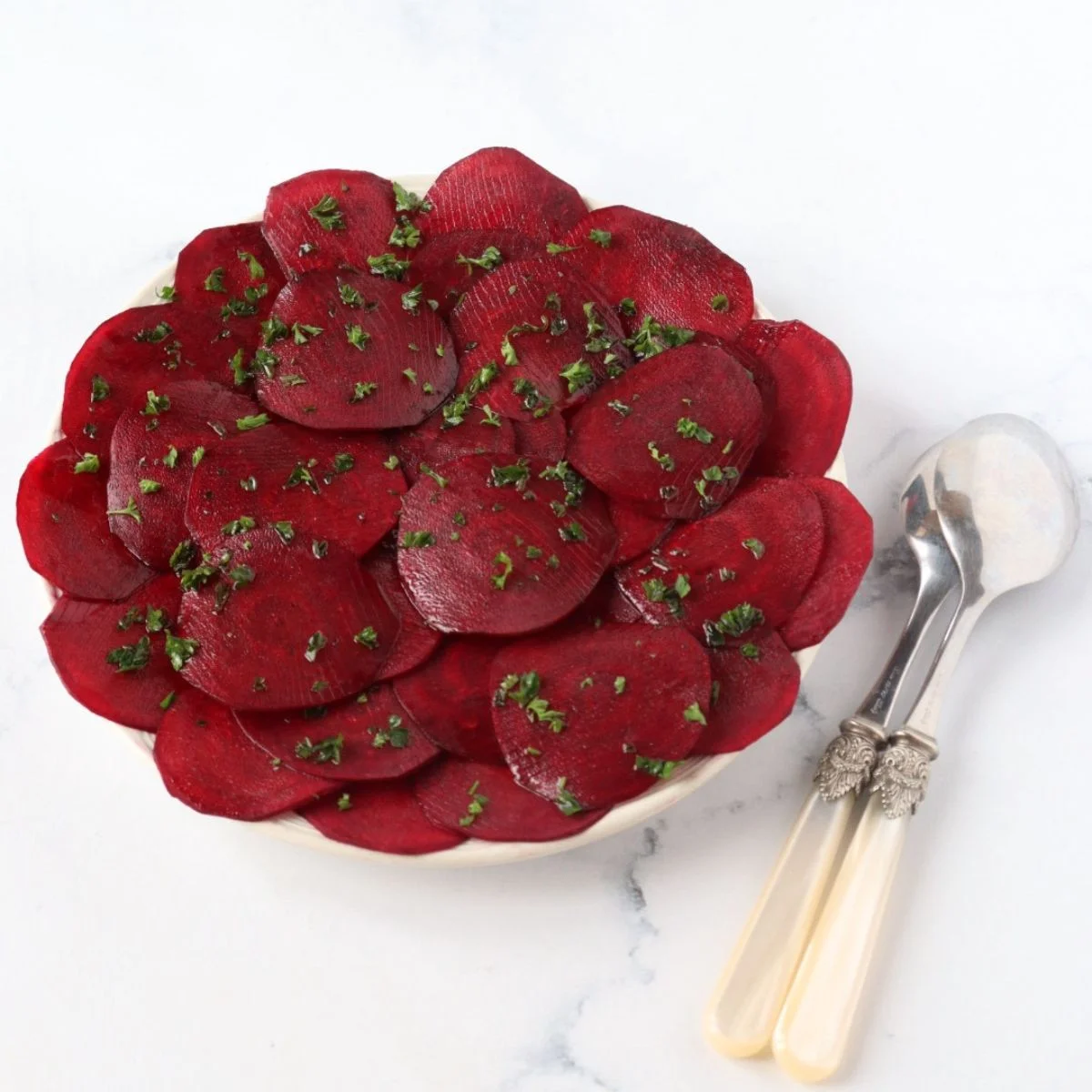
This beetroot carpaccio is a quick French-style starter of raw beetroot sliced thinly and dressed with olive oil, cider vinegar, parsley and salt. It takes just 10 minutes to prepare, and resting it overnight makes the slices more tender.
Ingredients
- 200 graw beetroot
- 20 mlextra-virgin olive oil
- 15 mlcider vinegar
- 15 mlchopped fresh parsley
- 1 pinchsalt
Instructions
- 1
Peel and slice
Peel the beetroot and rinse it thoroughly under cold water to remove any soil. Using a mandoline, slice it very thinly, no more than 1 mm thick.
- 2
Dress the beetroot
Arrange the beetroot slices on a large plate. Drizzle with the cider vinegar and olive oil, add the salt and scatter over the parsley. Serve straight away, or refrigerate until the following day for more tender slices.
What is beetroot carpaccio?
Carpaccio is traditionally associated with thinly sliced raw ingredients, and this version uses beetroot in place of the more familiar meat or fish. It is a simple French-style preparation, dressed rather than cooked.
The combination works because earthy beetroot meets sharp cider vinegar, rich olive oil and fresh parsley. Slicing the beetroot very thinly helps the dressing coat it evenly.
Nutrition and macros by portion
The nutrition label shows one serving as written: 221 calories, 3g protein, 20g carbs, 15g fat.
| Portion | Adjustment | kcal | Protein | Carbs | Fat |
|---|---|---|---|---|---|
| Lighter | Use less olive oil | 155 kcal | 2g | 14g | 11g |
| This serving | As written | 221 kcal | 3g | 20g | 15g |
| Hungry | Serve with bread | 332 kcal | 5g | 30g | 23g |
The beetroot supplies most of the carbohydrates, while the olive oil accounts for most of the fat; the dish contains only a modest amount of protein. To make it a more balanced meal, serve it with a protein-rich accompaniment such as eggs or beans.
Choosing the beetroot
Raw beetroot: Choose a firm beetroot with smooth skin, as it needs to be peeled and eaten uncooked. Rinse it carefully after peeling to remove any remaining soil.
Getting thin, even slices
Mandoline: A mandoline makes it easier to cut slices no thicker than 1 mm. Use its guard and keep your fingers clear of the blade.
Knife: If you do not have a mandoline, use a sharp knife and work slowly to make the slices as even and thin as possible.
Dressing and resting
Balanced dressing: The cider vinegar brings acidity, while extra-virgin olive oil softens its sharpness. Add the salt and parsley over the arranged slices so they are distributed across the plate.
Resting time: The carpaccio can be served immediately, or refrigerated until the following day. The longer rest gives the raw beetroot time to become more tender.
Texture and serving
Doneness cue: There is no cooking step; the texture depends on how thinly you slice the beetroot and whether you serve it straight away or let it rest. The slices should be delicate enough to eat easily.
On the plate: Serve it as a starter or alongside bread and a simple salad. Keep the slices spread out so each bite gets some dressing and parsley.
Timing and preparation
Quick serving: Allow about 10 minutes to peel, rinse, slice and dress the beetroot. A mandoline can make the slicing stage quicker.
Make ahead: For a softer result, prepare the dressed carpaccio and refrigerate it until the next day, as suggested in the method.
Recipe notes & tips
- Use the mandoline guard to protect your fingers while slicing.
- Keep the slices no thicker than 1 mm for the most delicate texture.
- Rinse the peeled beetroot thoroughly before slicing.
- Arrange the slices across a large plate so the dressing reaches them evenly.
- Add the parsley just before serving for a fresh finish.
Variations
- Add citrus: Replace some of the cider vinegar with lemon juice for a brighter dressing.
- Add cheese: Crumble a little goat’s cheese over the dressed slices before serving.
- Add crunch: Scatter toasted walnuts over the top for a contrasting texture.
- Change the herbs: Use fresh chives in place of the parsley.
- Add pepper: Finish with freshly ground black pepper alongside the salt.
Common mistakes to avoid
- Slices too thick: They can be harder to eat raw; aim for slices no thicker than 1 mm.
- Uneven slicing: Some pieces may be tougher than others; use a mandoline or take care to cut evenly with a sharp knife.
- Skipping the rinse: Soil can remain on the beetroot; rinse it thoroughly after peeling.
- Uneven dressing: Some slices may taste plain; spread them across a large plate before adding the dressing.
- Leaving it uncovered: The surface can dry in the fridge; cover the plate while the carpaccio rests.
How to store
Cover and refrigerate any leftovers, and eat them within 1–2 days. Serve chilled; this dish does not need reheating.
Frequently asked questions
Can I make beetroot carpaccio without a mandoline?
Yes. Use a sharp knife and slice the beetroot slowly and as evenly as possible. Aim for pieces no thicker than 1 mm.
Can I serve it straight away?
Yes, the method allows for serving it immediately after dressing. Refrigerating it until the following day makes the beetroot more tender.
Can I prepare it the day before?
Yes. Dress the slices, cover the plate and refrigerate it until the next day.
Can I use cooked beetroot?
This recipe is made with raw beetroot, so cooked beetroot will have a different texture. For the intended result, use raw beetroot.
What can I serve with beetroot carpaccio?
Serve it as a starter or alongside bread and a simple salad. Eggs or beans can make it a more substantial plate.
Cook it from the original
This recipe comes from gohealthywithbea.com. Their page has the author’s own photos, notes and tips — the best place to cook it from.
Open the recipe on gohealthywithbea.com