
San Sebastian Cheesecake (Burnt Basque cheesecake)
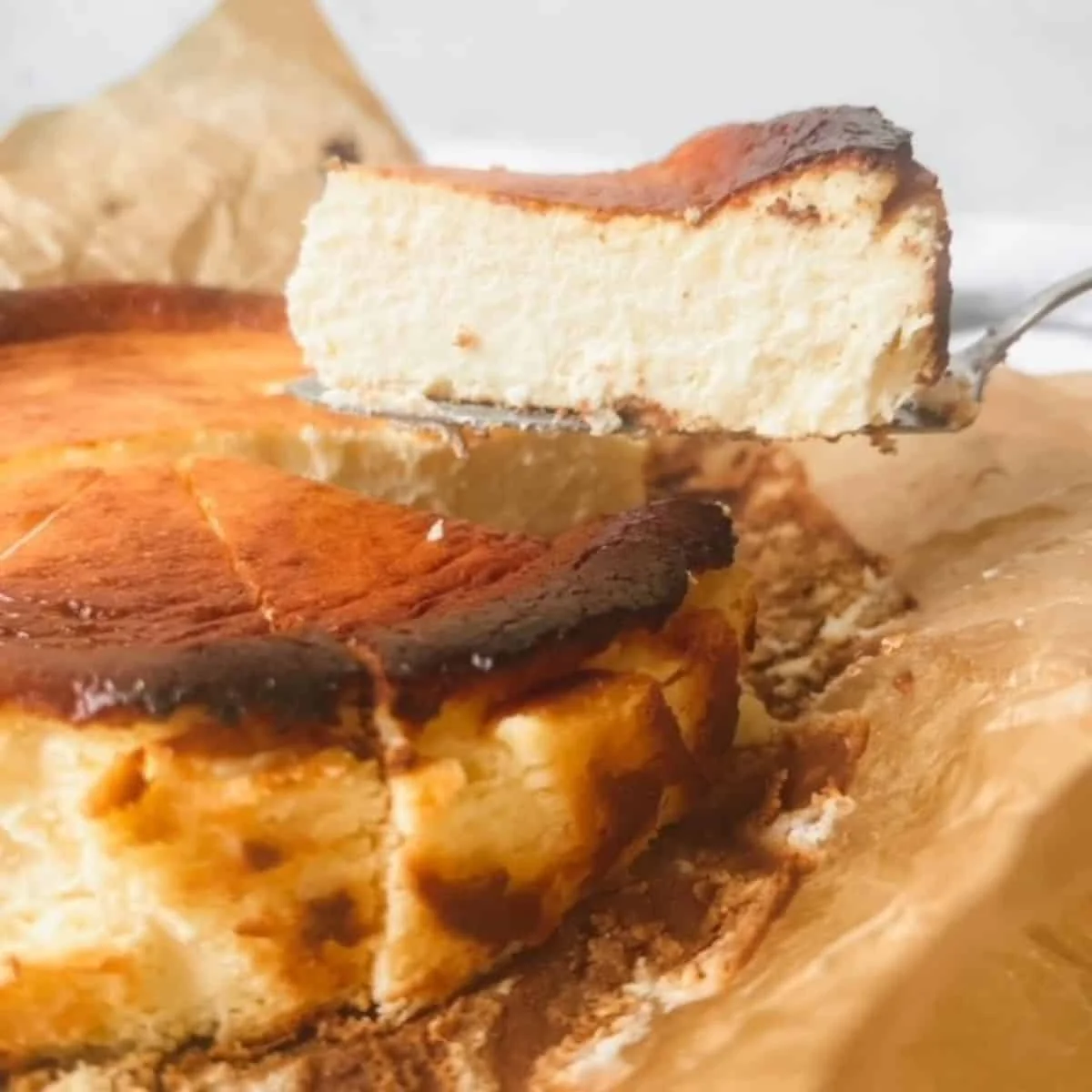
San Sebastián cheesecake is a simple Basque dessert with a deeply browned top and a soft, creamy centre. It needs just a handful of ingredients and no crust, making it an easy choice when you want an impressive-looking cheesecake without a complicated method.
Ingredients
- 600 gfull-fat cream cheese, at room temperature
- 200 ggranulated sugar
- 3 largeeggs, at room temperature
- 300 mldouble cream
- 2 teaspoonsvanilla extract
- 30 gcornflour
Instructions
- 1
Line the tin
Press parchment paper into the base and sides of the baking tin, leaving at least 5 cm overhanging the rim. It does not need to sit neatly; the folds add to the cheesecake’s rustic appearance.
- 2
Heat the oven
Preheat the oven to 220°C.
- 3
Beat the cheese
In a large bowl or stand mixer, beat the cream cheese for a few minutes until smooth.
- 4
Add the sugar
Sift the sugar into the cream cheese and beat for at least 3 minutes, until it is incorporated and the mixture has no lumps. Scrape down the sides of the bowl to mix everything evenly.
- 5
Mix in the eggs
Add the eggs one at a time, beating until each is incorporated. Scrape down the sides of the bowl as needed.
- 6
Add cream and vanilla
Beat in the double cream and vanilla extract until combined, scraping down the bowl so the mixture is even.
- 7
Stir in cornflour
Add the cornflour and beat until the cheesecake mixture is smooth and free of lumps. Scrape the bowl sides once more if needed.
- 8
Fill the tin
Transfer the mixture to the lined tin and spread it evenly. Carefully tap the tin on a hard surface to release trapped air bubbles.
- 9
Bake until browned
Bake for about 30–40 minutes, until the top is caramelised brown and may be nearly black at the edges. The sides should be set while the centre remains wobbly; it will firm up as it cools.
- 10
Cool and chill
Carefully remove the tin from the oven and leave the cheesecake to cool completely in it. It will rise in the oven and then sink as it cools. Once cool, refrigerate for at least 2 hours, preferably overnight, before serving.
What is San Sebastián cheesecake?
This crustless cheesecake takes its name from San Sebastián in Spain’s Basque Country. Its defining contrast is a dark, caramelised top and sides with a creamy, tender centre.
This version keeps the ingredient list short and relies on a hot oven rather than a water bath. Parchment that rises above the tin gives the cake its characteristic uneven, rustic outline.
Nutrition and macros by portion
The nutrition label shows one serving as written: 374 calories, 5g protein, 23g carbs, 30g fat.
| Portion | Adjustment | kcal | Protein | Carbs | Fat |
|---|---|---|---|---|---|
| Lighter | Serve a smaller slice | 262 kcal | 4g | 16g | 21g |
| This serving | As written | 374 kcal | 5g | 23g | 30g |
| Hungry | Serve a larger slice | 561 kcal | 8g | 34g | 45g |
The cream cheese, double cream and eggs provide most of the fat and some of the protein, while the sugar supplies much of the carbohydrate. Serve a slice with fresh fruit, or pair it with a lighter meal, to balance the richness of the dessert.
The ingredients that matter
Cream cheese: Full-fat cream cheese gives the cake its rich body. Bringing it to room temperature helps it beat smoothly and makes lumps less likely.
Cream and eggs: Double cream contributes richness, while the eggs help the mixture set as it bakes. Room-temperature eggs blend into the cheese mixture more readily.
Cornflour: A small amount helps give the centre structure after chilling. Sift it in and beat until no dry pockets remain.
Build a smooth mixture
Cream cheese first: Beat it until smooth before adding anything else, so any lumps can be worked out early.
Additions: Incorporate the sugar thoroughly, then add the eggs individually. Scraping down the bowl between additions helps prevent unmixed streaks at the bottom or sides.
Read the bake
Colour: The top should become a deep caramelised brown, with the edges allowed to darken considerably. The high oven temperature is what creates that signature finish.
Centre: Look for set edges and a visibly wobbly middle when you move the tin gently. Avoid waiting for the centre to look completely firm in the oven; it continues to set as it cools and chills.
Cooling and chilling
In the tin: Let the cheesecake cool completely without removing it from the tin. Its rise and subsequent dip are expected, not a sign that the bake has failed.
In the fridge: Chill it for at least 2 hours, or preferably overnight, so the centre firms enough to slice. For neater portions, use a clean knife and wipe it between cuts.
Serving the cheesecake
The cheesecake is rich and creamy, so small slices can be satisfying. Serve it plain to let the browned top and tangy cheese flavour stand out.
For a simple dessert plate, add fresh berries or sliced fruit. A little fruit offers a bright contrast without changing the recipe itself.
Recipe notes & tips
- Bring the cream cheese and eggs to room temperature before mixing for a smoother batter.
- Scrape down the bowl between additions so no dense mixture is left unmixed at the bottom.
- Leave the parchment overhanging the tin rather than trying to make it sit perfectly flat.
- Tap the filled tin gently on a hard surface to help dislodge air bubbles.
- Use the wobble in the centre, as well as the deep colour, to judge when the cheesecake is ready.
- Allow enough time for the cake to cool fully before chilling it.
Variations
- Serve with berries: Add fresh berries alongside each slice for a fruity contrast.
- Add citrus zest: Mix finely grated lemon zest into the batter for a fresh citrus note.
- Use orange zest: Add finely grated orange zest for a fragrant variation.
- Add a spice: Beat a small pinch of cinnamon into the mixture for a gentle warming note.
- Serve with fruit sauce: Spoon a little berry sauce beside the cheesecake when serving.
Common mistakes to avoid
- Cold cream cheese: It can leave lumps in the batter; let it soften at room temperature before beating.
- Adding all the eggs together: The mixture may be harder to combine evenly; beat them in one at a time.
- Skipping the bowl scrape: Unmixed batter can cling to the sides; scrape them down between additions.
- Baking until the centre is firm: The cake can lose its soft middle; remove it when the edges are set and the centre still wobbles.
- Removing it while warm: The cheesecake is delicate before chilling; cool it completely in the tin.
- Cutting before chilling: The middle may not hold its shape; refrigerate for at least 2 hours first.
How to store
Cover and refrigerate leftover cheesecake for up to 3 days. Serve chilled, or let a slice stand briefly at room temperature; reheating is not needed.
Frequently asked questions
Why is the middle still wobbly when it comes out of the oven?
That is expected: the edges should be set while the centre still moves gently. The cheesecake continues to set as it cools and chills.
Should the top really get very dark?
Yes. A deeply browned top, with very dark edges, is part of the style of this cheesecake.
Why did the cheesecake sink as it cooled?
It rises in the oven and then deflates as it cools. This is normal and contributes to its rustic appearance.
Can I make it ahead?
Yes. Once it has cooled completely, refrigerate it for at least 2 hours and preferably overnight before serving.
Does the parchment need to be neat?
No. Press it into the tin with at least 5 cm overhanging the rim; folds and uneven edges are fine.
How can I get cleaner slices?
Chill the cheesecake thoroughly and use a clean knife, wiping it between slices.
Cook it from the original
This recipe comes from glutenfreetranquility.com. Their page has the author’s own photos, notes and tips — the best place to cook it from.
Open the recipe on glutenfreetranquility.com