
Easy Authentic Spanish Seafood Paella Recipe
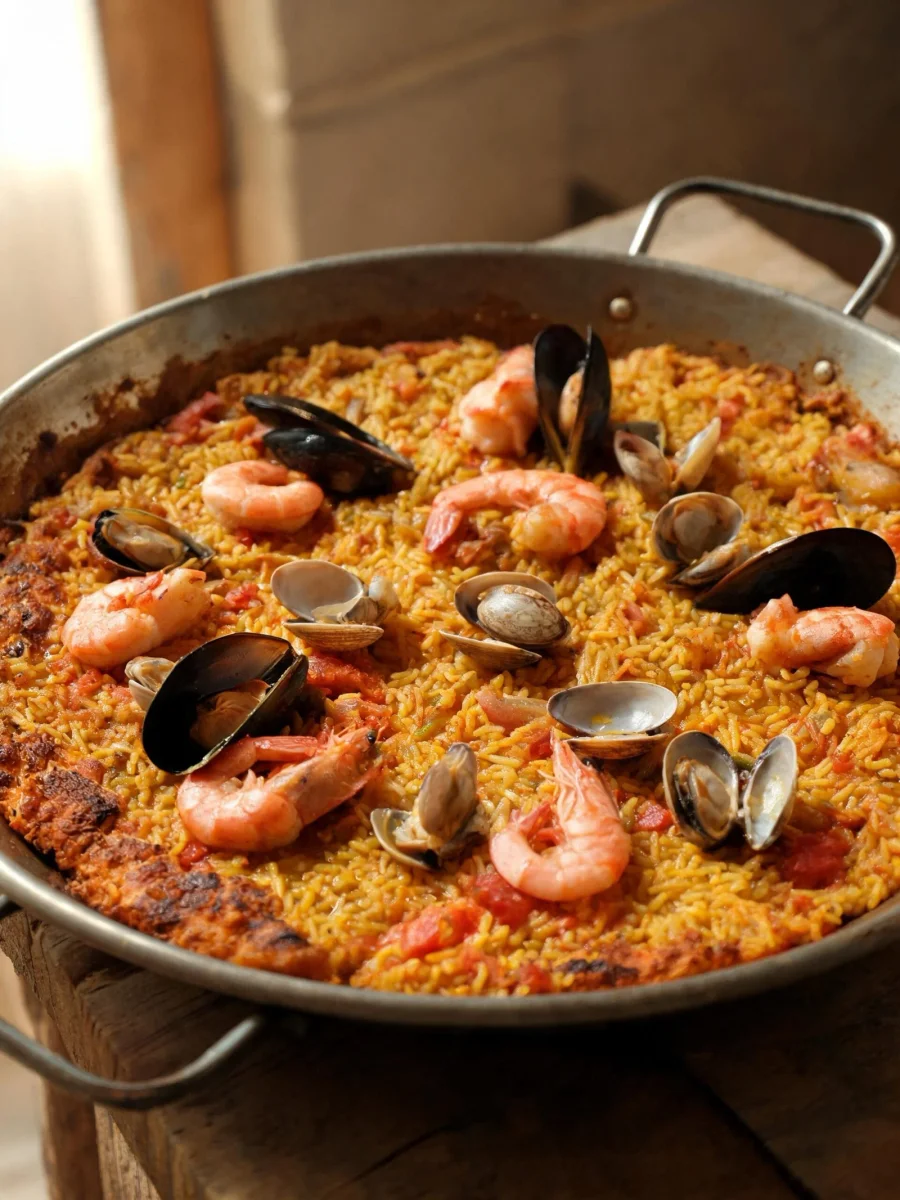
Spanish seafood paella brings Bomba rice, saffron and a mix of shrimp, mussels and clams together in one pan. The rice cooks in a tomato and seafood-broth base, with a final burst of heat to form a crisp layer underneath.
Ingredients
- 60 ml (1/4 cup)extra-virgin olive oil
- 1 mediumyellow onion, finely diced
- 1red bell pepper, finely diced
- 4 clovesgarlic, minced
- 240 g (1 cup)crushed tomatoes
- 300 g (1.5 cups)Spanish Bomba rice
- 950 ml (4 cups)good-quality seafood broth, warmed
- 120 ml (1/2 cup)dry white wine
- 1/2 teaspoonsaffron threads
- 1 teaspoonsmoked Spanish paprika
- 1 teaspoonkosher salt
- 1/2 teaspoonfreshly cracked black pepper
- 454 g (1 lb)large shrimp (16–20 count), peeled and deveined, tails on
- 454 g (1 lb)mussels, scrubbed and debearded
- 454 g (1 lb)clams, scrubbed
- 15 g (1/4 cup)fresh parsley, chopped
- 1lemon, cut into wedges
Instructions
- 1
Bloom the saffron
Combine the saffron threads with 120 ml (1/2 cup) of the warm seafood broth in a small bowl. Leave to infuse for at least 15 minutes.
- 2
Soften the vegetables
Heat the olive oil in a 38 cm (15-inch) paella pan over medium heat. Add the onion and red pepper and sauté for 8–10 minutes, until very soft.
- 3
Thicken the tomato
Stir in the garlic and smoked paprika and cook for 1 minute, until fragrant. Add the crushed tomatoes, salt and pepper, then cook for 10 minutes, until thick and jam-like.
- 4
Toast the rice
Add the Bomba rice and stir constantly for 2 minutes to toast the grains.
- 5
Reduce the wine
Pour in the white wine, scraping the bottom of the pan. Cook for 1–2 minutes, until most of the wine has evaporated.
- 6
Add the broth
Pour in the remaining warm broth and the saffron-broth mixture. Stir once to distribute the rice, then do not stir again.
- 7
Cook the rice
Bring the pan to a simmer, then reduce the heat to medium-low. Cook for 10 minutes, rotating the pan occasionally.
- 8
Arrange the seafood
Place the clams, mussels and shrimp on top of the rice, nestling them slightly into it.
- 9
Finish the simmer
Simmer for another 8–10 minutes, until the shellfish have opened, the shrimp are pink and the liquid has been absorbed.
- 10
Form the socarrat
Increase the heat to medium-high for 45–60 seconds, until you hear the rice crackling at the bottom of the pan.
- 11
Rest and serve
Take the pan off the heat, cover it loosely with foil and leave it to rest for 5–10 minutes. Garnish with parsley and serve with lemon wedges.
What is Spanish seafood paella?
Paella is a Spanish rice dish associated with Valencia, traditionally cooked in a wide, shallow pan. This seafood version pairs rice with shellfish, shrimp and saffron for a one-pan meal.
Bomba rice, a flavourful broth and an undisturbed simmer help the grains absorb liquid while keeping their shape. The brief final blast of heat aims to create socarrat, the toasted rice layer at the bottom.
Nutrition and macros by portion
The nutrition label shows one serving as written: 760 calories, 61g protein, 71g carbs, 24g fat.
| Portion | Adjustment | kcal | Protein | Carbs | Fat |
|---|---|---|---|---|---|
| Lighter | Less rice, more vegetables | 532 kcal | 43g | 50g | 17g |
| This serving | As written | 760 kcal | 61g | 71g | 24g |
| Hungry | Larger rice portion | 1140 kcal | 92g | 107g | 36g |
Most of the carbohydrates come from the Bomba rice, while the olive oil contributes much of the fat. Shrimp, mussels and clams provide most of the protein, with the exact amount varying with the edible yield of the shellfish. Pair a serving with a generous salad or vegetables for a more balanced plate.
Why these ingredients work
Bomba rice: its short, rounded grains are suited to absorbing broth in a paella. Toasting them in the pan first gives them a light coating of oil.
Saffron and paprika: saffron is steeped in warm broth so its flavour can spread through the rice. Smoked paprika adds a savoury note to the tomato base.
Seafood broth: warming it before adding helps the pan return to a simmer without a long pause. A broth with good flavour also supports the rice as it cooks.
Build a concentrated base
Soft onion and pepper form the starting point, so give them the full 8–10 minutes to cook down. The tomato then needs about 10 minutes to thicken to a jam-like consistency.
Toasting the rice for 2 minutes and reducing the wine before adding broth are distinct stages. Scrape the pan when pouring in the wine to loosen any browned bits.
Leave the rice alone
After the broth goes in, stir just once to distribute the rice, then leave it undisturbed. Stirring during the simmer can disrupt the even layer needed for this style of paella.
Rotate the pan occasionally as directed rather than mixing the rice. If your hob heats unevenly, rotating helps expose different parts of the pan to the heat.
Check the seafood and rice
The seafood goes on top after the rice has simmered for 10 minutes, giving it time to cook as the liquid continues to absorb. The recipe’s cues are opened shellfish, pink shrimp and absorbed liquid.
Discard any mussels or clams that remain closed after cooking. Listen for crackling during the final 45–60 seconds; that sound signals the bottom layer is toasting, so keep the high-heat finish brief.
Rest before serving
A loose foil cover and a 5–10 minute rest let the pan settle before you bring it to the table. Add the parsley after resting so it stays fresh-looking.
Serve the paella with lemon wedges for squeezing at the table. A simple green salad or steamed vegetables can round out the meal without competing with the seafood.
Recipe notes & tips
- Use a wide, shallow pan so the rice can cook in an even layer.
- Warm the broth before adding it to the pan.
- Keep the saffron steeping for at least 15 minutes while you prepare the base.
- Once you have stirred the rice into the broth, resist the urge to stir again.
- Check that the mussels and clams are scrubbed and debearded before cooking.
- Watch the rice closely during the final high-heat stage so the base toasts rather than burns.
Variations
- Add squid: tuck cleaned squid pieces in with the other seafood.
- Use more shellfish: replace some shrimp with extra mussels or clams.
- Make it milder: reduce the smoked paprika to suit your taste.
- Add peas: scatter them over the rice when arranging the seafood.
- Use fish: add firm fish pieces with the shellfish, allowing them to cook through.
Common mistakes to avoid
- Stirring after adding broth: the recipe relies on an undisturbed rice layer, so stir only once at that point.
- Rushing the tomato base: cook it for the full 10 minutes until thick and jam-like.
- Adding cold broth: warm it first so it is ready to simmer in the pan.
- Overcooking the socarrat: limit the final high-heat stage to 45–60 seconds and listen for crackling.
- Serving straight away: cover loosely and rest the paella for 5–10 minutes before garnishing.
How to store
Refrigerate leftovers promptly in a covered container and use within 1–2 days because the dish contains cooked shellfish. Reheat thoroughly in a covered pan with a small splash of water or broth; the rice may soften and the socarrat will not stay crisp.
Frequently asked questions
Can I use a different type of rice?
Bomba rice is the specified choice because it absorbs broth while holding its shape. If you substitute another rice, cooking time and liquid absorption may differ.
Do I stir the rice while it cooks?
Stir once after adding the broth and saffron mixture to distribute the rice. Leave it alone for the rest of the simmer.
What if some clams or mussels do not open?
The recipe uses opened shellfish as a doneness cue. Discard any that remain closed after cooking.
How can I tell when the socarrat is ready?
During the 45–60 second high-heat finish, listen for the rice to crackle at the bottom of the pan. Stop after that brief stage to avoid burning it.
Can I make this without a paella pan?
A wide, shallow pan is the closest substitute, as it allows the rice to spread in a layer. A deeper, narrower pan may cook it less evenly.
Can I prepare the paella ahead?
It is best served just after its short rest, when the seafood and rice are freshly cooked. For food safety, refrigerate leftovers promptly rather than leaving them at room temperature.
Cook it from the original
This recipe comes from bluerecipes.com. Their page has the author’s own photos, notes and tips — the best place to cook it from.
Open the recipe on bluerecipes.com