
Gluten Free Lemonade Scones
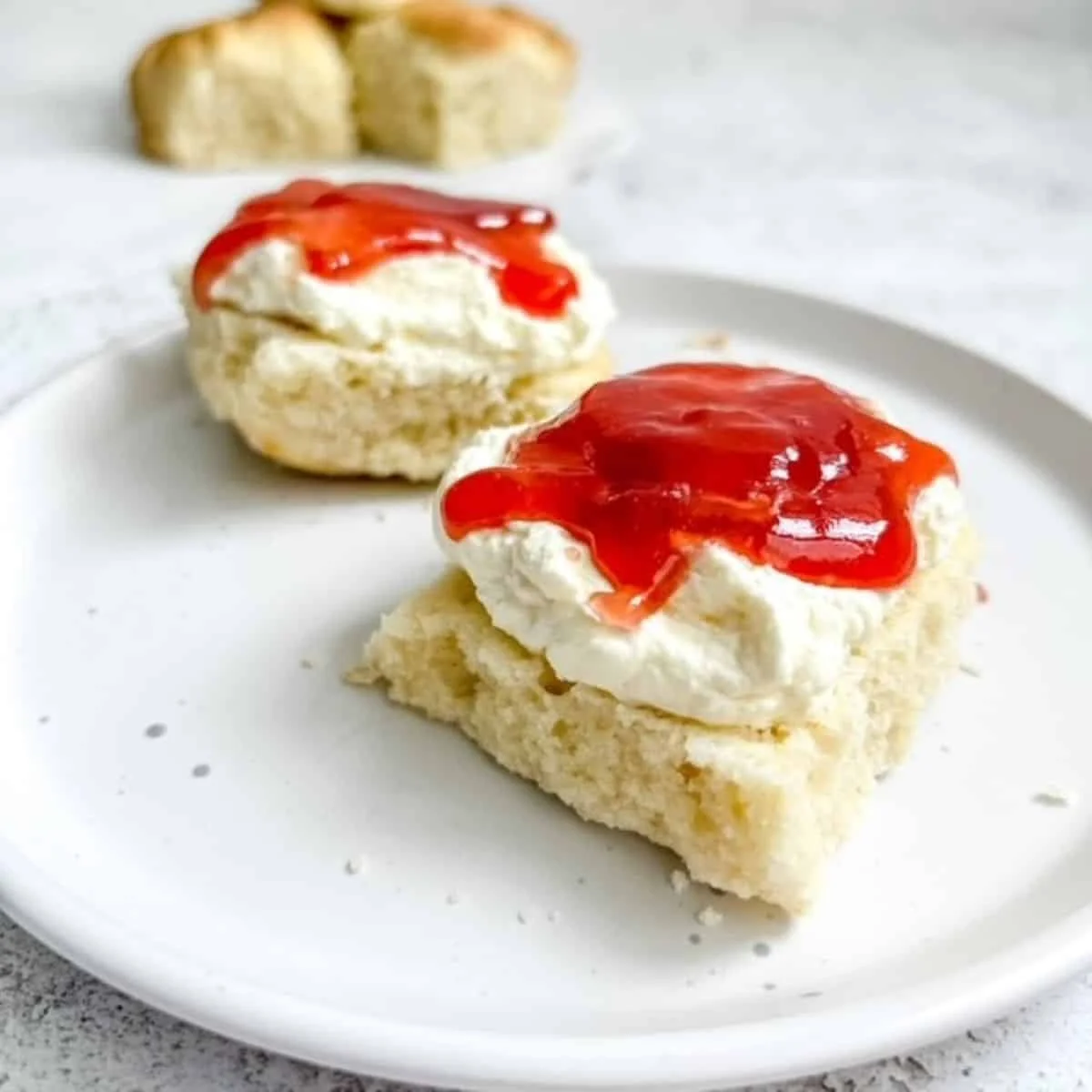
These quick British-style gluten-free scones use lemonade and cream to make a soft, tender dough with very little effort. Serve them warm with whipped cream and jam for afternoon tea, or add a lemon glaze for a sweeter finish.
Ingredients
- 400 ggluten-free self-raising flour
- 40 gsugar
- 1 teaspoonbaking powder (check the label for gluten-containing ingredients)
- 220 mldouble cream
- 220 mllemonade
- 2 tablespoonsmilk, for brushing the tops
Instructions
- 1
Preheat the oven
Heat the oven to 200°C (400°F/Gas Mark 6) and line a baking sheet with baking parchment.
- 2
Mix the dry ingredients
In a large bowl, combine the gluten-free flour, baking powder and sugar.
- 3
Add wet ingredients
Pour the cream and lemonade into the flour mixture.
- 4
Bring together
Fold gently until everything is combined into a soft dough. Avoid mixing too much; the dough will be sticky.
- 5
Shape the dough
Turn the dough onto a lightly floured surface and knead it gently, just enough to bring it together.
- 6
Cut the scones
Shape the dough into a disc about 3 cm thick. Press a 6 cm cutter straight down without twisting to cut out the scones; coating the cutter between cuts helps with the sticky dough.
- 7
Arrange on tray
Carefully transfer the scones to the lined baking sheet, placing them close together so their sides slightly touch.
- 8
Brush and bake
Brush the tops with a little milk and bake for about 15 minutes, until golden brown.
- 9
Cool the scones
Transfer the baked scones to a cooling rack.
- 10
Serve with toppings
Serve with a filling or glaze of your choice; whipped cream and jam are suggested.
What are lemonade scones?
Lemonade scones are a simple British-style bake made with flour, cream and fizzy lemonade in place of a more involved dough. The lemonade adds sweetness and helps keep the mixture tender, while cream supplies richness.
This gluten-free version is designed for a quick batch, with self-raising flour and a little extra baking powder doing the lifting. Its soft, sticky dough needs a gentle touch to bake into light scones.
Nutrition and macros by portion
The nutrition label shows one serving as written: 254 calories, 1g protein, 44g carbs, 8g fat.
| Portion | Adjustment | kcal | Protein | Carbs | Fat |
|---|---|---|---|---|---|
| Lighter | Smaller scone, lighter topping | 178 kcal | 1g | 31g | 6g |
| This serving | As written | 254 kcal | 1g | 44g | 8g |
| Hungry | Serve two scones | 381 kcal | 2g | 66g | 12g |
The flour and sugar provide most of the carbohydrate, while the double cream supplies most of the fat; the recipe contains relatively little protein. Pair a scone with fresh fruit or a protein-rich accompaniment such as yoghurt to make a more balanced plate.
Choosing the ingredients
Gluten-free flour: use a self-raising blend so the scones have structure and rise. Check that both the flour and baking powder are labelled gluten-free if that is important for your cooking.
Lemonade and cream: use regular fizzy lemonade and double cream. Together they form the dough without needing to rub butter into the flour.
Handling the sticky dough
Gentle folding: mix only until the flour is incorporated, then stop. Overworking gluten-free dough can make the finished scones dense rather than tender.
Light kneading: use a lightly floured surface and handle the dough just enough to shape it. Dust the cutter between cuts if dough clings to it.
Cutting and arranging
Straight cuts: press the cutter down firmly without twisting. A clean, straight cut helps the scones rise evenly.
Close spacing: place the cut rounds with their sides just touching on the lined tray. This follows the method and helps support their rise as they bake.
When are they baked?
Golden tops: bake at 200°C for about 15 minutes, checking towards the end of the baking time. The tops should be golden brown before you take the tray from the oven.
Cooling: move the scones to a rack after baking so they can cool without sitting on the hot tray. They are especially inviting served warm.
Serving with tea
Classic filling: split the scones and add whipped cream and jam for a familiar afternoon-tea serving. Keep the filling separate until just before serving.
Alternative finish: a lemon glaze gives them a sweeter, citrus-led finish. They also work plain alongside tea or coffee.
Recipe notes & tips
- Line the baking sheet before mixing so the soft dough can be transferred promptly.
- Measure the flour carefully and avoid packing it into the measuring container.
- Fold the wet ingredients in gently and stop as soon as no dry flour remains.
- Flour the cutter between cuts to make handling the sticky dough easier.
- Set the rounds close together, with their sides just touching.
- Wait until the scones have cooled slightly before splitting and filling them.
Variations
- Lemon glaze: drizzle cooled scones with a simple lemon glaze for a sweeter finish.
- Jam and cream: split each scone and fill it with whipped cream and jam before serving.
- Plain serving: leave the scones unfilled and serve them warm with tea.
- Smaller rounds: use a smaller cutter and check them early, as smaller scones may bake faster.
Common mistakes to avoid
- Overmixing: the dough can become heavy, so fold only until it comes together.
- Twisting the cutter: this can hinder an even rise, so press straight down and lift cleanly.
- Skipping flour on the cutter: sticky dough may cling, so coat the cutter between cuts.
- Overworking during shaping: knead only gently on a lightly floured surface.
- Overbaking: the scones may dry out, so check for golden tops at about 15 minutes.
How to store
Store cooled scones in an airtight container at room temperature and eat within 2 days for the best texture. Warm them briefly in a low oven before serving; add cream and jam just before eating.
Frequently asked questions
Can I make these scones ahead?
They can be baked in advance and stored once completely cool. For the best texture, serve them within 2 days and warm briefly before serving.
Why is the dough so sticky?
The recipe makes a soft dough from cream and lemonade, so some stickiness is expected. Use a lightly floured surface and coat the cutter between cuts rather than adding lots of flour.
Can I use single cream?
The recipe specifies double cream, which has a richer consistency. Changing to a thinner cream may alter the dough, so the result is not guaranteed to be the same.
How can I tell when the scones are ready?
Bake for about 15 minutes at 200°C and look for golden-brown tops. Check them towards the end of the baking time.
What should I serve with them?
Whipped cream and jam are the suggested filling. You can also serve them plain or finish them with a lemon glaze.
How do I keep the recipe gluten-free?
Use gluten-free self-raising flour and check the baking powder label for gluten-containing ingredients. Check the other packaged ingredients too if needed.
Cook it from the original
This recipe comes from glutenfreetranquility.com. Their page has the author’s own photos, notes and tips — the best place to cook it from.
Open the recipe on glutenfreetranquility.com