
Air Fryer Halibut That Actually Stays Juicy
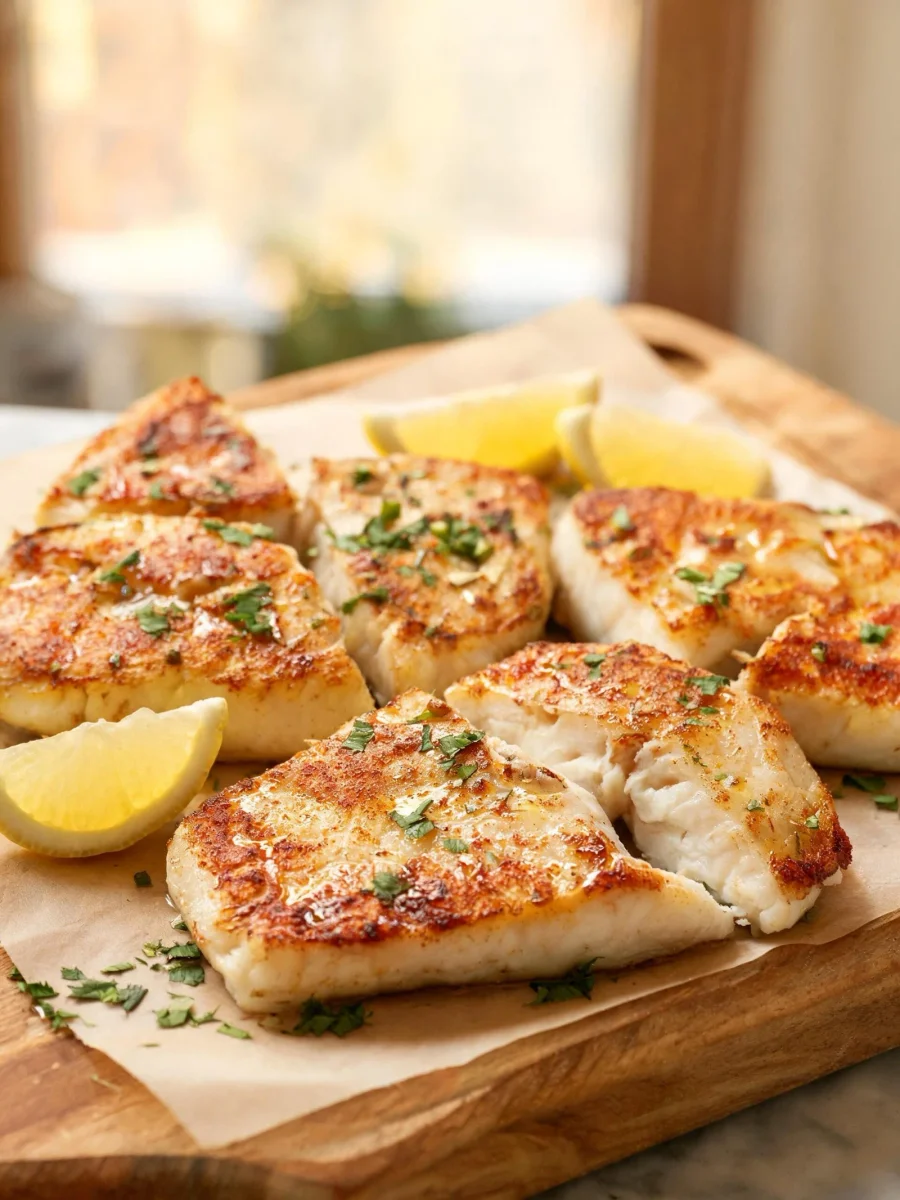
These air-fried halibut fillets are seasoned with smoked paprika, garlic and a little cayenne, then finished with butter and lemon. The quick method keeps the fish tender while giving it a savoury, lightly smoky coating.
Ingredients
- 4 fillets, about 170 g each (6 oz each)halibut
- 30 ml (2 tablespoons)olive oil
- 5 ml (1 teaspoon)garlic powder
- 5 ml (1 teaspoon)smoked paprika
- 2.5 ml (1/2 teaspoon)onion powder
- 2.5 ml (1/2 teaspoon)salt
- 1.25 ml (1/4 teaspoon)black pepper
- 1.25 ml (1/4 teaspoon), optionalcayenne pepper
- 14 g (1 tablespoon), cut into small piecesunsalted butter
- 1lemon, cut into wedges
- To taste, optionalfresh parsley, roughly chopped
Instructions
- 1
Dry the fish
Pat both sides of the halibut fillets dry with paper towels so the surface moisture is removed and the seasoning can adhere.
- 2
Season the fillets
Drizzle olive oil over both sides of each fillet and rub it in gently. Combine the garlic powder, smoked paprika, onion powder, salt, black pepper and cayenne, if using, in a small bowl, then season both sides of the fish evenly.
- 3
Preheat the air fryer
Heat the air fryer to 200°C (400°F) for about 3 minutes before adding the fish.
- 4
Arrange the fish
Set the seasoned fillets in the basket in one layer, leaving space between each piece. Do not stack or crowd them.
- 5
Air-fry the fillets
Cook at 200°C (400°F) for 10–14 minutes, depending on thickness. Fillets about 2 cm (3/4 inch) thick usually take 10–12 minutes; those closer to 2.5 cm (1 inch) take 12–14 minutes.
- 6
Check for doneness
Gently press the thickest part with a fork; the fish should flake apart easily. Its internal temperature should be 54–57°C (130–135°F).
- 7
Finish and serve
Remove the fillets from the air fryer and place a small piece of butter on each one straight away. Leave for 1 minute to melt, squeeze fresh lemon over the top, add parsley if using, and serve immediately.
What is air fryer halibut?
Halibut is a mild, firm white fish often prepared simply so its clean flavour stays at the centre of the dish. This American-style version uses an air fryer for a quick cook and a paprika-and-garlic seasoning for a savoury, gently smoky finish.
The fish is coated with oil before cooking and finished with butter and lemon. That combination adds flavour without masking the halibut.
Nutrition and macros by portion
The nutrition label shows one serving as written: 240 calories, 34g protein, 2g carbs, 11g fat.
| Portion | Adjustment | kcal | Protein | Carbs | Fat |
|---|---|---|---|---|---|
| Lighter | Use less butter | 168 kcal | 24g | 1g | 8g |
| This serving | As written | 240 kcal | 34g | 2g | 11g |
| Hungry | Add potatoes or rice | 360 kcal | 51g | 3g | 17g |
Halibut provides most of the protein, while olive oil and butter contribute most of the fat. The small amount of carbohydrate comes mainly from the seasonings and lemon. Pair a fillet with vegetables, and add a measured portion of potatoes or rice if you want more energy from the meal.
Why dry halibut first?
Surface moisture: patting the fillets dry helps the oil and spices cling rather than slide off. It also avoids adding extra moisture to the air fryer basket.
Building the seasoning
Smoked paprika: it gives the fish a mellow smoky note, while garlic and onion powders add savoury depth. Salt and black pepper round out the mix.
Cayenne: this is optional and brings a little heat. Leave it out for a milder result, or use the stated amount for a gentle kick.
Spacing and timing matter
Single layer: leave room around each fillet so hot air can circulate; if the pieces touch or overlap, they may cook unevenly. Cook in batches if all four will not fit with space between them.
Thickness: begin checking the thinner pieces around 10 minutes, and allow thicker fillets up to 14 minutes. The time range is more useful than relying on the clock alone.
How to tell when it is done
Flake test: gently press the thickest section with a fork. The fish should separate into flakes without feeling tough.
Temperature: the recipe gives a target of 54–57°C (130–135°F) in the thickest part. Check carefully so the thermometer does not touch the basket.
Finish with butter and lemon
Butter: add it as soon as the fish comes out so the residual heat melts it over the surface. The one-minute rest gives the butter time to coat the fillets.
Lemon and parsley: squeeze lemon over the fish just before serving for a fresh, bright contrast to the smoky seasoning. Parsley is optional.
What to serve alongside
Serve the halibut straight away with a simple vegetable side, such as green beans or a crisp salad. Potatoes, rice or bread also work well if you want a more filling plate.
Recipe notes & tips
- Pat the halibut dry on both sides before adding oil or seasoning.
- Mix the dry seasonings together first so they are easy to distribute evenly.
- Leave space around every fillet in the air fryer basket.
- Use the thickness of the fish to guide the cooking time.
- Add the butter immediately after cooking so it melts over the hot fish.
- Serve soon after adding the lemon for the freshest flavour.
Variations
- Milder seasoning: leave out the cayenne for a gentler flavour.
- More heat: keep the cayenne in the seasoning mix for a spicier finish.
- Herb finish: scatter the optional chopped parsley over the cooked fillets.
- Citrus swap: serve with lemon wedges and let everyone squeeze on as much juice as they like.
Common mistakes to avoid
- Skipping the drying step: damp fish can shed its seasoning, so pat both sides thoroughly with paper towels.
- Crowding the basket: overlapping fillets can cook unevenly, so leave space or cook in batches.
- Using one timing for every fillet: thickness changes the cooking time, so check thinner pieces earlier.
- Cooking by appearance alone: press the thickest part with a fork and check the internal temperature.
- Adding butter too early: it can run off during cooking, so place it on the fish immediately after removing it from the air fryer.
How to store
Refrigerate leftovers in an airtight container and use within 2 days. Reheat gently in the air fryer until warmed through, checking often to avoid drying out the fish.
Frequently asked questions
Can I use frozen halibut?
Thaw it fully before following this method, then pat it dry well. The stated cooking times are for thawed fillets.
Do I need to turn the fillets halfway through?
The method does not call for turning them; arrange the fish in a single layer and cook until done.
How long should I cook thinner fillets?
Fillets about 2 cm (3/4 inch) thick are expected to take around 10–12 minutes at 200°C (400°F). Check for flaking and the target internal temperature.
Can I leave out the cayenne?
Yes. It is optional, so omit it for a milder seasoning.
Can I prepare the seasoning in advance?
Yes. Mix the dry spices ahead of time and keep them covered; coat the fish with oil and season it just before cooking.
Cook it from the original
This recipe comes from bluerecipes.com. Their page has the author’s own photos, notes and tips — the best place to cook it from.
Open the recipe on bluerecipes.com