
Vegan Spring Rolls
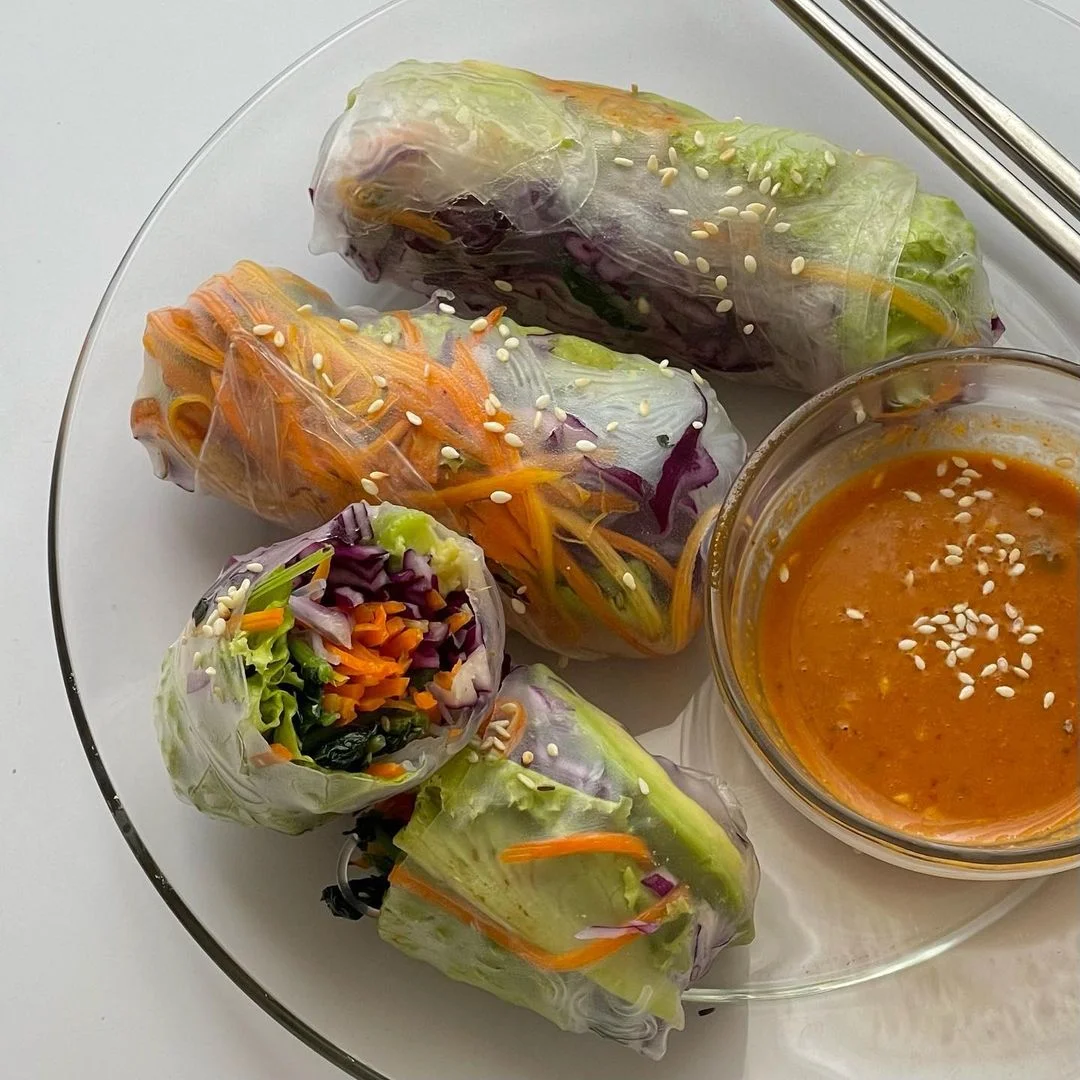
These vegan spring rolls wrap crisp vegetables, avocado and seasoned rice vermicelli in soft rice paper, with a quick gochujang-peanut dipping sauce. They make a fresh, hands-on meal that you can customise with the vegetables you have.
Ingredients
- As neededRice paper wrappers
- To tasteVegetables of your choice
- To tasteCarrots
- To tastePurple cabbage
- To tasteLettuce
- To tasteSpinach
- A pinchSalt
- To tasteSesame oil, for the spinach
- To tasteAvocado
- To tasteRice vermicelli noodles
- To tasteSesame oil, for the noodles
- To tasteSoy sauce, for the noodles
- 1 tbspGochujang
- 1 tbspPeanut butter
- 1/2 tbspSoy sauce, for the dipping sauce
- A splashHot water
Instructions
- 1
Soften the wrappers
Dip a rice paper wrapper in water until it softens.
- 2
Add the fillings
Place the vegetables, avocado and seasoned rice vermicelli on the softened wrapper.
- 3
Roll the wrappers
Fold and roll the rice paper around the fillings.
- 4
Mix the sauce
Combine the gochujang, peanut butter, 1/2 tbsp soy sauce and a splash of hot water.
- 5
Serve the rolls
Enjoy the spring rolls with the dipping sauce or another sauce of your choice.
What are vegan spring rolls?
Fresh spring rolls are rice-paper wrappers filled with vegetables and other ingredients, served uncooked rather than fried. They are common across several Southeast Asian cuisines, with fillings and sauces varying by region and cook.
This version pairs crunchy vegetables and creamy avocado with vermicelli noodles, then adds a spicy, savoury peanut dip. The mix of fresh textures makes each roll feel varied without needing a complicated filling.
Nutrition and macros by portion
The nutrition label shows one serving as written: 280 calories, 8g protein, 47g carbs, 8g fat.
| Portion | Adjustment | kcal | Protein | Carbs | Fat |
|---|---|---|---|---|---|
| Lighter | Use less vermicelli | 196 kcal | 6g | 33g | 6g |
| This serving | As written | 280 kcal | 8g | 47g | 8g |
| Hungry | Add more noodles | 420 kcal | 12g | 71g | 12g |
The vermicelli and rice paper provide most of the carbohydrates, while avocado and sesame oil contribute much of the fat. The vegetables add fibre, and the peanut butter and noodles provide some protein; soy sauce and gochujang contribute sodium. Pair a serving with extra vegetables or another protein-rich dish if you want a more filling, balanced plate.
Choosing the fillings
Crunchy vegetables: Carrots and purple cabbage give the rolls bite, while lettuce adds a softer, leafy layer. Cut the vegetables into pieces that are easy to tuck into the wrappers.
Greens and avocado: Spinach brings a tender, earthy element, and avocado makes the filling creamy. Blanch and season the spinach with a pinch of salt and sesame oil as specified.
Seasoning the noodles
Vermicelli: Cook or prepare the rice vermicelli according to its packet, then season it with sesame oil and soy sauce. The recipe does not specify quantities for these seasonings, so add them to taste.
Keep the noodles manageable: A modest bundle is easier to wrap than a large mound. Let excess moisture drain so the filling does not make the rice paper slippery.
Handling rice paper
Brief dip: Dip each wrapper in water until pliable, rather than leaving it submerged. It will continue to soften as you fill and roll it.
Gentle touch: Rice paper can tear if pulled or packed too tightly. Place the filling in a compact line and roll steadily, folding the sides in as you go.
Getting a good texture
Balanced filling: Combine crisp vegetables with the soft noodles and avocado so no one texture dominates. Avoid overfilling, which can split the wrapper or make the roll difficult to handle.
Serve promptly: The wrappers are at their most pleasant soon after assembly, when they are soft but not dried out. Keep the finished rolls covered while you make the rest.
Making the dipping sauce
Gochujang and peanut butter: Stir together 1 tbsp of each with 1/2 tbsp soy sauce. This gives the sauce a savoury, spicy base with a nutty finish.
Hot water: Add a splash and mix until the sauce reaches a consistency for dipping. Add only enough to loosen it, since the amount is not specified.
Serving the rolls
Serve the rolls with the gochujang-peanut sauce or another sauce you like. For a more substantial meal, pair them with extra vegetables or a bowl of soup.
Recipe notes & tips
- Prepare and season the filling components before wetting the rice paper.
- Dip wrappers one at a time so they do not stick together.
- Arrange the filling in a narrow line, leaving room to fold in the sides.
- Keep completed rolls covered while assembling the remaining ones.
- Taste the dipping sauce after mixing and adjust its thickness with a little more hot water if needed.
Variations
- Extra crunch: Add more finely cut carrot or purple cabbage.
- More greens: Increase the lettuce or spinach in each roll.
- Creamier filling: Use a little more avocado.
- Milder dip: Reduce the gochujang in the sauce.
- Alternative sauce: Serve with another dipping sauce of your choice.
Common mistakes to avoid
- Soaking the wrapper too long: Dip it only until pliable, as it softens further while you work.
- Overfilling: Use a smaller amount of each filling so the wrapper can close securely.
- Wet filling: Drain the noodles and blanched spinach well to help prevent soggy rolls.
- Tearing the rice paper: Handle it gently and avoid pulling it tight around the filling.
- Making them too far ahead: Assemble close to serving time and keep the rolls covered.
How to store
Store leftover rolls in an airtight container in the fridge and eat them within a day, as rice paper can dry out and become firm. Keep the dipping sauce covered and separate; these rolls are best served cold or at room temperature rather than reheated.
Frequently asked questions
Do I need to cook the rice paper?
No. Dip each wrapper in water until pliable, then fill and roll it.
Can I use different vegetables?
Yes. The recipe allows vegetables of your choice, so use suitable crisp or leafy vegetables you enjoy.
How do I stop the rolls sticking together?
Keep them separated while assembling and avoid stacking them while the wrappers are wet. Cover the finished rolls so they do not dry out.
Can I make the dipping sauce less thick?
Yes. Stir in a little more hot water until it is easy to dip into.
Can I prepare the rolls ahead?
They are best assembled shortly before serving. If you need to make them ahead, cover them well and keep them chilled for a short time.
Cook it from the original
This recipe comes from fooooods.com. Their page has the author’s own photos, notes and tips — the best place to cook it from.
Open the recipe on fooooods.com