
4 Ingredient Christmas Cakes
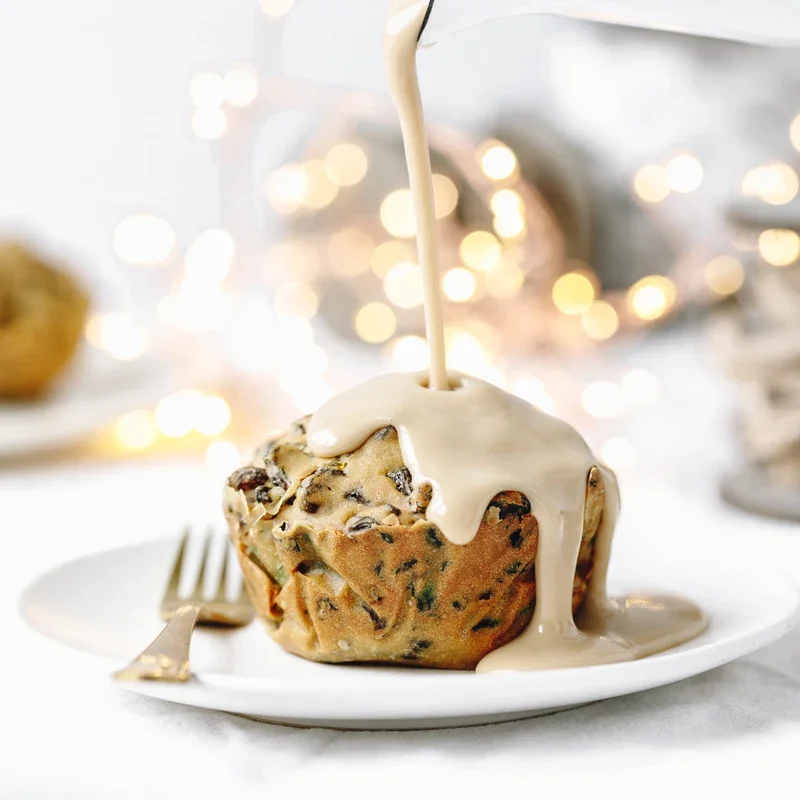
These individual Christmas fruit cakes pair dried fruit and coffee with a simple flour-and-milk batter, served with a plant-based salted caramel custard. They make a festive dessert for a small gathering, though the supplied recipe details do not include baking or custard instructions.
Ingredients
- 450 gChristmas fruit mix
- 60 mlcold brew or cooled coffee
- 1 cup (250 ml)self-raising flour or gluten-free flour
- 200 mlnut or oat milk
- 1 cup (250 ml)coconut milk
- 3 tbsp (45 ml)coconut sugar
- 1/4 tspsalt
- 1 1/2 tbsp (22.5 ml)cornflour
- 3/4 cup (187.5 ml)unsweetened almond or oat milk
- 1/2 tspvanilla extract
What are Christmas cakes?
Christmas cakes are festive bakes built around dried fruit, a familiar feature of holiday baking in New Zealand and elsewhere. This version is portioned into six individual cakes and uses coffee in the fruit mixture.
The recipe also lists a salted caramel-style custard made with coconut milk and sugar. The supplied details give the ingredients but not the preparation method, so baking times and cooking cues cannot be confirmed.
Nutrition and macros by portion
The nutrition label shows one serving as written: 425 calories, 6g protein, 77g carbs, 11g fat.
| Portion | Adjustment | kcal | Protein | Carbs | Fat |
|---|---|---|---|---|---|
| Lighter | Less custard per cake | 298 kcal | 4g | 54g | 8g |
| This serving | As written | 425 kcal | 6g | 77g | 11g |
| Hungry | Add another cake | 638 kcal | 9g | 116g | 17g |
Most of the carbohydrates come from the dried fruit, flour and coconut sugar; the coconut milk contributes much of the fat, while the recipe has only modest protein from the flour and plant milks. Serve a cake with a moderate amount of custard and add fresh fruit to round out the plate.
The fruit and coffee
Fruit mix: the 450 g of dried fruit is the main component, bringing sweetness and a chewy texture to each cake.
Coffee: cold brew or cooled coffee is listed alongside the fruit. The recipe does not say whether to soak the fruit, so follow the original publisher’s instructions for how to combine them.
Choosing the flour
Self-raising flour: this is the standard option named for the cakes. No separate raising agent is listed.
Gluten-free flour: this is offered as an alternative, but gluten-free blends can behave differently. Use a blend intended for baking and check its packet guidance if the original method does not provide further detail.
Getting the milk choice right
Cake batter: the recipe allows nut or oat milk. Choose one option and use the stated 200 ml.
Custard: unsweetened almond or oat milk is listed separately from the coconut milk. Keeping it unsweetened helps preserve the intended balance with the coconut sugar.
What the custard ingredients do
Coconut milk: this provides the custard’s rich base. The recipe does not specify whether to use canned or carton coconut milk, which can vary in thickness.
Cornflour: this is the thickener, while coconut sugar supplies sweetness and salt gives the caramel-style sauce its savoury edge. Vanilla adds flavour, but the method and cooking cues are not included.
Serving the cakes
The recipe is intended to make six individual cakes, with the custard as an accompaniment. Since no serving or plating instructions are supplied, add the custard to taste once both components are prepared according to the original method.
A tart fruit accompaniment can offset the sweetness, while tea or coffee makes a simple drink pairing.
Recipe notes & tips
- Measure the flour by volume as listed, and avoid packing it tightly into the cup.
- Choose either nut or oat milk for each part of the recipe rather than combining both.
- Use unsweetened plant milk in the custard as specified.
- Check whether your dried fruit mix contains large pieces and chop them smaller if the original method calls for an even mixture.
- Look up the publisher’s original method before baking, as the supplied recipe text contains no preparation steps.
Variations
- Gluten-free option: use the listed gluten-free flour in place of self-raising flour.
- Oat version: choose oat milk for both the cakes and custard.
- Almond version: choose nut milk for the cakes and almond milk for the custard.
- Coffee choice: use cooled brewed coffee instead of cold brew.
- Vanilla finish: add the listed vanilla to the custard as directed by the original method.
Common mistakes to avoid
- Guessing the baking time: the supplied recipe does not state one, so check the original method before starting.
- Using hot coffee: the ingredient specifies cold brew or cooled coffee; let freshly brewed coffee cool first.
- Adding sweetened custard milk: use unsweetened almond or oat milk as listed.
- Assuming all coconut milk is alike: check the product, as carton and canned versions can differ in thickness.
- Treating the ingredient list as a full method: it does not explain the mixing, baking or custard-making steps.
How to store
The supplied recipe does not give storage guidance. Once prepared, keep the cakes and custard covered and refrigerated, and consult the original publisher’s instructions for a reliable storage time and reheating advice.
Frequently asked questions
How many cakes does this recipe make?
It lists six servings, described as individual cakes.
Can I make the cakes gluten-free?
Yes. The ingredient list offers gluten-free flour as an alternative, but it does not specify a particular blend.
Can I use oat milk?
Yes. Oat milk is listed as an option for both the cakes and the custard.
Is the coffee meant to soak the fruit?
The ingredients list coffee with the fruit, but the supplied text does not explain how they are combined. Check the original method for that detail.
How do I cook the custard?
The ingredients are provided, but there are no preparation instructions in the supplied recipe. Refer to the publisher’s method for the cooking sequence and doneness cues.
How long should I bake the cakes?
No oven temperature or baking time was provided. Use the original publisher’s instructions rather than guessing.
Cook it from the original
This recipe comes from goodfor.co.nz. Their page has the author’s own photos, notes and tips — the best place to cook it from.
Open the recipe on goodfor.co.nz