
Low FODMAP Spaghetti Bolognese
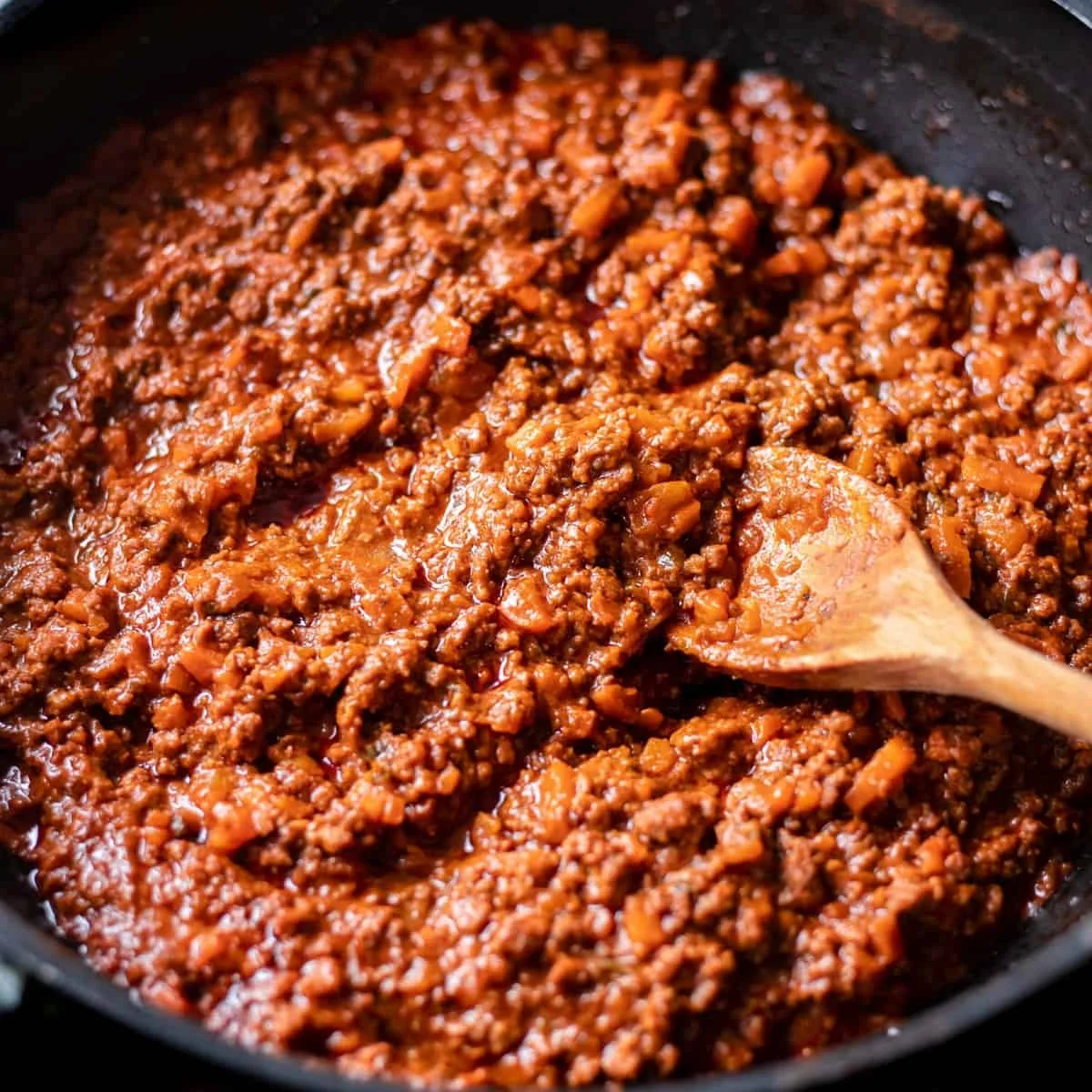
This is a rich, slow-simmered Bolognese sauce made with pork, beef, pancetta, passata and lactose-free milk. The recipe offers a quicker simmer or a longer, gentler cook for a thicker, more developed sauce; spaghetti is not included in the ingredient list.
Ingredients
- 15 mlgarlic-infused olive oil
- 15 mlunsalted butter
- 482 g (17 oz)minced pork
- 482 g (17 oz)minced beef
- 170 g (6 oz), dicedpancetta
- 2.5 mlsalt
- 1.25 mlblack pepper
- 5, finely choppedspring onions, green parts only
- 1 large, finely choppedcarrot
- 240 ml (1 cup)dry red wine
- 320 ml (1⅓ cups)tomato passata
- 240 ml (1 cup)lactose-free milk
- 240 ml (1 cup)beef stock
Instructions
- 1
Brown the meat
Heat the oil and butter in a large, wide pan or large frying pan over medium-high heat. Once the butter has melted and is bubbling, add the beef, pork, pancetta, salt and pepper. Cook, breaking up the meat as it browns.
- 2
Cook the vegetables
Stir in the green parts of the spring onions and the carrot. Cook for 3 minutes, mixing well.
- 3
Add the liquids
Pour in the wine and let it cook for about 3 minutes, reducing slightly. Add the passata, milk and beef stock, then mix well.
- 4
Simmer the sauce
For the quicker method, bring the sauce to a simmer, then reduce the heat to medium so it bubbles gently. Cook uncovered for 20–30 minutes, stirring occasionally. Add water if the sauce becomes thicker than you like.
- 5
Slow simmer
For the longer method, cover the pan once all the ingredients are in and simmer over very low heat for 2–2½ hours, stirring about every 30 minutes. Remove the lid and simmer for 20 minutes to thicken the sauce.
- 6
Adjust seasoning
When the sauce is ready, taste it and adjust the seasoning to your preference.
What is Bolognese?
Bolognese is a meat-based sauce associated with Bologna in northern Italy, traditionally cooked slowly until the ingredients meld into a savoury, cohesive sauce. This version combines beef and pork with pancetta, vegetables, wine, passata and milk.
The recipe is titled for spaghetti, but the listed ingredients and method make the sauce only; spaghetti is not specified. Its low-FODMAP adaptations include garlic-infused oil and the green parts of spring onions.
Nutrition and macros by portion
The nutrition label shows one serving as written: 793 calories, 41g protein, 12g carbs, 60g fat.
| Portion | Adjustment | kcal | Protein | Carbs | Fat |
|---|---|---|---|---|---|
| Lighter | Use leaner mince | 555 kcal | 29g | 8g | 42g |
| This serving | As written | 793 kcal | 41g | 12g | 60g |
| Hungry | Serve a larger portion | 1190 kcal | 62g | 18g | 90g |
The protein comes mainly from the beef, pork and pancetta; most of the fat comes from those meats, the oil and the butter. Carbohydrate comes principally from the passata, carrot and wine, while spaghetti is not included in the listed ingredients. For a more balanced plate, serve the sauce with vegetables alongside; the supplied nutrition figures are for one serving as reported and do not specify pasta.
The meat and pancetta
Three meats: beef and pork provide the main body, while diced pancetta brings a salty, savoury note. Break the mince into small pieces as it browns so it is spread evenly through the sauce.
Brown in the pan: give the meat time to colour before adding the vegetables. This stage builds flavour and helps avoid a sauce made up of pale, steamed mince.
Building the flavour
Green spring onion: use only the green parts, as specified, and chop them finely so they soften quickly alongside the carrot.
Wine and passata: let the wine reduce for about 3 minutes before adding the passata, milk and stock. That short reduction allows some of the wine’s sharpness to cook off.
Choosing a simmer
Quicker route: simmer uncovered for 20–30 minutes, stirring from time to time. Keep the bubbles gentle and add water if the sauce thickens too much for your preference.
Longer route: cover and simmer over very low heat for 2–2½ hours, stirring about every 30 minutes, then uncover for 20 minutes. The final uncovered simmer reduces the sauce to a thicker consistency.
Checking the texture
Gentle bubbles: once the sauce is simmering, reduce the heat so it bubbles softly rather than boiling vigorously. A hard boil can make it reduce too quickly and needs more frequent attention.
Your preferred thickness: the recipe gives water as an option during the quicker method if the sauce gets too thick. In the longer method, the uncovered finishing time is there to thicken it.
Serving the sauce
With spaghetti: serve the finished sauce with spaghetti if you want the dish named in the title, but note that pasta is not included in the ingredient list or method. Choose pasta separately and cook it according to its packet instructions.
At the table: a simple green salad or cooked vegetables can accompany the pasta and sauce. Taste the sauce once more before serving and adjust the seasoning as directed.
Recipe notes & tips
- Use a wide pan so the meat can brown rather than crowd together.
- Break up the mince as it cooks for an even texture in the finished sauce.
- Keep the simmer gentle, particularly during the longer cooking option.
- Stir the sauce occasionally to help it cook evenly.
- Add water during the quicker simmer if the sauce becomes thicker than you prefer.
- Taste and adjust the seasoning once the sauce has finished cooking.
Variations
- Long simmer: use the covered 2–2½-hour method, then uncover for 20 minutes to thicken.
- Quick version: simmer uncovered for 20–30 minutes, stirring occasionally.
- More vegetables: serve the sauce with extra cooked vegetables on the side.
- Pasta pairing: serve with spaghetti cooked separately, as pasta is not listed in this recipe.
Common mistakes to avoid
- Adding vegetables too soon: brown the meat first, then add the spring onion greens and carrot.
- Boiling hard: lower the heat after the sauce reaches a simmer so it bubbles gently.
- Letting it get too thick: during the quicker method, add water if needed.
- Skipping the final reduction: for the slow method, remove the lid and simmer for 20 minutes to thicken.
- Forgetting to stir: stir occasionally during the quick simmer and about every 30 minutes during the slow one.
How to store
Cool the sauce and refrigerate it in a covered container, using it within 3 days. Reheat gently in a saucepan until piping hot, stirring as it warms; add a splash of water if it has thickened.
Frequently asked questions
Is spaghetti included in the recipe?
No. The title mentions spaghetti, but the ingredients and method cover the sauce only. Cook and serve spaghetti separately if desired.
How long does the quicker version take to simmer?
Simmer it uncovered for 20–30 minutes, stirring occasionally. Add water if it becomes thicker than you like.
How long is the slow-simmer option?
Cover and simmer over very low heat for 2–2½ hours, stirring about every 30 minutes. Then uncover and simmer for a further 20 minutes.
Can I use a different pan?
The method calls for a large, wide pan or a large frying pan. Choose one large enough to hold the meat and liquids comfortably.
When should I adjust the seasoning?
Taste the sauce when it is done and adjust the seasoning to your preference.
Cook it from the original
This recipe comes from glutenfreestories.com. Their page has the author’s own photos, notes and tips — the best place to cook it from.
Open the recipe on glutenfreestories.com