
Grilled Dijon Basil Chicken
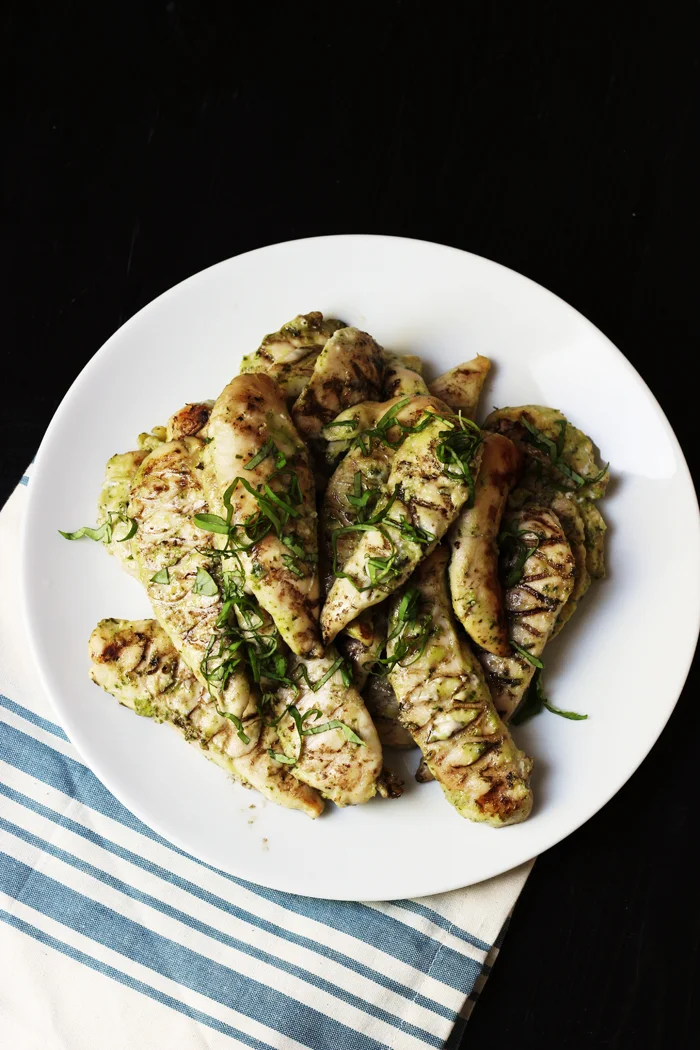
Grilled Dijon Basil Chicken is a summery American-style dish of tender chicken coated in a fresh basil, red wine vinegar and Dijon marinade. Grill it outdoors or on a grill pan, then serve it hot, warm or cold.
Ingredients
- 15 g (⅓ cup)fresh basil, chopped
- 79 ml (⅓ cup)red wine vinegar
- 79 ml (⅓ cup)olive oil
- 5 ml (1 tsp)Dijon mustard
- to tasteblack pepper
- 1 pinchsalt
- 1.13 kg (2.5 lb)chicken tenders
Instructions
- 1
Blend the marinade
Add the basil, red wine vinegar, olive oil, Dijon mustard, black pepper and salt to a blender or food processor. Blend until very smooth.
- 2
Marinate the chicken
Put the chicken in a zip-top bag or lidded dish and pour over the marinade. Seal the bag and massage it gently so the chicken is coated. Set the bag on a tray to catch drips and chill in the fridge for 2 to 4 hours.
- 3
Grill until cooked
Heat an outdoor grill or indoor grill pan. Take the chicken out of the marinade and discard the marinade. Grill the chicken until cooked through and its internal temperature reaches 74°C (165°F). Serve hot, warm or cold.
What is grilled Dijon basil chicken?
This American-style grilled chicken pairs lean tenders with a sharp, herb-filled marinade. Its summery character comes from fresh basil, vinegar and olive oil, with Dijon mustard adding a savoury note.
The recipe works by blending the marinade until smooth, then giving the chicken time to take on its flavour before grilling. The tenders cook quickly and can be served at different temperatures, making them handy for a summer meal.
Nutrition and macros by portion
The nutrition label shows one serving as written: 244 calories, 30g protein, 1g carbs, 13g fat.
| Portion | Adjustment | kcal | Protein | Carbs | Fat |
|---|---|---|---|---|---|
| Lighter | Use less olive oil | 171 kcal | 21g | 1g | 9g |
| This serving | As written | 244 kcal | 30g | 1g | 13g |
| Hungry | Add potatoes and salad | 366 kcal | 45g | 2g | 20g |
The chicken provides most of the protein, while the olive oil is the main source of fat; the basil, vinegar and mustard contribute little carbohydrate. For a balanced plate, serve a portion with vegetables and a carbohydrate-rich side such as potatoes or bread.
The marinade ingredients
Fresh basil: use chopped leaves and blend them with the other ingredients so the herb is distributed throughout the marinade.
Vinegar and mustard: red wine vinegar brings acidity, while Dijon gives the mixture a tangy, savoury edge.
Olive oil: it rounds out the sharp flavours and helps the marinade coat the chicken. Blend until no large pieces of basil remain.
Marinating safely
Chill the chicken for 2 to 4 hours in a sealed bag or covered dish. Resting the bag on a tray helps contain any leaks in the fridge.
Discard the marinade after removing the raw chicken. Do not use it as a serving sauce.
Getting the grill ready
Heat the outdoor grill or grill pan before adding the chicken. A hot cooking surface helps the tenders start grilling promptly.
Lift the chicken from the marinade and let excess drip away before placing it on the grill. Arrange the pieces so they are not crowded.
Doneness and texture
Temperature check: the recipe calls for an internal temperature of 74°C (165°F). Check a tender at its thickest point with a food thermometer.
Keep an eye on the pieces as they cook, since tenders can vary in size. Take them off once they are cooked through rather than leaving them on the grill unnecessarily.
Serving ideas
Serve the chicken hot from the grill, warm after resting, or cold as part of a picnic-style meal. Its basil and vinegar flavour pairs well with simple sides.
Try it alongside grilled vegetables, a green salad or potatoes. For a more substantial plate, add a grain or bread.
Recipe notes & tips
- Blend the marinade until smooth so the basil is evenly spread through it.
- Keep the chicken covered and refrigerated for the full 2 to 4 hours of marinating.
- Place the bag on a tray in the fridge in case any marinade escapes.
- Heat the grill before adding the chicken.
- Use a food thermometer to check for 74°C (165°F) at the thickest point.
- Discard the marinade that has been in contact with raw chicken.
Variations
- Add garlic: blend a peeled garlic clove into the marinade for a deeper savoury flavour.
- Use lemon: replace some of the red wine vinegar with lemon juice for a brighter citrus note.
- Try another herb: blend in parsley alongside the basil for a different fresh-herb profile.
- Use chicken breast: cut it into similarly sized strips so the pieces cook more evenly.
- Make it indoors: cook the tenders on a preheated grill pan when outdoor grilling is not practical.
Common mistakes to avoid
- Skipping the chill: marinate the chicken in the fridge for 2 to 4 hours rather than leaving it at room temperature.
- Using the marinade as a sauce: discard it after it has touched raw chicken.
- Starting on a cool grill: heat the grill or grill pan before adding the tenders.
- Guessing doneness: check that the thickest part reaches 74°C (165°F).
- Crowding the grill: leave space between pieces so they can cook on the hot surface.
How to store
Refrigerate leftover cooked chicken in a covered container within 2 hours and use within 3 to 4 days. Reheat until steaming hot, or serve it cold from the fridge.
Frequently asked questions
How long should I marinate the chicken?
Chill it for 2 to 4 hours, as directed. Keep the chicken covered or sealed in the fridge while it marinates.
Can I use a grill pan instead of an outdoor grill?
Yes. Heat an indoor grill pan and cook the chicken on it, checking that the thickest part reaches 74°C (165°F).
How do I know when the chicken is done?
Check the internal temperature at the thickest point with a food thermometer; it should reach 74°C (165°F).
Can I serve the chicken cold?
Yes. The recipe can be served hot, warm or cold, so chilled leftovers also work well in a salad or packed lunch.
Can I keep the marinade to serve with the chicken?
No. Discard the marinade after it has been in contact with raw chicken.
Cook it from the original
This recipe comes from goodcheapeats.com. Their page has the author’s own photos, notes and tips — the best place to cook it from.
Open the recipe on goodcheapeats.com