
Gluten Free Naan Bread - fluffy & tender
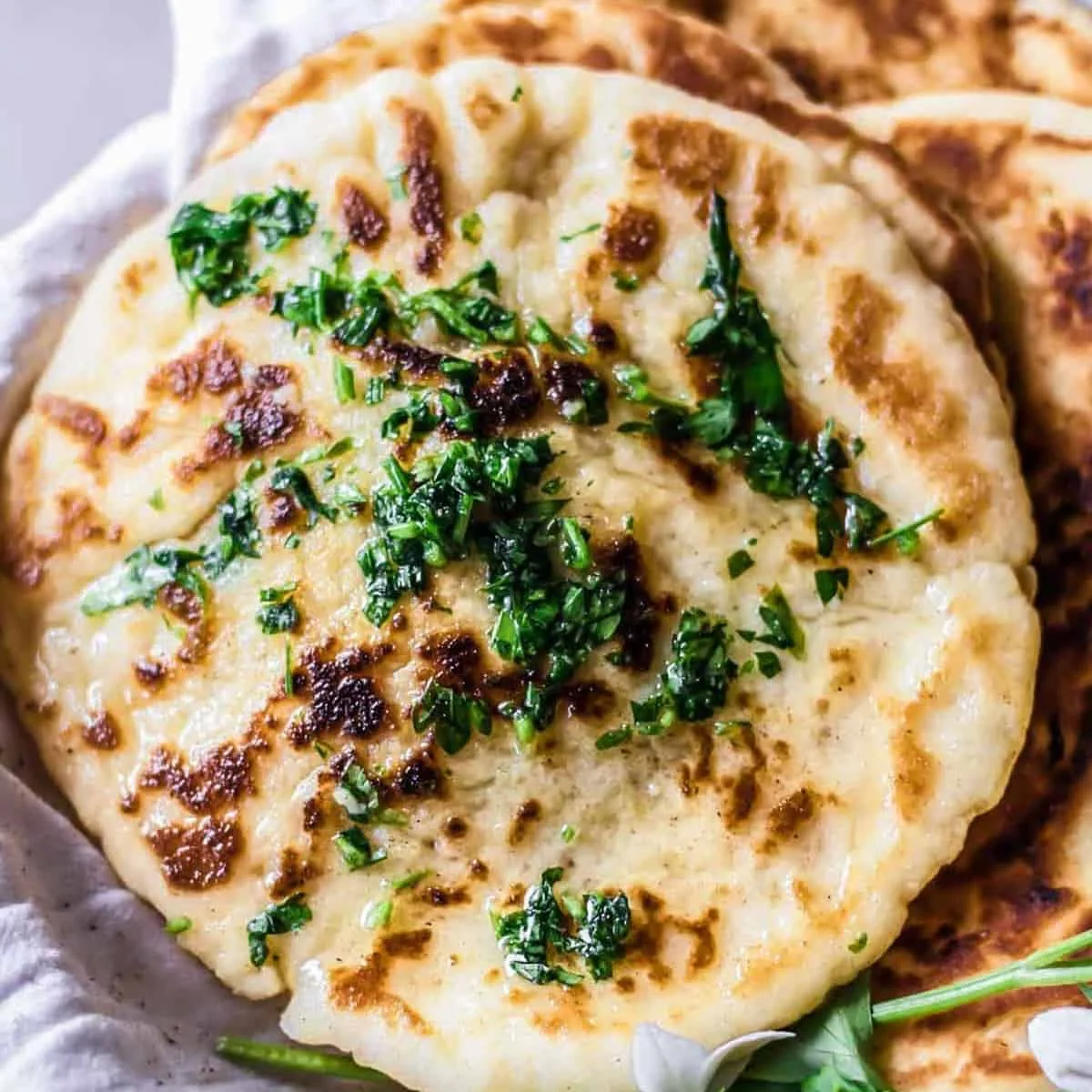
This gluten-free naan is a soft, chewy flatbread cooked in a hot skillet until it develops brown blisters. Serve it warm alongside curries, or brush it with garlic butter or herb oil for extra flavour.
Ingredients
- 300 g (2½ cups)gluten-free flour
- 25 g (2 tbsp)white granulated sugar
- 7 g (2¼ tsp)instant yeast
- 80 g (⅓ cup), at room temperaturelactose-free yoghurt (or plant-based yoghurt)
- 42 g (3 tbsp), melted or softenedbutter (or plant-based butter or olive oil)
- 180 ml (¾ cup), warmwater
- 3 g (½ tsp)salt
- as neededoil or extra butter, for frying
- 42 g (3 tbsp)butter or olive oil
- 1 clovegarlic
- to tastefresh parsley, rosemary or other herbs of choice
Instructions
- 1
Mix the dough
Whisk the flour, yeast, salt and sugar together in a medium bowl. Add the yoghurt, melted butter and water, then mix by hand or with a stand mixer fitted with a paddle attachment on medium speed for about 3 minutes. The dough should be slightly sticky but manageable enough to shape into a ball.
- 2
Let it rise
Gather the dough into a ball and cover it. Leave it in a warm place until it has doubled in volume, about 40–60 minutes depending on the room.
- 3
Shape the naan
Turn the risen dough onto a lightly floured surface and dust it with a little more flour. Divide it into 8 pieces, then roll each one into an oval about 1 cm (⅜ inch) thick. Avoid rolling the pieces too thick, as they may not bubble properly.
- 4
Cook the naan
Heat a cast-iron skillet over high heat and lightly grease it with oil to prevent sticking. Cook one naan at a time: fry the first side for about 30 seconds, until it starts to bubble, then flip and cook until the second side is browned and slightly charred. Repeat with the remaining dough.
- 5
Keep them covered
Stack the cooked naan and cover the stack with a tea towel to help keep the breads fresh.
- 6
Brush with butter
Brush the naan with garlic oil or melted butter.
- 7
Serve warm
Serve the naan while it is warm.
- 8
Heat the fat
To make the garlic butter or oil, put the butter or olive oil in a pan over medium heat.
- 9
Add garlic and herbs
Roughly chop the garlic and add it to the pan. Fry over medium heat, stirring frequently, until the garlic starts to soften. Remove all the garlic pieces, then add the herbs of your choice.
What is naan?
Naan is a leavened flatbread associated with South Asian cooking and often served in Indian restaurants. This version uses gluten-free flour and yeast to recreate a soft, tender bread with a chewy middle.
A hot skillet gives the naan its browned patches and bubbles without needing an oven. The recipe also offers a quick garlic-and-herb finish.
Nutrition and macros by portion
The nutrition label shows one serving as written: 228 calories, 6g protein, 32g carbs, 10g fat.
| Portion | Adjustment | kcal | Protein | Carbs | Fat |
|---|---|---|---|---|---|
| Lighter | Use less garlic butter | 160 kcal | 4g | 22g | 7g |
| This serving | As written | 228 kcal | 6g | 32g | 10g |
| Hungry | Serve an extra naan | 342 kcal | 9g | 48g | 15g |
The flour and sugar provide most of the carbohydrates, while the butter or oil contributes much of the fat. The yoghurt and flour provide some protein; serve a naan with a protein-rich curry and vegetables to make a more balanced plate.
Choosing the ingredients
Gluten-free flour: Use a blend intended for baking, since different blends can absorb liquid differently. The recipe includes no binder, so the dough may handle differently from wheat-based naan.
Yoghurt and butter: Room-temperature yoghurt and melted or softened butter are mixed into the dough for tenderness. Plant-based alternatives are suggested for a vegan version.
Getting the dough ready
Mixing: Knead or mix for about 3 minutes, stopping when the dough is cohesive and just sticky enough to form a ball. A stand mixer with a paddle attachment is one option, but mixing by hand also works.
Rising: Keep the covered dough somewhere warm until it doubles in volume. The stated rise is 40–60 minutes, so allow for that even though the listed total time is 25 minutes.
Rolling for bubbles
Even portions: Divide the dough into 8 pieces so the breads are similar in size and cook at a similar pace.
Thin ovals: Roll each piece to about 1 cm thick. The method warns that thicker pieces may not bubble, so aim for an even thickness rather than leaving a bulky centre.
Cooking in the skillet
Hot pan: Heat the cast-iron skillet over high heat and grease it lightly. The surface should be hot before each piece goes in, so the dough begins to bubble quickly.
Doneness cues: Cook the first side for about 30 seconds, until bubbles begin to appear. After flipping, look for browning and a few slightly charred spots on the other side.
Garlic butter or oil
Gentle frying: Warm the butter or olive oil over medium heat, then stir the roughly chopped garlic frequently as it softens. Remove all the garlic pieces before adding the fresh herbs, as directed.
Finish: Brush the naan with garlic oil or melted butter while it is warm. Keep the cooked breads under a tea towel as you work through the batch.
What to serve with naan
Serve the naan warm with a curry, lentil dish or other meal that has a sauce to scoop up. Its soft texture also makes it useful as a base for dips.
For a fuller plate, pair it with a protein-rich curry or pulses and a serving of vegetables. The garlic-and-herb topping adds flavour without needing another side.
Recipe notes & tips
- Check that your gluten-free flour blend is suitable for yeast breads.
- Keep the dough covered while it rises so its surface does not dry out.
- Dust the work surface lightly; too much extra flour can make the naan dry.
- Roll the pieces evenly so they cook at a similar rate.
- Cook the naan one at a time in the hot, lightly greased skillet.
- Cover the cooked stack with a tea towel while frying the remaining pieces.
Variations
- Vegan dough: Use plant-based yoghurt and plant-based butter or olive oil as suggested.
- Herb finish: Choose parsley, rosemary or another fresh herb for the garlic oil.
- Plain naan: Leave off the garlic butter or oil and serve the breads as they are.
- Olive oil finish: Use olive oil in place of butter for the topping.
- Extra garlic: Keep the garlic flavour in the oil by brushing it on after removing the softened pieces, as the method directs.
Common mistakes to avoid
- Dough too dry: Mix until it is slightly sticky and can still be gathered into a ball.
- Skipping the rise: Wait for the dough to double in volume before shaping.
- Rolling too thick: Aim for about 1 cm so the naan can bubble as it cooks.
- Cool skillet: Heat the pan over high heat before cooking each naan.
- Overcooking the garlic: Stir frequently over medium heat and remove it once it starts to soften.
- Leaving naan uncovered: Keep the cooked breads under a tea towel to help them stay fresh.
How to store
Let leftover naan cool, then store it in an airtight container at room temperature for up to 2 days or in the fridge for up to 4 days. Reheat briefly in a hot, dry skillet until warm and soft.
Frequently asked questions
How long does the dough need to rise?
The method gives a rise time of 40–60 minutes, or until the dough has doubled in volume. The time can vary with the warmth of your kitchen.
Why is my naan not bubbling?
The dough may have been rolled too thick, or the skillet may not have been hot enough. Roll to about 1 cm and preheat the pan over high heat.
Can I make this naan vegan?
Yes. The recipe suggests plant-based yoghurt and plant-based butter or olive oil in place of the dairy ingredients.
Can I use a different gluten-free flour blend?
You can use another gluten-free flour blend, but blends vary in how much liquid they absorb. Aim for dough that is slightly sticky yet can be gathered into a ball.
Can I prepare the garlic topping ahead?
The method makes the topping on the hob shortly before brushing it over the naan. If you make it ahead, cool and refrigerate it, then warm it gently before use.
How do I know when each naan is cooked?
The first side should start to bubble after about 30 seconds. After turning, cook until the other side is browned with a few slightly charred spots.
Cook it from the original
This recipe comes from glutenfreestories.com. Their page has the author’s own photos, notes and tips — the best place to cook it from.
Open the recipe on glutenfreestories.com