
Cinnamon Sugar Covered Baked Donuts
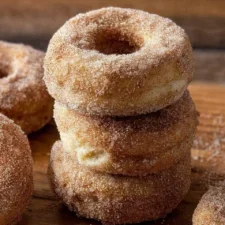
These American-style baked doughnuts are made with a soft, yeast-raised dough and finished with a cinnamon-sugar coating. They take a little time to rise, but the ingredient list is straightforward and makes 12 doughnuts.
Ingredients
- 320 g (1 1/3 cups), warmed to 35–41°C (95–105°F)whole milk
- 2 teaspoonsinstant yeast
- 57 g (1/4 cup / 1/2 stick), meltedunsalted butter
- 135 g (2/3 cup)granulated sugar
- 2 large, at room temperatureeggs
- 1 teaspoonkosher salt
- 1/4 teaspoonnutmeg
- 560 g (4 1/2 cups), plus extra if neededplain flour
- 57 g (1/4 cup / 1/2 stick), meltedunsalted butter
- 200 g (1 cup)granulated sugar
- 1 tablespoonground cinnamon
Instructions
- 1
Wake the yeast
Pour the warm milk into the bowl of a stand mixer and stir in the yeast. Leave it for 3–5 minutes, until foamy.
- 2
Mix the wet ingredients
Add the melted butter, sugar, eggs, salt and nutmeg, then mix until combined.
- 3
Add the flour
With the mixer on low, gradually add 560 g (4 1/2 cups) flour. Mix until a soft dough forms, adding extra flour if needed until the dough pulls away from the bowl's sides.
- 4
Knead the dough
Knead in the mixer for 5–6 minutes, until smooth and elastic. The dough should feel soft and slightly tacky, rather than very sticky.
- 5
Let it rise
Transfer the dough to a greased bowl, cover it and leave it in a warm place for about 1 hour, or until doubled in size.
What are cinnamon sugar baked doughnuts?
Doughnuts are a familiar American bakery treat, often made from yeast-raised dough and finished with a sweet coating. This version uses a soft, enriched dough with milk, eggs and butter, then pairs it with cinnamon and sugar.
The method provided covers mixing, kneading and the first rise. It does not include instructions for shaping, baking or applying the coating, so those finishing details are not specified here.
Nutrition and macros by portion
The nutrition label shows one serving as written: 250 calories, 4g protein, 35g carbs, 10g fat.
| Portion | Adjustment | kcal | Protein | Carbs | Fat |
|---|---|---|---|---|---|
| Lighter | Smaller doughnut portion | 175 kcal | 3g | 25g | 7g |
| This serving | As written | 250 kcal | 4g | 35g | 10g |
| Hungry | Larger doughnut portion | 375 kcal | 6g | 53g | 15g |
The flour and sugar provide most of the carbohydrates, while the butter contributes much of the fat; eggs and milk supply some protein. Pair a doughnut with yoghurt or fruit if you want something more substantial alongside it.
Choosing the ingredients
Warm milk: Keep it within 35–41°C (95–105°F) as listed. Milk that is too hot can harm the yeast, while milk that is too cool may take longer to become foamy.
Flour: Add the 560 g gradually and keep extra flour nearby. The dough should pull away from the bowl but remain soft and slightly tacky.
Cinnamon sugar: The final two ingredients are intended for the coating. Keep the cinnamon and sugar together for an even flavour when the doughnuts are ready to finish.
Getting the dough right
Yeast mixture: Give the milk and instant yeast 3–5 minutes to become foamy before continuing. This is the cue in the method that the mixture is ready for the other ingredients.
Kneading: Mix for 5–6 minutes, stopping when the dough looks smooth and feels elastic. Add extra flour only if the dough remains heavily sticky or clings to the bowl instead of pulling away.
The first rise
Warm spot: Cover the greased bowl and leave it somewhere warm for about 1 hour. The stated endpoint is a dough that has doubled in size, so use that cue as well as the timing.
Room-temperature eggs: Bringing the eggs to room temperature before mixing helps them combine more readily with the other ingredients.
Butter and texture
First measure: The initial 57 g of melted butter goes into the dough with the sugar, eggs, salt and nutmeg. It contributes to the dough's enriched, tender character.
Second measure: A separate 57 g of melted butter is listed for finishing, followed by the cinnamon and sugar. Keep this measure apart from the butter used in the dough.
Planning the finish
The listed total time is 35 minutes, but the method also specifies about 1 hour for the first rise. Allow for that rise when planning, and note that the supplied directions do not give the remaining preparation or baking times.
No serving suggestion is included in the method. A simple drink such as coffee, tea or milk makes an easy accompaniment.
Recipe notes & tips
- Warm the milk to the specified range before adding the yeast.
- Use room-temperature eggs so they blend more easily into the mixture.
- Add flour gradually rather than tipping it all in at once.
- Judge the dough by its soft, slightly tacky feel as well as by how it pulls away from the bowl.
- Grease the bowl before transferring the dough for its first rise.
- Keep the coating butter separate from the butter mixed into the dough.
Variations
- Extra spice: Add a little more cinnamon to the coating mixture.
- Warm spice: Increase the nutmeg slightly for a more pronounced spiced note.
- Vanilla: Add a small amount of vanilla to the dough mixture.
- Citrus: Mix finely grated orange zest into the dough for a fresh aroma.
- Plain finish: Use the melted butter without the cinnamon sugar for a simpler coating.
Common mistakes to avoid
- Milk too hot: Keep it between 35–41°C so the yeast is not exposed to excessive heat.
- Skipping the foam check: Wait 3–5 minutes and look for foam before mixing in the other ingredients.
- Adding too much flour: Add it gradually and stop when the dough pulls away while remaining soft.
- Over-kneading: Use the stated 5–6 minutes and stop when the dough is smooth and elastic.
- Rushing the rise: Leave the dough until it has doubled, even if that takes longer than about 1 hour.
- Mixing up the butter measures: Reserve the second 57 g portion for the coating.
How to store
The supplied method does not give storage instructions. Once fully prepared, keep leftover doughnuts in an airtight container and reheat briefly until just warm; the coating may soften during storage.
Frequently asked questions
How many doughnuts does this recipe make?
The recipe is listed as 12 servings.
How warm should the milk be?
Warm it to 35–41°C (95–105°F), as specified in the ingredients.
How do I know when the dough is kneaded enough?
After 5–6 minutes in the mixer, it should look smooth and feel elastic, soft and slightly tacky.
How long does the first rise take?
The method gives about 1 hour in a warm place, or until the dough has doubled in size.
Can I use plain flour?
Yes. Plain flour is the British English name for the all-purpose flour listed in the recipe.
Does the method explain how to shape and bake the doughnuts?
No. The supplied method ends after the first rise and does not provide shaping, baking or coating instructions.
Cook it from the original
This recipe comes from cakebakingtips.com. Their page has the author’s own photos, notes and tips — the best place to cook it from.
Open the recipe on cakebakingtips.com