
Garlic Butter Baked Swai Fish
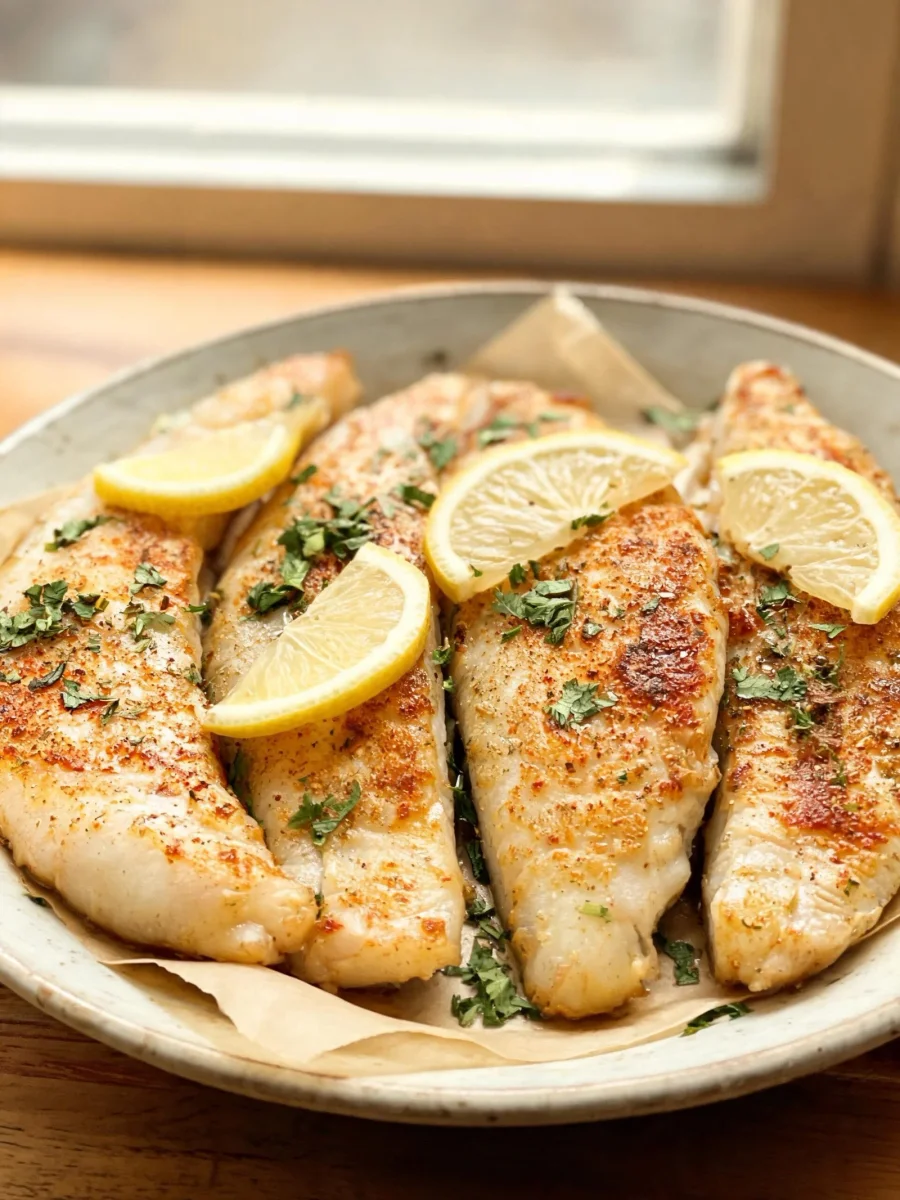
Swai fillets bake in a savoury butter, garlic and smoked paprika coating, with lemon to brighten each bite. It is a straightforward oven dinner that needs little hands-on time and pairs easily with vegetables or a grain.
Ingredients
- 4 fillets, 113–170 g each (4–6 oz each), thawed and patted dryswai fish fillets
- 43 g (3 tablespoons)unsalted butter, melted
- 15 ml (1 tablespoon)olive oil
- 3 clovesgarlic, minced
- 5 ml (1 teaspoon)smoked paprika
- 5 ml (1 teaspoon)onion powder
- 2.5 ml (1/2 teaspoon)salt
- 1.25 ml (1/4 teaspoon)black pepper
- 2.5 ml (1/2 teaspoon)dried oregano
- 1 lemon, half juiced and half sliced for servinglemon
- 30 ml (2 tablespoons), optionalfresh parsley, chopped
Instructions
- 1
Dry the fillets
Take the swai out of the fridge 15 minutes before cooking. Pat the fillets completely dry with paper towels.
- 2
Heat the oven
Preheat the oven to 200°C (400°F). Line a baking dish or sheet pan with foil or parchment paper.
- 3
Mix the coating
Stir the melted butter, olive oil, minced garlic, smoked paprika, onion powder, salt, black pepper and dried oregano together in a small bowl.
- 4
Season the fish
Set the fillets in the prepared dish with space between them. Spoon the butter mixture evenly over each one, then squeeze the juice from half the lemon over the top.
- 5
Bake until flaky
Bake uncovered for 18 to 22 minutes, checking at 18 minutes. The fish is ready when it is opaque throughout and flakes easily with a fork.
- 6
Finish and serve
Take the dish out of the oven and scatter over the parsley, if using. Serve straight away with the lemon slices on the side.
What is garlic butter baked swai?
Swai is a mild, tender freshwater fish often sold as boneless fillets. This American-style preparation bakes it with familiar butter, garlic and seasoning rather than a crisp coating.
The butter and oil carry the spices over the fish, while lemon brings a fresh, sharp contrast. Baking the fillets in a single layer keeps the method simple and makes the fish easy to check.
Nutrition and macros by portion
The nutrition label shows one serving as written: 240 calories, 25g protein, 2g carbs, 14g fat.
| Portion | Adjustment | kcal | Protein | Carbs | Fat |
|---|---|---|---|---|---|
| Lighter | Use less butter | 168 kcal | 18g | 1g | 10g |
| This serving | As written | 240 kcal | 25g | 2g | 14g |
| Hungry | Add rice or potatoes | 360 kcal | 38g | 3g | 21g |
The fish supplies most of the protein, while the butter and olive oil account for much of the fat. Small amounts of carbohydrate come from the garlic, spices and lemon. Serve a fillet with a generous portion of vegetables and a moderate serving of rice or potatoes for a more balanced plate.
Choosing and preparing the fish
Thawing: Fully thaw the fillets before baking so they cook more evenly. The recipe calls for taking them out of the fridge 15 minutes before cooking.
Drying: Blot each fillet thoroughly with paper towels. Removing surface moisture helps the seasoning cling rather than slide off into the dish.
Building the garlic butter
Butter and oil: Melted butter gives the fish a rich coating, while olive oil loosens the mixture and helps it spread. Mix them with the seasonings before spooning them over the fillets.
Seasoning: Smoked paprika and oregano add savoury, smoky notes, with onion powder, garlic, salt and pepper rounding them out. Stir well so the garlic and spices are distributed rather than left in one dense patch.
Getting the timing right
Thickness: Fillets can vary in size, so begin checking at 18 minutes, as the method specifies. A thinner piece may finish before a thicker one.
Doneness: Look for fish that is opaque throughout and separates into flakes when gently tested with a fork. Avoid relying on colour alone if the fillets are uneven in thickness.
Serving the fish
Lemon: The recipe uses half the lemon in the seasoning and serves the remaining half as slices. Add a squeeze at the table for a brighter finish.
Sides: Serve with rice, potatoes or bread to catch the buttery juices, and add a green vegetable or salad for freshness. Parsley is an optional final garnish.
Using the baking dish
Spacing: Arrange the fillets with a little room between each piece so they bake rather than crowd together. If they do not fit comfortably in one layer, use a larger dish or sheet pan.
Lining: Foil or parchment makes serving and cleaning up easier. Keep the dish uncovered during baking, as directed, so you can check the fish easily.
Recipe notes & tips
- Pat the fish dry just before arranging it in the baking dish.
- Mix the seasoning thoroughly into the melted butter and oil before spooning it over the fillets.
- Leave space between the pieces so they cook in a single layer.
- Check the fish at 18 minutes, especially if the fillets are on the thinner side.
- Add the parsley just before serving to keep its colour fresh.
- Serve the lemon slices at the table so everyone can adjust the sharpness to taste.
Variations
- Add chilli: Stir a pinch of chilli flakes into the butter mixture for gentle heat.
- Use fresh herbs: Replace the dried oregano with chopped fresh oregano, adding it to the butter mixture.
- Try another citrus: Use lime instead of lemon for a different sharp finish.
- Make it dairy-free: Use a plant-based butter alternative in place of the unsalted butter.
- Add vegetables: Bake quick-cooking vegetables alongside the fish, giving them room in the pan.
Common mistakes to avoid
- Wet fillets: The coating can slide off; pat the fish dry before seasoning.
- Crowded dish: The pieces may cook unevenly; arrange them with space or use a second pan.
- Uneven coating: Clumps of garlic or spice can leave some bites under-seasoned; stir the mixture well before spooning.
- Overbaking: Swai can become dry; start checking at 18 minutes and remove it once opaque and flaky.
- Skipping the early check: Fillets differ in thickness; check the thinnest piece first and keep an eye on the rest.
How to store
Refrigerate leftovers in an airtight container within 2 hours and use within 3 days. Reheat gently in a covered oven-safe dish at 160°C until hot, or use short intervals in the microwave to avoid drying the fish.
Frequently asked questions
Can I use frozen swai fillets?
Yes, but thaw them fully before cooking and pat them dry as the method directs. Baking them from frozen would change the cooking time and texture.
How can I tell when the fish is done?
It should be opaque throughout and flake easily when tested gently with a fork. Begin checking at 18 minutes because fillet thickness affects the timing.
Can I prepare the butter mixture ahead?
You can mix the butter, oil, garlic and seasonings shortly ahead and keep the mixture covered in the fridge. Warm it gently until spoonable before coating the fish.
Can I use a different fish?
A mild white fish with a similar thickness can work, though its baking time may differ. Check for opacity and easy flaking rather than assuming the same timing will apply.
Do I need to cover the fish while it bakes?
No. The recipe bakes the fillets uncovered, which also makes it easy to check their doneness.
What can I serve with garlic butter swai?
Rice, potatoes or bread all go well with the buttery juices. Add a green vegetable or salad for a fresh contrast.
Cook it from the original
This recipe comes from bluerecipes.com. Their page has the author’s own photos, notes and tips — the best place to cook it from.
Open the recipe on bluerecipes.com