
Low FODMAP Grilled Cheese Sandwich with Spinach
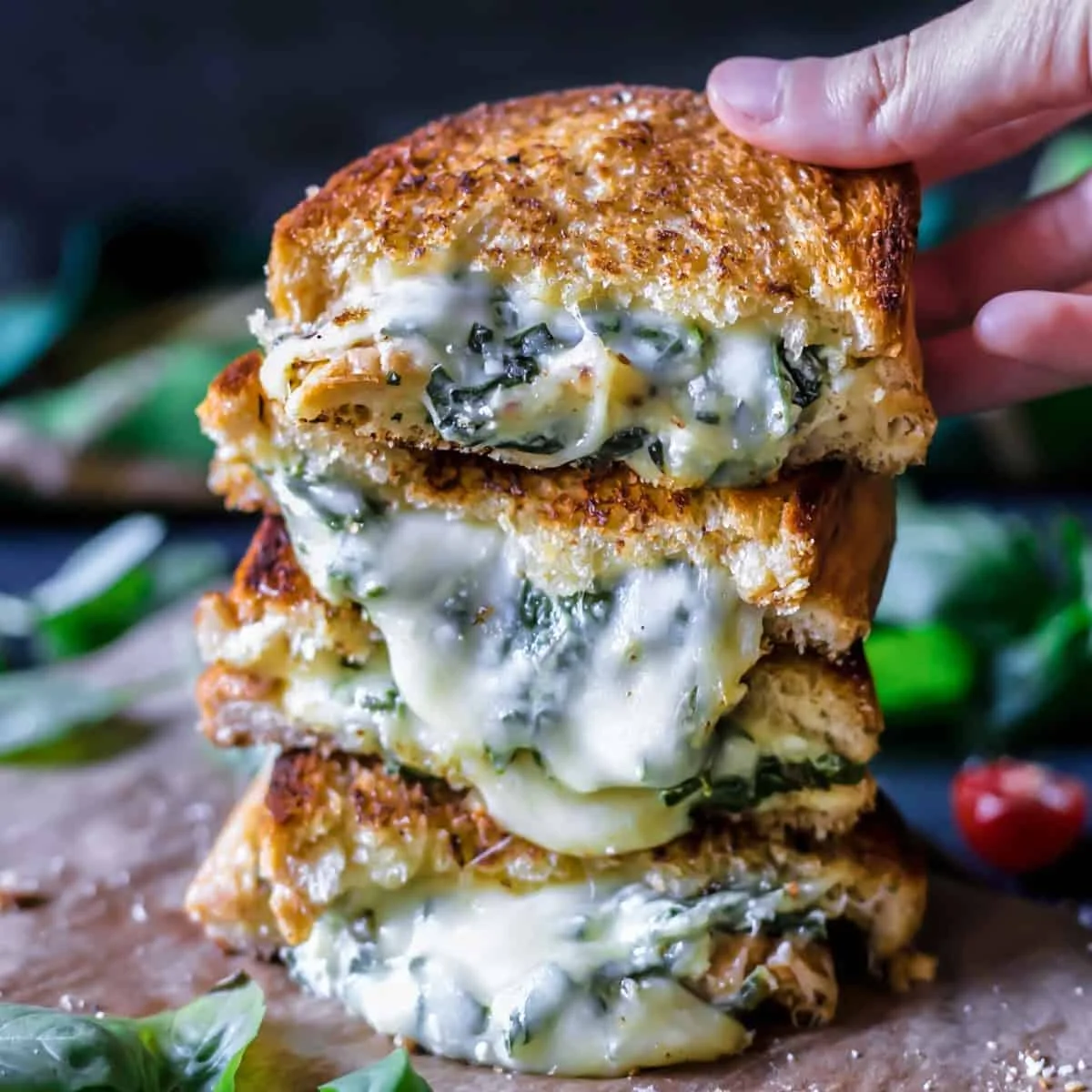
This spinach grilled cheese pairs a creamy, savoury filling with melted lactose-free cheese between crisp, buttery slices of gluten-free bread. It makes three quick sandwiches, ready in about 10 minutes.
Ingredients
- 6 slicesgluten-free bread
- 250 gspinach
- 100 glactose-free cream cheese
- 3 tbspolive oil
- 3 tbspbutter
- 300 glactose-free cheese, such as cheddar or Gouda
- to tastesalt
- to taste, optionalblack pepper
Instructions
- 1
Cook the spinach
Put the spinach and olive oil in a pan and sauté for a few minutes, until the leaves begin to soften.
- 2
Make the filling
Add the cream cheese and cook for 1–2 minutes, until it has melted completely. Season with salt and optional black pepper.
- 3
Butter the bread
Heat a skillet over medium heat. Spread butter on one side of each slice of bread.
- 4
Assemble sandwiches
When the skillet is hot, add two slices of bread, buttered side down. Layer shredded cheese, spinach cream filling and more shredded cheese on each slice, then top with the remaining bread slices, buttered side up.
- 5
Fry until golden
Gently press the sandwiches with a spatula as they cook. Once the undersides are browned, flip and cook the other sides until toasted and browned and the cheese has melted, about 2–3 minutes.
- 6
Cook remaining sandwiches
Repeat with the remaining bread and filling to make the other sandwiches.
- 7
Serve while warm
Serve the sandwiches warm.
What is spinach grilled cheese?
Grilled cheese is a familiar comfort-food sandwich, cooked in a pan until the bread is browned and the cheese melts. This version adds a spinach and cream cheese filling and uses gluten-free bread and lactose-free dairy.
The method keeps the filling creamy while the bread crisps in butter. Layering cheese around the spinach filling helps give each bite a gooey, savoury centre.
Nutrition and macros by portion
The nutrition label shows one serving as written: 875 calories, 38g protein, 48g carbs, 63g fat.
| Portion | Adjustment | kcal | Protein | Carbs | Fat |
|---|---|---|---|---|---|
| Lighter | Use less butter and cheese | 613 kcal | 27g | 34g | 44g |
| This serving | As written | 875 kcal | 38g | 48g | 63g |
| Hungry | Add an extra sandwich | 1313 kcal | 57g | 72g | 95g |
The bread supplies most of the carbohydrates, while the cheese and cream cheese contribute protein and much of the fat; the olive oil and butter add further fat. Serve a sandwich with a generous salad or vegetable soup to add freshness and variety to the plate.
Choosing the bread and cheese
Bread: Use gluten-free slices that are sturdy enough to hold the filling. If the loaf is especially delicate, handle the sandwiches gently when turning them.
Cheese: Cheddar gives a sharper flavour, while Gouda is generally milder. Shred the cheese so it melts more readily between the slices.
Getting the spinach filling right
Spinach: Cook it just until it begins to soften; it will cook further when the assembled sandwich is fried. A pan with room for the leaves makes stirring easier.
Cream cheese: Add it once the spinach has softened, then keep cooking until it melts into the greens. Season the filling before assembling so the flavour is distributed throughout.
Build for an even melt
Cheese layers: Put some shredded cheese on the bread, add the spinach mixture, then finish with more cheese. The cheese on both sides of the filling melts into the bread and helps hold the layers together.
Butter: Spread it over one side of every slice, and place that side against the pan first. Keep the heat at medium so the bread can brown while the cheese melts.
Watch the colour and texture
The first side should be browned before you flip the sandwich. Press gently with a spatula rather than flattening it hard, which can push the filling out.
The sandwiches are ready when both sides are toasted and the cheese has melted. The recipe gives about 2–3 minutes of frying; use the visible browning and melted centre as your cues.
Serve it as a meal
These sandwiches are best served warm, while the cheese is still soft. A crisp salad or a simple bowl of soup makes a fresh contrast to the rich filling.
For easier serving, let each sandwich rest briefly after cooking, then cut it in half. This gives the melted filling a moment to settle before slicing.
Recipe notes & tips
- Shred the cheese before you start cooking so the sandwiches are quick to assemble.
- Let the spinach soften in the oil before stirring in the cream cheese.
- Keep the skillet at medium heat to give the cheese time to melt as the bread browns.
- Use a wide spatula to turn the sandwiches without losing the filling.
- Cook in batches if the sandwiches do not fit comfortably in the skillet.
Variations
- Add herbs: Stir chopped chives or parsley into the spinach and cream cheese.
- Choose Gouda: Use lactose-free Gouda for a milder, buttery-tasting filling.
- Add tomato: Tuck in a few thin tomato slices, keeping them away from the bread edges.
- Use baby spinach: Swap in baby spinach and cook it just until wilted.
- Add mustard: Spread a thin layer of mustard on the inside of the bread for a sharper flavour.
Common mistakes to avoid
- Overcooking the spinach: Stop when it has just softened so the filling does not become overly wet.
- Using high heat: The bread may brown before the cheese melts; cook over medium heat instead.
- Overfilling the bread: Keep the filling within the edges to make the sandwiches easier to flip.
- Flipping too early: Wait until the bottom is browned so the bread is less likely to tear.
- Pressing too firmly: Apply gentle pressure with the spatula to avoid squeezing out the filling.
How to store
Refrigerate leftover sandwiches in an airtight container for up to 2 days. Reheat in a skillet over medium-low heat until warmed through and crisp again; the bread may soften somewhat in storage.
Frequently asked questions
Can I make the spinach filling ahead?
Yes. Cook the spinach and cream cheese filling ahead, refrigerate it in a covered container, and assemble the sandwiches when ready to cook.
How do I keep gluten-free bread from breaking?
Choose sturdy slices and spread the butter gently. Turn the sandwiches carefully with a wide spatula, especially if the bread is soft or thin.
Which cheese works best?
Lactose-free cheddar gives a stronger flavour, while lactose-free Gouda is milder. Shredding either helps it melt between the bread slices.
Can I cook these without butter?
Butter gives the bread its browned, crisp exterior. You can use olive oil on the outside instead, though the flavour and browning will differ.
How can I tell when a sandwich is done?
Look for browned, toasted bread on both sides and melted cheese inside. If the bread is colouring too quickly, lower the heat so the filling has time to warm.
Cook it from the original
This recipe comes from glutenfreestories.com. Their page has the author’s own photos, notes and tips — the best place to cook it from.
Open the recipe on glutenfreestories.com