
Coconut Creme Brulee
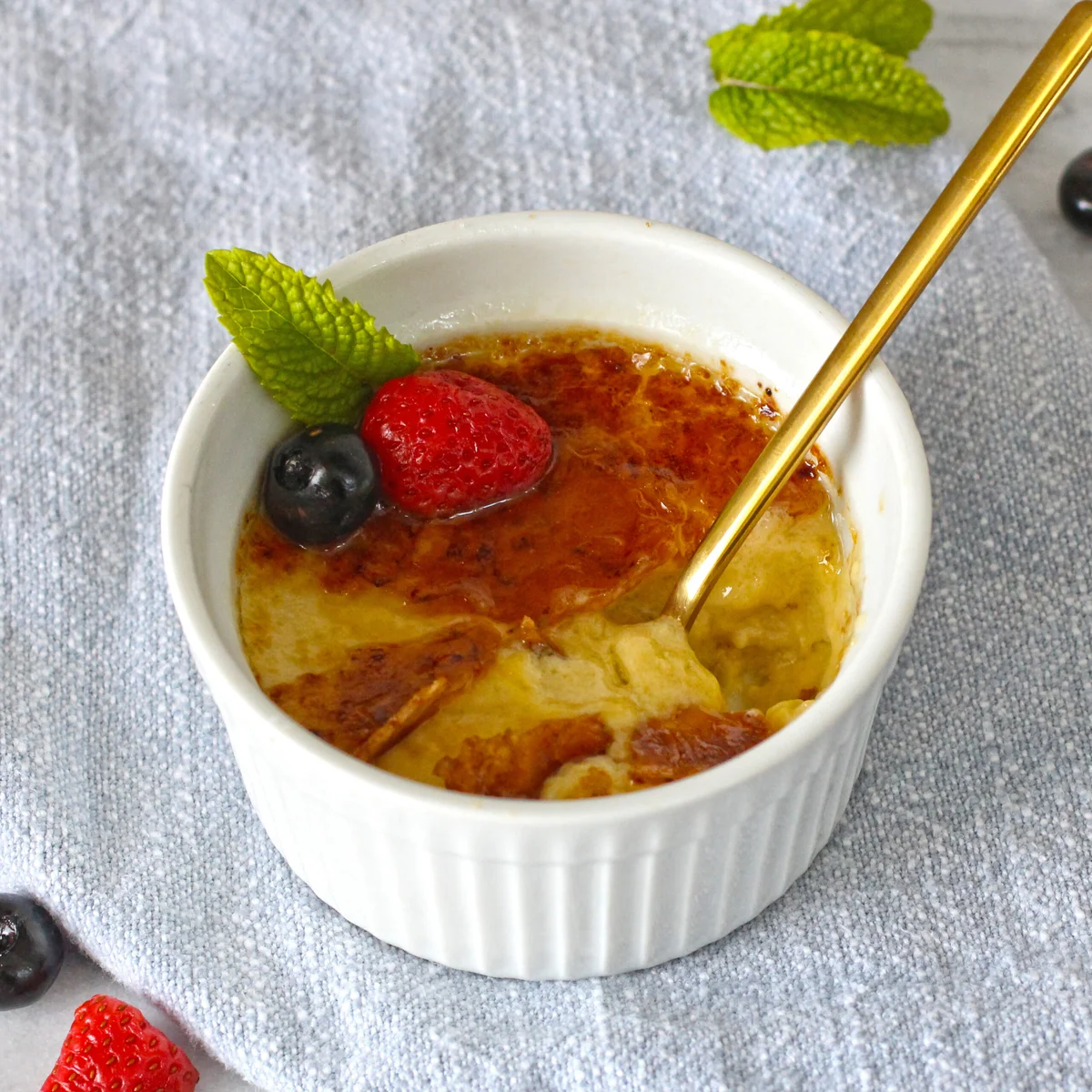
This dairy-free crème brûlée pairs a softly set coconut custard with a crisp, caramelised sugar top. Make it ahead, then torch the topping just before serving for the best contrast in texture.
Ingredients
- 2 cans, 397 g each (14 oz each)coconut cream
- 5egg yolks
- 50 g (1/4 cup)monk fruit sugar
- 15 ml (1 tbsp)vanilla extract
- a pinchsalt
- to tastemonk fruit sugar, for topping
- to tastecoconut sugar
- to tastefresh fruit
- as neededwarm water, for the water bath
Instructions
- 1
Preheat the oven
Heat the oven to 163°C (325°F).
- 2
Prepare the water bath
Set the ramekins inside a large baking dish. Pour in warm water until it reaches about halfway up their sides.
- 3
Measure the coconut
Spoon the solids from the cans of coconut cream into a 473 ml (1-pint) measuring jug. Add enough of the liquid from the cans to make exactly 473 ml (2 cups). Pour this into a small saucepan and bring it to a simmer; discard any liquid left in the cans.
- 4
Mix the custard
Meanwhile, whisk the monk fruit sugar and egg yolks together in a bowl. Slowly drizzle in the warm coconut mixture while whisking, then whisk in the vanilla.
- 5
Bake the custards
Divide the custard evenly among the ramekins and place the baking dish in the oven. Bake for 25 minutes, or until the custard only jiggles slightly when the dish is tapped.
- 6
Cool in the bath
Take the dish out of the oven and leave the ramekins in the water bath on the counter for 1 hour.
- 7
Chill the ramekins
Remove the ramekins from the water, wrap them in cling film and chill in the fridge until fully cool, for at least 1 hour. They will keep in the fridge for a few days.
- 8
Caramelise the tops
When ready to serve, sprinkle a thin layer of coconut sugar over each custard, followed by a thin layer of monk fruit sugar. Use a kitchen torch to caramelise the topping. If a little liquid collects over the crunchy sugar, let it cool slightly and carefully tip it into the sink.
- 9
Serve with fruit
Serve the crème brûlée with fresh fruit.
What is crème brûlée?
Crème brûlée is a classic French-style baked custard finished with a thin layer of caramelised sugar. Its appeal is the contrast between the cool, smooth custard and the crisp top.
This version uses coconut cream in place of dairy. Egg yolks help the custard set, while the two sugars on top are used for their different browning and setting qualities.
Nutrition and macros by portion
The nutrition label shows one serving as written: 390 calories, 5g protein, 12g carbs, 39g fat.
| Portion | Adjustment | kcal | Protein | Carbs | Fat |
|---|---|---|---|---|---|
| Lighter | Smaller ramekin portion | 273 kcal | 4g | 8g | 27g |
| This serving | As written | 390 kcal | 5g | 12g | 39g |
| Hungry | Larger ramekin portion | 585 kcal | 8g | 18g | 59g |
The coconut cream supplies most of the energy and fat, while the egg yolks contribute fat and protein; the monk fruit sugar adds some carbohydrates, depending on the product used. Serve a ramekin with fresh fruit, and consider a lighter meal alongside if you want to balance the rich dessert.
Getting the coconut mixture right
Coconut solids: the recipe measures the solids from the cans first, then adds just enough of the liquid to reach exactly 473 ml. This keeps the custard mixture to the specified volume.
Simmering: warm the measured coconut mixture until it simmers, rather than boiling it hard. Pour it into the yolks gradually so the mixture combines smoothly.
Whisking the custard
Egg yolks: whisk them with the monk fruit sugar before adding the coconut mixture. A slow drizzle and steady whisking help incorporate the warm liquid evenly.
Vanilla: whisk it in once the coconut mixture and yolks are combined. This distributes its flavour throughout the custard.
Using a water bath
Water level: aim for warm water about halfway up the sides of the ramekins. This bath surrounds them during baking and helps the custards cook gently.
Cooling: leave the ramekins in the bath on the counter for the full hour after baking, then chill them for at least another hour. The custard should be fully cool before you add the topping.
Checking when they are done
At 25 minutes, tap the baking dish gently and look for a slight jiggle in the custard. The recipe does not call for the centres to be completely firm in the oven.
Ovens and ramekin sizes can affect the timing, so use the jiggle as the stated doneness cue rather than waiting for the surface to brown.
Making the crisp topping
Coconut sugar: sprinkle on a thin layer first; it contributes the characteristic burnt colour.
Monk fruit sugar: add a thin layer after the coconut sugar. The recipe uses it because it becomes firm when torched, creating a crunchy finish.
Serving the custards
Torch the sugar just before serving so the top is crisp against the chilled custard. Use a thin, even coating rather than piling sugar on.
Fresh fruit makes a simple accompaniment and adds a fresh contrast to the rich coconut custard. Add it alongside the ramekins when serving.
Recipe notes & tips
- Measure the coconut solids and liquid together to exactly 473 ml before heating.
- Pour the warm coconut mixture into the yolks slowly while whisking.
- Keep the water level around halfway up the ramekins during baking.
- Use the slight jiggle as the doneness cue at 25 minutes.
- Chill the custards fully before adding either sugar for the topping.
- Torch the topping shortly before serving to preserve its crunch.
Variations
- Berry topping: serve with fresh berries for a tart, juicy contrast.
- Citrus fruit: pair with orange segments for a bright accompaniment.
- Vanilla emphasis: add a little extra vanilla if you want its flavour to stand out more.
- Sugar balance: adjust the relative thin layers of coconut sugar and monk fruit sugar to suit your preferred colour and crunch.
- Fruit platter: offer a mixture of fresh fruit alongside the ramekins.
Common mistakes to avoid
- Adding coconut mixture too quickly: the warm liquid may not combine evenly, so drizzle it in while whisking.
- Skipping the volume check: too much or too little coconut mixture changes the recipe's proportions, so measure to exactly 473 ml.
- Boiling the coconut mixture: bring it only to a simmer before removing it from the heat.
- Baking until completely firm: the custard should still jiggle slightly when the dish is tapped.
- Torching too early: the topping can lose its crispness, so caramelise it close to serving.
- Using a thick sugar layer: it may not caramelise evenly, so sprinkle on thin layers.
How to store
Cover the un-topped custards and keep them in the fridge for a few days, as the recipe specifies. Add the sugar and torch it just before serving; the finished topping is best eaten straight away. Serve chilled rather than reheating.
Frequently asked questions
Can I make the custards ahead?
Yes. Bake, cool and chill them in the fridge, then add and torch the sugar shortly before serving.
How long do the custards bake?
Bake for 25 minutes at 163°C (325°F), or until they jiggle only slightly when the dish is tapped.
Do I need to use a water bath?
Yes, the method uses warm water about halfway up the ramekins while they bake. Leave them in the bath for 1 hour after removing them from the oven.
Why are there two sugars on top?
The coconut sugar provides the browned colour, while the monk fruit sugar is included because it sets firm when torched.
What if liquid appears on top after torching?
The method notes that a thin layer of liquid may collect over the crunchy sugar. Let it cool slightly, then carefully tip it into the sink.
What should I serve with coconut crème brûlée?
Serve it with fresh fruit, as the recipe suggests. Berries or citrus fruit work well as simple options.
Cook it from the original
This recipe comes from glutenfreesociety.org. Their page has the author’s own photos, notes and tips — the best place to cook it from.
Open the recipe on glutenfreesociety.org