
Soft Pita Breads
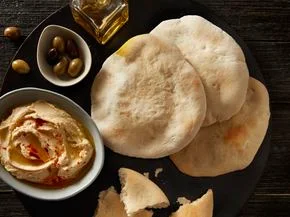
These soft, chewy pita breads bake into handy pockets for sandwich fillings or make a simple scoop for hummus. The dough needs time to rise, but the method uses straightforward ingredients and a hot baking surface.
Ingredients
- 375–500 g (3–4 cups)plain flour
- 1 tablespoonsugar
- 1 packet (about 7 g; 2¼ teaspoons)fast-action dried yeast
- 1½ teaspoonssalt
- 300 ml (1¼ cups), warmed to 41–46°C (105–115°F)water
- 2 tablespoons, plus extra for the bowlolive oil
Instructions
- 1
Mix the dough
In a large bowl, whisk together 375 g (3 cups) of the flour, the sugar, yeast and salt. Stir in the warm water and 2 tablespoons of olive oil with a wooden spoon, just until a soft dough forms. Turn it out onto a floured surface and knead by hand for 10 minutes, adding only as much of the remaining flour as needed to make the dough smooth, soft and elastic.
- 2
Let dough rise
Lightly drizzle a large, clean bowl with olive oil. Shape the dough into a ball and place it in the bowl. Cover tightly with cling film and leave at room temperature for 1 to 1½ hours, until doubled in size.
- 3
Shape the rounds
Punch down the dough and divide it into 8 equal pieces. Shape each piece into a ball, cover with a damp tea towel and leave to rest for 20 minutes.
- 4
Heat the oven
Meanwhile, put a baking stone or an upside-down baking sheet in the centre of the oven and heat it to 200°C (400°F).
- 5
Roll the dough
Roll each dough ball into a round about 6 mm (¼ inch) thick.
- 6
Bake the pitas
Transfer 3 to 4 rounds at a time to the baking stone or heated baking sheet. Bake for 4 to 5 minutes, without turning, until puffed and cooked through.
What are pita breads?
Pita is a round, leavened flatbread widely eaten across the Middle East and neighbouring regions. When baked at high heat, the dough can puff and form a pocket that is useful for holding fillings.
This version uses a short list of pantry ingredients and a long rise for a soft, chewy result. Baking the rounds on a preheated stone or tray helps them puff quickly.
Nutrition and macros by portion
The nutrition label shows one serving as written: 220 calories, 5g protein, 38g carbs, 5g fat.
| Portion | Adjustment | kcal | Protein | Carbs | Fat |
|---|---|---|---|---|---|
| Lighter | Use less olive oil | 154 kcal | 4g | 27g | 4g |
| This serving | As written | 220 kcal | 5g | 38g | 5g |
| Hungry | Serve an extra pita | 330 kcal | 8g | 57g | 8g |
The flour supplies most of the carbohydrates, while the olive oil contributes fat and the flour provides some protein. Pair a pita with a protein-rich filling and vegetables for a more rounded plate.
Choosing the flour
Plain flour: start with 375 g (3 cups), then add only enough of the remaining flour to make the dough manageable. The exact amount needed can vary, so judge by the dough’s feel rather than adding it all at once.
Bread flour: the recipe allows it as a swap for plain flour. It may give the pitas a chewier texture.
Kneading and rising
Kneading: work the dough for the full 10 minutes, until it feels smooth, soft and elastic. Add flour sparingly; too much can make the dough stiff and harder to roll.
First rise: keep the bowl covered while the dough rests for 1 to 1½ hours at room temperature. Look for it to double in size rather than relying on the clock alone.
Resting the portions
After dividing the dough into 8 pieces, shape them into balls and cover them with a damp tea towel for 20 minutes. This pause relaxes the dough and makes each piece easier to roll into a round.
Getting the pocket to puff
A fully heated baking stone or upside-down baking sheet gives each round a hot surface as soon as it goes into the oven. Let the oven heat to 200°C (400°F) with the surface already inside.
Keep the rounds about 6 mm (¼ inch) thick and avoid turning them during baking. They are ready when puffed and cooked through, usually after 4 to 5 minutes.
Serving ideas
Fill the pitas with your favourite sandwich ingredients, or cut them into wedges for dipping into hummus. They also work well alongside soups, salads or other dishes that benefit from a soft bread for scooping.
Recipe notes & tips
- Measure out the remaining flour separately so you can add it gradually while kneading.
- Use warm, not hot, water within the stated temperature range.
- Cover the dough during both rests so its surface does not dry out.
- Make sure the baking stone or tray is hot before adding the first round.
- Bake the pitas in batches of 3 to 4 so there is room for them to puff.
Variations
- Try bread flour: Swap it for the plain flour if you prefer a chewier pita.
- Make wedges: Cut the baked pitas into wedges for dipping into hummus.
- Add a filling: Use the pockets for your favourite sandwich fillings.
- Serve alongside soup: Pair the warm pitas with soup for dipping.
Common mistakes to avoid
- Adding all the flour at once: Hold some back and add only enough to make the dough smooth, soft and elastic.
- Using water that is too hot: Keep it within 41–46°C (105–115°F) as specified.
- Skipping the covered rests: Cover the dough and shaped balls so they do not dry out.
- Rolling uneven rounds: Aim for an even thickness of about 6 mm (¼ inch) so they bake consistently.
- Baking on a cold surface: Heat the stone or upside-down tray in the oven before baking.
How to store
Let leftover pitas cool, then store them in an airtight bag or container at room temperature for up to 2 days. Warm briefly in the oven or in a dry frying pan before serving.
Frequently asked questions
How do I know when the dough has risen enough?
It should have doubled in size after 1 to 1½ hours at room temperature. If it has not doubled, give it more time.
Why did my pitas not puff?
A baking surface that was not hot enough or rounds that were rolled unevenly can make puffing less reliable. Preheat the surface in the oven and roll each round to an even thickness.
Can I use bread flour instead?
Yes. The recipe suggests swapping plain flour for bread flour if desired.
Do I need to turn the pitas while baking?
No. Bake them for 4 to 5 minutes without turning, until puffed and cooked through.
How should I serve pita bread?
Use the pitas as pockets for sandwich fillings or cut them into wedges to dip into hummus.
Cook it from the original
This recipe comes from goldmedalflour.com. Their page has the author’s own photos, notes and tips — the best place to cook it from.
Open the recipe on goldmedalflour.com