
Mung Bean & Mango
A smooth baby-food purée pairing soft mung beans with sweet, ripe mango. It is a simple way to serve both ingredients together, with the beans cooked until they blend easily.
Ingredients
- 50 g (¼ cup)dried mung beans
- 240 ml (1 cup)water
- ½ripe mango, peeled and diced
Instructions
- 1
Rinse the beans
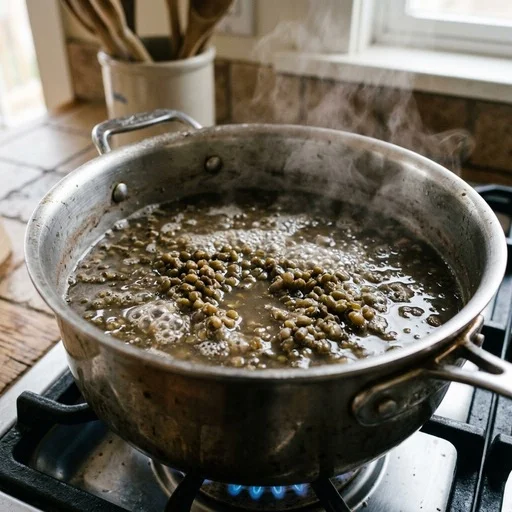
Rinse 50 g (¼ cup) of mung beans. There is no need to soak them: put them in a saucepan with 240 ml (1 cup) of water and bring to the boil.
- 2
Simmer until soft
Lower the heat and simmer for 20–25 minutes, until the beans are very soft and starting to break apart.
- 3
Prepare the mango
While the beans cook, peel and dice ½ ripe mango, removing all the fibrous strings.
- 4
Blend until smooth
Put the cooked mung beans and fresh mango in a blender and blend until smooth. The mango is added raw for a fresh, fruity flavour.
What is mung bean and mango purée?
It is a simple blended dish of cooked mung beans and fresh mango, made here as a baby-food purée. Rather than a single traditional preparation, it is a straightforward pairing of a mild legume with a sweet fruit.
The beans are simmered until they begin to break apart, which helps them blend smoothly with the raw mango. Use a ripe fruit for a soft texture and naturally sweet taste.
Nutrition and macros by portion
The nutrition label shows one serving as written: 234 calories, 13g protein, 47g carbs, 1g fat.
| Portion | Adjustment | kcal | Protein | Carbs | Fat |
|---|---|---|---|---|---|
| Lighter | Smaller purée portion | 164 kcal | 9g | 33g | 1g |
| This serving | As written | 234 kcal | 13g | 47g | 1g |
| Hungry | Larger purée portion | 351 kcal | 20g | 70g | 2g |
The mung beans provide most of the protein and complex carbohydrates, while the mango contributes much of the fruit sugar and additional carbohydrate. The beans also account for most of the fibre; the small amount of fat comes from both ingredients. To balance a meal, serve an age-appropriate portion alongside another familiar food rather than relying on this purée alone.
Cooking the mung beans
Rinsing: rinse the dried beans before cooking, and follow the method without soaking them.
Simmering: keep the water at a gentle simmer for 20–25 minutes. The beans should be very soft and starting to break apart before blending.
Choosing and preparing the mango
Ripeness: choose a ripe mango that gives slightly when pressed and has soft, sweet flesh.
Strings: remove any fibrous strands as you peel and dice the fruit; they can leave the purée stringy.
Getting a smooth texture
Blending: combine the cooked beans with the mango and blend until smooth. If your blender struggles, let the beans cool slightly and blend in short bursts.
Consistency: this recipe makes a thick purée. For a thinner texture, you can blend in a little water, checking the consistency as you go.
Timing and doneness
The beans need 20–25 minutes of simmering, so prepare the mango while they cook. Start checking near the shorter end of the time range.
Doneness: taste or press a bean to check that it is completely soft, with no firm centre, before blending.
Serving the purée
Serve it freshly blended, or cool it before offering it. For a meal with more variety, pair an appropriate portion with another food your baby already eats safely.
Follow your usual guidance for introducing foods and supervise your baby while eating. Mango can occasionally cause a reaction, particularly in babies with sensitive skin or a latex allergy.
Recipe notes & tips
- Rinse the mung beans well before adding them to the saucepan.
- Keep the beans at a gentle simmer so the water does not boil away too quickly.
- Check that the beans are very soft before blending.
- Remove all visible mango fibres for a smoother result.
- Blend the mango raw, as directed, for a fresh fruity flavour.
Variations
- Thinner texture: blend in a little water until it reaches the consistency you want.
- More mango: add extra ripe mango for a fruitier purée.
- Smoother blend: blend for longer, pausing to scrape down the sides if needed.
- Serve separately: offer the cooked beans and diced mango separately if that suits your baby’s stage and eating skills.
Common mistakes to avoid
- Firm beans: simmer until very soft and beginning to break apart before blending.
- Forgotten rinse: rinse the dried beans before cooking.
- Stringy purée: remove all fibrous strands from the mango before blending.
- Under-ripe mango: choose ripe fruit so it blends easily and tastes sweet.
- Blending too soon: let the beans cool slightly if they are too hot for your blender.
How to store
Cool the purée promptly, transfer it to a clean, covered container and refrigerate for up to 2 days. Reheat only the portion you need until hot throughout, then cool it to a suitable temperature before serving; discard leftovers from a bowl your baby has eaten from.
Frequently asked questions
Do mung beans need soaking for this recipe?
No. Rinse them, then cook them directly in the measured water as described.
How do I know when the mung beans are cooked?
They should be very soft and starting to break apart after 20–25 minutes of simmering.
Can I cook the mango?
The method uses raw mango for a fresh, fruity flavour. Peel and dice it, then blend it with the cooked beans.
Can I make the purée thinner?
Yes. Blend in a little water at a time until it reaches the consistency you prefer.
Can I prepare this ahead?
Yes. Refrigerate it in a clean, covered container and use within 2 days.
Is mango suitable for every baby?
Mango is often introduced around 6–8 months, but individual readiness and reactions vary. It can sometimes trigger a reaction, including in babies with sensitive skin or a latex allergy; follow your usual advice for introducing foods.
Cook it from the original
This recipe comes from blwrecipes.com. Their page has the author’s own photos, notes and tips — the best place to cook it from.
Open the recipe on blwrecipes.com