
Authentic Caribbean Jerk Chicken: Charred and Spicy
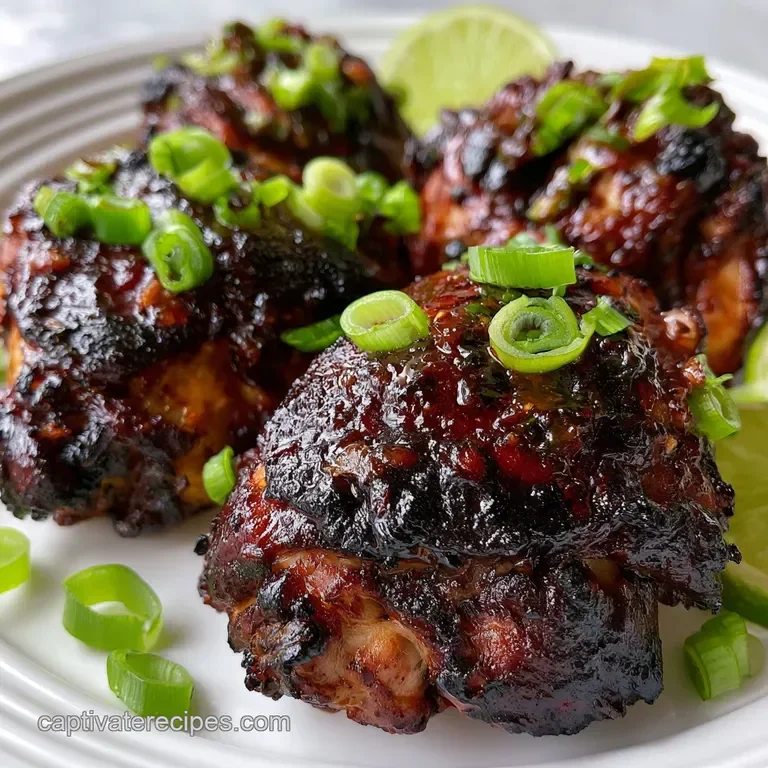
Jamaican jerk chicken pairs Scotch bonnet heat with allspice, thyme and warming spices, then finishes with deeply browned skin and juicy meat. Marinate it ahead for an easy, flavour-packed dinner.
Ingredients
- 2Scotch bonnet peppers, seeded and chopped
- 3 stalksspring onions, chopped
- 4 clovesgarlic, minced
- 1 tbspfresh ginger, grated
- 2 tbspfresh lime juice
- 1 tbspapple cider vinegar
- 1 tbspolive oil
- 1 tbspbrown coconut sugar
- 1 tbspground allspice
- 1 tspcinnamon
- 1 tspdried thyme
- 1 tspkosher salt
- 1/2 tspblack pepper
- 1.36 kg (3 lb)bone-in, skin-on chicken thighs
- 1 tbspolive oil
Instructions
- 1
Blend the marinade
Put all the marinade ingredients in a blender and pulse until they form a thick paste with a little texture. Make sure the Scotch bonnet peppers are fully incorporated.
- 2
Coat the chicken
Pat the chicken thighs dry with paper towels. Rub the marinade generously beneath the skin and over all the meat.
- 3
Marinate the chicken
Seal the chicken in a bag and refrigerate for at least 4 hours; for the deepest flavour, leave it for 24 hours.
- 4
Sear the skin
Heat the olive oil in a skillet over medium-high heat. Place the chicken skin-side down and sear for 5–7 minutes, until the skin is mahogany-coloured and releases easily from the pan.
- 5
Bake until cooked
Set the seared chicken on a wire rack over a baking sheet. Bake at 200°C (400°F) for 25–30 minutes, until the thickest part of a thigh reaches 77°C (170°F).
- 6
Rest before serving
Leave the chicken to rest for 10 minutes before serving so the juices can redistribute.
What is jerk chicken?
Jerk is a Jamaican style of seasoning and cooking, known for bold spices, aromatic herbs and the heat of Scotch bonnet peppers. Traditionally, the seasoned meat is cooked over a fire, where smoke and high heat contribute to its distinctive character.
This version builds flavour with a blended paste, then uses a skillet and oven to brown the skin and cook the bone-in thighs through. Allspice and thyme give the marinade its savoury warmth, while lime and vinegar bring brightness.
Nutrition and macros by portion
The nutrition label shows one serving as written: 485 calories, 35g protein, 11g carbs, 32g fat.
| Portion | Adjustment | kcal | Protein | Carbs | Fat |
|---|---|---|---|---|---|
| Lighter | Smaller thigh, more greens | 340 kcal | 25g | 8g | 22g |
| This serving | As written | 485 kcal | 35g | 11g | 32g |
| Hungry | Add rice and peas | 728 kcal | 53g | 17g | 48g |
The chicken supplies most of the protein and fat, while the coconut sugar and spring onions contribute some of the carbohydrates. Serve a thigh with a generous portion of vegetables and, if desired, a measured serving of rice or peas to round out the plate.
The marinade's balance
Aromatic base: Scotch bonnets, spring onions, garlic and fresh ginger create a punchy foundation. Lime juice and apple cider vinegar cut through the richness of the chicken.
Spice and sweetness: Allspice, cinnamon and thyme provide depth, while a little brown coconut sugar rounds out the heat. Blending the ingredients into a thick, slightly textured paste helps it cling to the chicken.
Getting flavour under the skin
Dry surface: Patting the thighs dry helps the marinade stay in place and gives the skin a better chance of browning. Take care not to tear the skin as you work.
Even coating: Ease the marinade beneath the skin as well as over the outside of each thigh. Refrigerate in a sealed bag for at least 4 hours, or up to the recipe's suggested 24 hours for deeper flavour.
Searing and baking
Skin-side down: Give the chicken 5–7 minutes in a medium-high skillet without moving it too soon. The skin should look mahogany-coloured and release from the pan when it is ready to turn or lift.
Gentle finish: Baking on a wire rack over a baking sheet lets heat circulate around the thighs. Check the thickest part of a thigh for 77°C (170°F), then rest the meat for 10 minutes before serving.
Choosing the heat level
Pepper heat: Scotch bonnets bring substantial chilli heat as well as a fruity aroma. Removing the seeds, as directed, keeps them out of the paste, but the peppers will still make a spicy marinade.
Handling: Avoid touching your eyes after preparing the peppers, and wash your hands and equipment thoroughly. If you are unsure about the heat, start with less pepper and keep the rest of the recipe unchanged.
What to serve alongside
Fresh sides: Serve the chicken with a crisp salad or simply cooked greens to contrast with its rich, spicy coating. Lime wedges can add a fresh, tangy finish at the table.
A heartier plate: Rice, peas or roasted vegetables make satisfying accompaniments. Allow time for the chicken to rest while you finish the sides.
Recipe notes & tips
- Blend the marinade until thick but not completely smooth so it can coat the chicken well.
- Pat the chicken skin dry before adding the marinade.
- Keep the thighs in a sealed bag while they marinate to contain the paste.
- Let the skin sear undisturbed until it releases easily from the skillet.
- Use a thermometer in the thickest part of a thigh, without touching the bone.
- Rest the chicken for the full 10 minutes before serving.
Variations
- Adjust the heat: Use fewer Scotch bonnets for a milder marinade.
- Add citrus: Serve with extra lime wedges for a brighter finish.
- Use chicken drumsticks: Apply the same marinade and check each piece for doneness.
- Make it on the barbecue: Cook the marinated thighs over a grill, turning as needed to brown them evenly and checking the thickest part for 77°C.
- Serve with rice and peas: Add a traditional-style accompaniment to make the meal more substantial.
Common mistakes to avoid
- Wet chicken skin: Pat the thighs dry before marinating so the surface is not waterlogged.
- Marinating briefly: Allow at least 4 hours in the fridge for the seasoning to take hold.
- Crowding the skillet: Sear in batches if the thighs do not fit with space around them.
- Forcing the chicken loose: Give the skin more time if it has not yet released easily from the pan.
- Guessing doneness: Check the thickest part of a thigh reaches 77°C (170°F).
- Skipping the rest: Wait 10 minutes before serving to let the juices settle.
How to store
Refrigerate leftover chicken in a covered container within 2 hours of cooking and use within 3–4 days. Reheat until piping hot throughout, in an oven or microwave; avoid reheating it more than once.
Frequently asked questions
How long should I marinate jerk chicken?
Marinate it in the refrigerator for at least 4 hours. The recipe suggests 24 hours for deeper flavour.
Can I make the marinade less spicy?
Use fewer Scotch bonnet peppers. The recipe already calls for them seeded, but they still add considerable heat.
How do I know when the thighs are cooked?
Check the thickest part of a thigh with a thermometer, avoiding the bone. It should reach 77°C (170°F).
Why sear the chicken before baking?
Searing the skin-side first gives it a deeply browned finish before the thighs cook through in the oven.
Can I use boneless chicken thighs?
The recipe is written for bone-in, skin-on thighs, so boneless pieces will cook differently. Check them early with a thermometer rather than relying on the stated baking time.
What should I serve with jerk chicken?
Rice and peas, salad or cooked greens all work well. Choose sides that suit how substantial you want the meal to be.
Cook it from the original
This recipe comes from captivaterecipes.com. Their page has the author’s own photos, notes and tips — the best place to cook it from.
Open the recipe on captivaterecipes.com