
Basic Vinaigrette
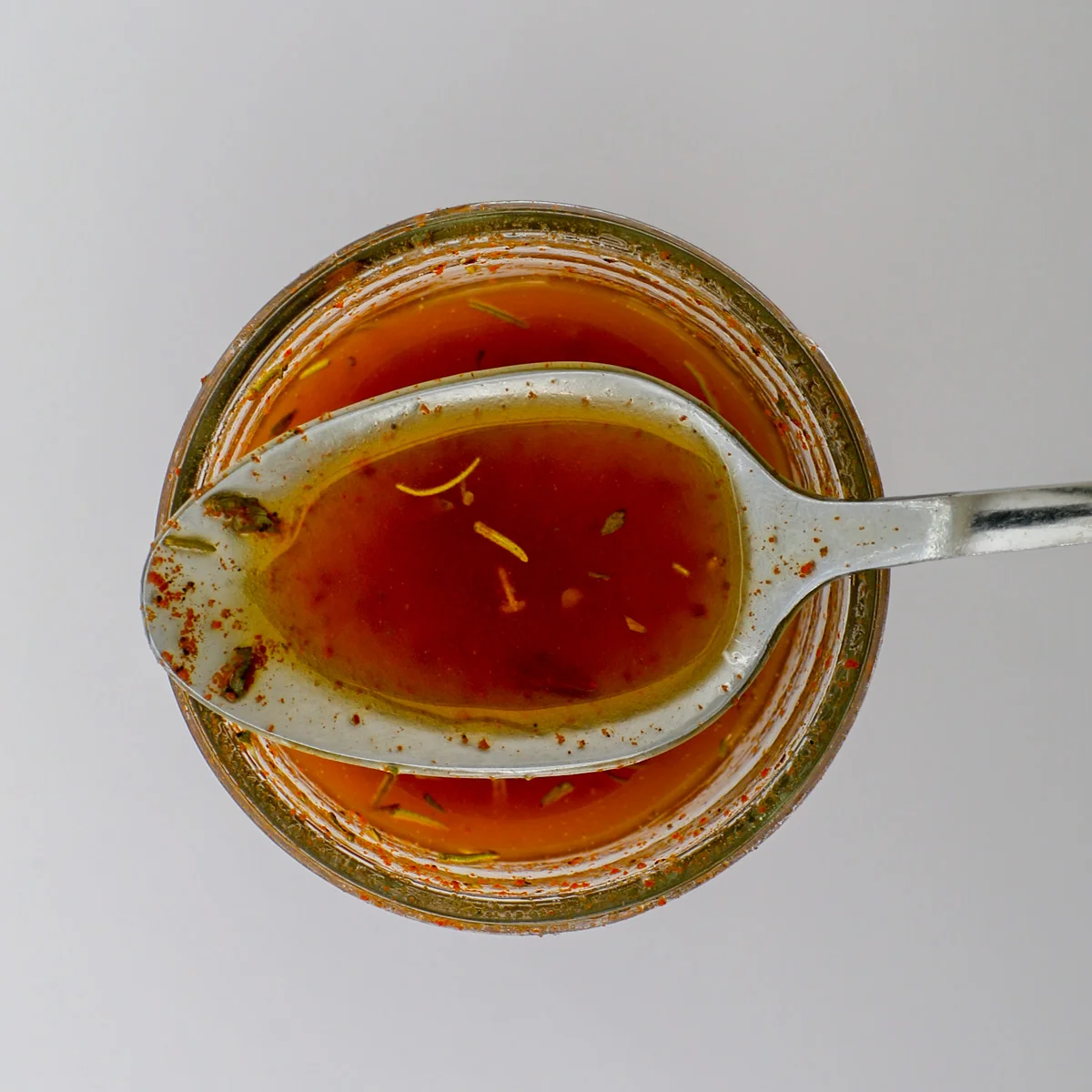
This quick American-style vinaigrette combines vinegar, seasoning and neutral oil in a jar for a simple, customisable salad dressing. Make it in five minutes, then adapt the flavour with your choice of mix-ins.
Ingredients
- 60 ml (¼ cup)red wine vinegar, or another vinegar, citrus juice or a combination
- 5 ml (1 tsp)paprika
- 2.5 ml (½ tsp)salt
- 0.6 ml (⅛ tsp)black pepper
- to tastemix-ins for the dressing
- 120–180 ml (½–¾ cup)neutral oil
Instructions
- 1
Season the vinegar
Pour the vinegar into a Mason jar and add the paprika, salt and black pepper. Add your chosen mix-ins, fit the lid and shake until well combined.
- 2
Add the oil
Pour in the oil, replace the lid and shake again.
- 3
Serve or chill
Serve immediately, or chill the dressing until you are ready to use it.
What is vinaigrette?
Vinaigrette is a dressing built around an acidic ingredient, such as vinegar or citrus juice, combined with oil and seasonings. It is a familiar feature of American home cooking, where the balance and flavour can be adjusted to suit the salad.
This version keeps the method simple: shake the ingredients in a jar, with paprika adding colour and a warm savoury note. Its flexible mix-ins make it easy to tailor without changing the basic approach.
Nutrition and macros by portion
The nutrition label shows one serving as written: 124 calories, 1g protein, 1g carbs, 14g fat.
| Portion | Adjustment | kcal | Protein | Carbs | Fat |
|---|---|---|---|---|---|
| Lighter | Use less oil | 87 kcal | 1g | 1g | 10g |
| This serving | As written | 124 kcal | 1g | 1g | 14g |
| Hungry | Larger dressed salad | 186 kcal | 2g | 2g | 21g |
The oil is the main source of fat and most of the listed calories, while the vinegar and seasonings contribute little energy; the small amount of carbohydrate and protein comes from the ingredients in the dressing. Serve it over a generous portion of vegetables, and pair the salad with a protein-rich food if you want a more filling plate.
Choosing the vinegar
Red wine vinegar: its tangy flavour gives the dressing a clear, savoury edge. You can use another vinegar or citrus juice, as the recipe allows.
Balance: the amount of oil varies from 120 to 180 ml, so the finished dressing can be made more sharply acidic or milder to your taste.
Making it in a jar
Seasoning first: shake the vinegar with the paprika, salt, pepper and mix-ins before adding the oil. This gives the seasonings a chance to disperse through the acidic part of the dressing.
Secure lid: make sure the Mason jar is closed firmly before shaking. Add the oil only after the first shake, then shake again to combine.
Mix-ins and flavour
Keep the additions suited to the salad you plan to dress. Herbs or other seasonings can bring a different character, while the vinegar and oil remain the base.
Start modestly with strongly flavoured additions, then taste the dressing and adjust the mix-ins next time. The recipe leaves their quantity open so you can choose the balance.
Texture and serving
The dressing is shaken rather than cooked, so it is ready as soon as the oil and vinegar have been combined. It may separate again as it stands; shake the jar briefly before serving if needed.
Use it with a green salad or other salad ingredients that suit its acidity and seasoning. Add it just before serving so the leaves do not sit dressed for too long.
Planning the dressing
The total preparation time is five minutes, and the recipe makes eight servings. There is no cooking or resting step, though the jar can be chilled until the dressing is needed.
Because the oil quantity is given as a range, choose an amount that suits your preferred sharpness. A lower amount makes the vinegar more prominent; a higher amount softens it.
Recipe notes & tips
- Use a jar with a lid that seals securely before shaking.
- Choose the lower end of the oil range for a sharper dressing.
- Use the vinegar or citrus option that best suits your salad.
- Add mix-ins gradually so they do not overwhelm the base.
- Shake again just before serving if the dressing has separated.
Variations
- Citrus base: Replace some or all of the vinegar with citrus juice.
- Herb addition: Stir or shake in herbs that complement the salad.
- Alternative vinegar: Use another vinegar for a different tang.
- Spice adjustment: Change the seasoning mix to suit your preferred flavour.
- Oil balance: Use 120 ml oil for a sharper dressing or up to 180 ml for a milder one.
Common mistakes to avoid
- Loose lid: The dressing can leak while shaking; check that the jar is firmly closed.
- Oil added too soon: The method seasons the vinegar first; add the oil after the initial shake.
- Too much oil: The vinegar flavour can become subdued; begin with the lower amount in the range.
- Overdoing mix-ins: Strong additions can take over the dressing; add them sparingly.
- Forgotten re-shake: The dressing may separate while standing; shake it again before serving.
How to store
Keep any leftover dressing in a sealed jar in the fridge and use it within a few days. Shake well before serving; no reheating is needed.
Frequently asked questions
Can I use a different vinegar?
Yes. The recipe allows another vinegar, citrus juice or a combination in place of red wine vinegar.
How much oil should I use?
Use 120–180 ml. The lower amount gives a sharper dressing, while the higher amount makes it milder.
What can I use as mix-ins?
Choose seasonings or other additions that suit the salad. Add them to the vinegar mixture before shaking in the oil.
Can I make the dressing ahead?
Yes. Chill it in a sealed jar until you are ready to serve, then shake it again.
Why has the dressing separated?
Oil and vinegar can separate as the dressing stands. Shake the jar again before serving to recombine them.
How many servings does this make?
The recipe makes eight servings.
Cook it from the original
This recipe comes from goodcheapeats.com. Their page has the author’s own photos, notes and tips — the best place to cook it from.
Open the recipe on goodcheapeats.com