
Mango Spears
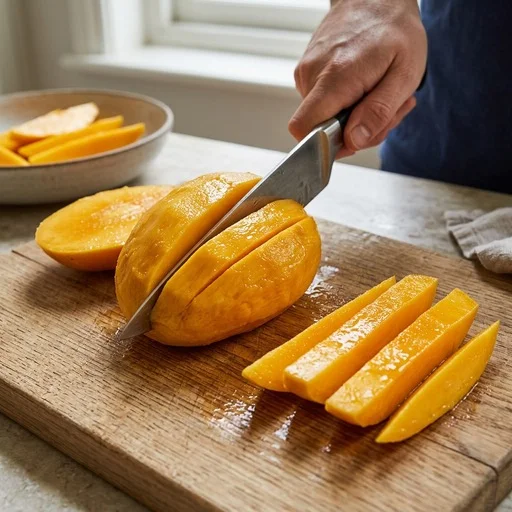
Ripe mango cut into easy-to-grip spears makes a quick, soft fruit offering for babies. The same fruit can also be cut into cubes for older children or adults.
Ingredients
- 1ripe mango
Instructions
- 1
Choose ripe fruit
Select a ripe mango that gives slightly when you press it.
- 2
Cut the cheeks
Stand the mango on its end and slice off both cheeks, cutting beside the flat stone.
- 3
Score the flesh
Make a grid in the flesh of each cheek, taking care not to cut through the skin.
- 4
Reveal the cubes
Push the skin upwards to expose the cubes, then slice the chunks away.
- 5
Cut into spears
Alternatively, peel the mango and cut it into long spears that are easy to grip.
What are mango spears?
Mango spears are simply fresh mango cut into long pieces that are easier for little hands to hold. Mango is native to South Asia, and this quick preparation lets its soft flesh and sweet flavour speak for themselves.
Choose a ripe fruit so the flesh is yielding rather than hard. The recipe also shows how to cut the cheeks into cubes if you want a different shape.
Nutrition and macros by portion
The nutrition label shows one serving as written: 202 calories, 3g protein, 50g carbs, 1g fat.
| Portion | Adjustment | kcal | Protein | Carbs | Fat |
|---|---|---|---|---|---|
| Lighter | Serve a smaller spear | 141 kcal | 2g | 35g | 1g |
| This serving | As written | 202 kcal | 3g | 50g | 1g |
| Hungry | Offer more mango | 303 kcal | 4g | 75g | 2g |
Most of this serving's energy and carbohydrate comes from the mango's natural sugars; it also provides a little fibre and very little fat or protein. For a more balanced meal, serve it alongside an age-appropriate source of protein and fat.
Choosing a ripe mango
Ripeness: A ripe mango should give slightly when pressed. Avoid fruit that feels very firm, as it will be harder to cut into soft spears.
Cutting around the stone
Cheeks: The flat stone runs through the centre, so slice down either side to remove the two fleshy cheeks. Keeping the fruit steady on its end helps guide the cuts.
Making cubes or spears
Grid: For cubes, score the cheek flesh in a grid without piercing the skin, then push the skin upwards to expose the pieces before slicing them off.
Spears: For the alternative shape, peel the mango first and cut the flesh into long strips. Keep the pieces suitable for the child's age and ability, and supervise eating.
Texture and serving
Softness: The mango should be ripe and yielding, but not so overripe that it collapses when handled. Check each piece for any firm or stringy sections before serving.
Pairing: Serve the fruit on its own or alongside another age-appropriate food. Mango can be slippery, so offer it while the child is seated and closely supervised.
Timing and preparation
Quick prep: The stated preparation time is 5 minutes, and there is no cooking. A sharp knife and a stable chopping board make the cuts easier to control.
Recipe notes & tips
- Choose a mango that gives slightly to gentle pressure.
- Use a stable chopping board and keep your fingers clear of the knife.
- Cut beside the flat stone to remove the cheeks cleanly.
- For cubes, score only the flesh and leave the skin intact.
- Peel the fruit before cutting spears so they are easier to handle.
Variations
- Cubes: Score the cheeks in a grid and slice off the exposed pieces.
- Chilled mango: Refrigerate the prepared fruit briefly before serving.
- Mixed fruit: Offer the mango with another soft, age-appropriate fruit.
- Mashed mango: Mash ripe flesh with a fork for a softer texture.
- Plain serving: Keep the mango on its own to let its sweet flavour stand out.
Common mistakes to avoid
- Unripe fruit: Choose a mango that yields slightly so the flesh is softer.
- Cutting through the skin: Score the cheek flesh carefully and stop before reaching the peel.
- Cutting beside the stone inaccurately: Keep the blade close to either side of the flat stone.
- Slippery pieces: Serve the fruit while the child is seated and closely supervised.
- Pieces that do not suit the child: Adjust the shape and size to the child's age and eating ability.
How to store
Keep cut mango in a covered container in the refrigerator and use within 2 days. Serve chilled or let it lose some of its chill before offering; do not reheat.
Frequently asked questions
When can babies try mango?
The recipe description says mango can generally be introduced around 6–8 months. Choose a texture and shape suited to the child's development, and ask a health professional if you are unsure.
How do I know when the mango is ripe?
It should give slightly when gently pressed. A very firm mango may be harder to cut into soft spears.
How do I cut mango around the stone?
Stand the mango on its end and slice down either side of the flat stone to remove the cheeks. You can then score the cheeks for cubes or peel the fruit for spears.
Can I prepare the mango in advance?
Yes. Store cut pieces in a covered container in the refrigerator and use within 2 days.
Can mango cause a reaction?
The recipe description notes that mango may trigger a reaction in some babies with sensitive skin or a latex allergy. If you have concerns about a possible reaction, seek advice from a health professional.
Cook it from the original
This recipe comes from blwrecipes.com. Their page has the author’s own photos, notes and tips — the best place to cook it from.
Open the recipe on blwrecipes.com