
Taftan Bread
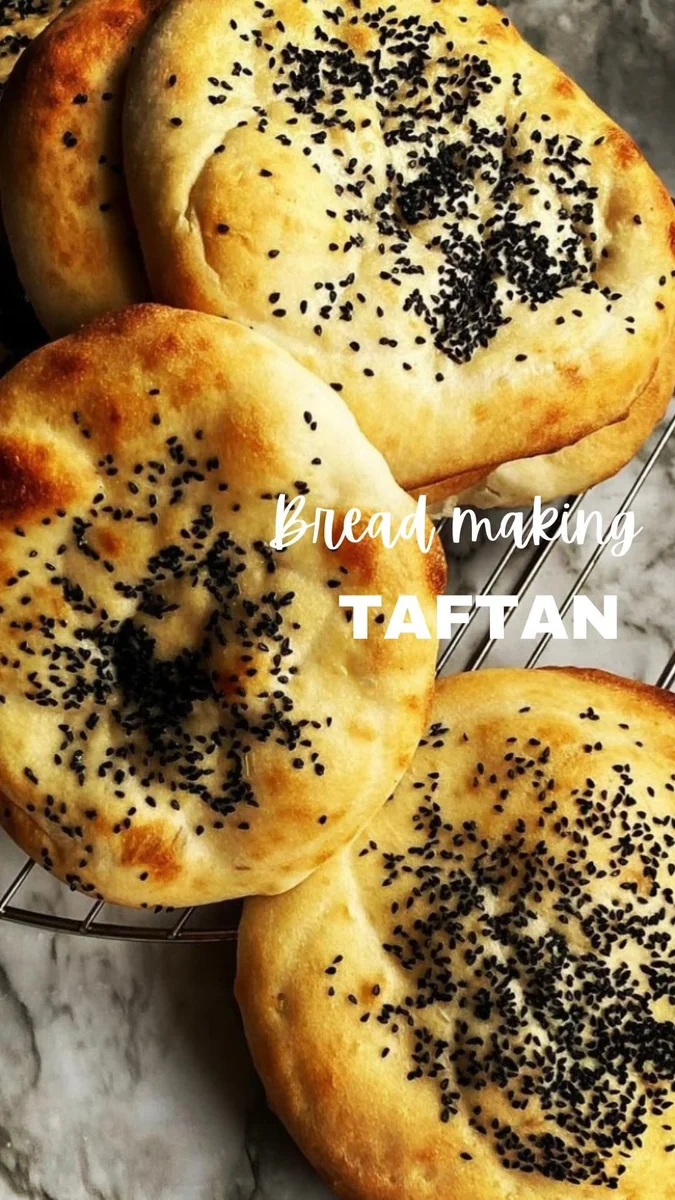
Taftan is a soft, lightly sweetened flatbread flavoured with cardamom and rose water. This version is enriched with milk and oil, then baked hot until golden and brushed with butter for a tender finish.
Ingredients
- 375 g (3 cups)plain flour
- 120 ml (1/2 cup)warm water
- 120 ml (1/2 cup)warm milk
- 100 g (1/2 cup)sugar
- 60 ml (1/4 cup)oil
- 1 tbspinstant yeast
- 1 tsprose water (optional)
- 1/2 tspcardamom
- A pinchsalt and saffron
Instructions
- 1
Mix the dough
Put all the ingredients in a bowl. Knead, gradually adding the warm water and milk mixture, until you have a soft dough.
- 2
Let it rise
Leave the dough to rise for at least 2 to 3 hours.
- 3
Rest the dough
Shape the dough into balls and leave them to rest for 1 hour.
- 4
Shape the breads
Flatten the balls into taftan breads.
- 5
Brush and scatter
Brush the breads with the egg and milk mixture, then sprinkle with nigella, poppy or sesame seeds.
- 6
Bake until golden
Bake in an oven preheated to its highest temperature for 12 to 15 minutes, or until golden.
- 7
Brush with butter
As soon as the breads come out of the oven, brush the tops with melted butter.
What is taftan bread?
Taftan is a leavened flatbread associated with Persian and South Asian food traditions. It is often enriched and flavoured, making it softer and more aromatic than a plain flatbread.
This version combines sugar, milk, oil and yeast with cardamom, saffron and optional rose water. A hot bake gives the shaped breads a golden surface, while the finishing butter adds softness and richness.
Nutrition and macros by portion
The nutrition label shows one serving as written: 581 calories, 12g protein, 98g carbs, 14g fat.
| Portion | Adjustment | kcal | Protein | Carbs | Fat |
|---|---|---|---|---|---|
| Lighter | Use less sugar and butter | 407 kcal | 8g | 69g | 10g |
| This serving | As written | 581 kcal | 12g | 98g | 14g |
| Hungry | Make larger breads | 872 kcal | 18g | 147g | 21g |
Most of the carbohydrates come from the flour and sugar, while oil and the butter brushed on after baking contribute much of the fat. The flour, milk and yeast provide some protein, though the bread is mainly a source of carbohydrate. Pair a portion with a protein-rich dish and vegetables to make a more balanced plate.
Building a soft dough
Warm liquids: the recipe uses warm water and milk to bring the dough together. Add the mixture as you knead so you can judge when the dough is soft.
Flour and yeast: plain flour forms the structure, while instant yeast leavens the dough during its long rise. Mix the ingredients thoroughly so the flavourings and yeast are spread through the dough.
Letting the dough rise
First rise: allow at least 2 to 3 hours for the dough to rise, as specified in the method. The dough should look expanded and feel airy before you shape it.
Second rest: after making balls, leave them for 1 hour. This gives the dough time to relax, making it easier to flatten into breads.
Shaping and topping
Shape: flatten each dough ball into a bread. Keep the breads reasonably even in thickness so they bake at a similar pace.
Finish: brush on the egg and milk mixture and scatter over nigella, poppy or sesame seeds. The recipe does not specify amounts for these toppings, so use enough to cover the surface lightly.
Baking and doneness
High heat: preheat the oven to its highest temperature before baking. The recipe gives a baking time of 12 to 15 minutes, but the oven setting itself is not specified.
Colour: look for a golden surface as the main doneness cue. Brush with melted butter immediately after baking, while the breads are still hot.
Flavour choices
Rose water: this is optional and lends a floral note. If you prefer a simpler aroma, leave it out and let the cardamom and saffron flavour the bread.
Seeds: choose nigella, poppy or sesame seeds for the topping, or use a mix. Each gives the surface a slightly different savoury contrast to the gently sweet dough.
Serving taftan
Serve the breads warm, either alongside a meal or as a snack. Their lightly sweet, fragrant flavour works well with savoury dishes, as well as with tea.
For a more balanced plate, pair a bread with a protein-rich dish and vegetables rather than serving it on its own.
Recipe notes & tips
- Use warm rather than hot liquids when mixing the dough.
- Knead until the dough feels soft and comes together evenly.
- Allow the full rising and resting times for a more relaxed dough.
- Preheat the oven fully before putting the breads in.
- Keep an eye on the breads near the end of baking, as oven temperatures vary.
- Brush on the melted butter as soon as the breads leave the oven.
Variations
- Skip the rose water: leave it out for a less floral flavour.
- Choose nigella seeds: scatter them over the egg and milk wash for a savoury topping.
- Use sesame seeds: add a nutty finish before baking.
- Try poppy seeds: sprinkle them over the brushed dough for a delicate crunch.
- Adjust the cardamom: use a little less for a milder aromatic flavour.
Common mistakes to avoid
- Adding liquid all at once: knead it in gradually so the dough stays soft rather than overly wet.
- Using hot liquid: use warm water and milk so the dough can rise as intended.
- Skipping the second rest: leave the shaped balls for 1 hour so they are easier to flatten.
- Baking in an unheated oven: preheat to the highest temperature before baking.
- Waiting to add butter: brush it over the breads straight from the oven for the specified finish.
How to store
Cool the breads completely, then store them in an airtight container at room temperature for up to 2 days. Reheat briefly in a warm oven until soft; avoid prolonged heating, which can dry them out.
Frequently asked questions
How long does the dough need to rise?
The first rise takes at least 2 to 3 hours. After shaping the dough into balls, leave them to rest for another hour.
How do I know when the breads are baked?
Bake for 12 to 15 minutes in an oven preheated to its highest temperature, and look for a golden surface.
Can I leave out the rose water?
Yes. It is optional, so you can omit it and keep the cardamom and saffron.
Which seeds can I use on top?
The method suggests nigella, poppy or sesame seeds. Choose one or combine them.
Can I make the dough ahead?
The recipe does not give instructions for an overnight rise. For the method as written, allow at least 2 to 3 hours for the first rise and 1 hour of rest after shaping the balls.
Cook it from the original
This recipe comes from fooooods.com. Their page has the author’s own photos, notes and tips — the best place to cook it from.
Open the recipe on fooooods.com