
Recipe for Simple Borscht (oil free)
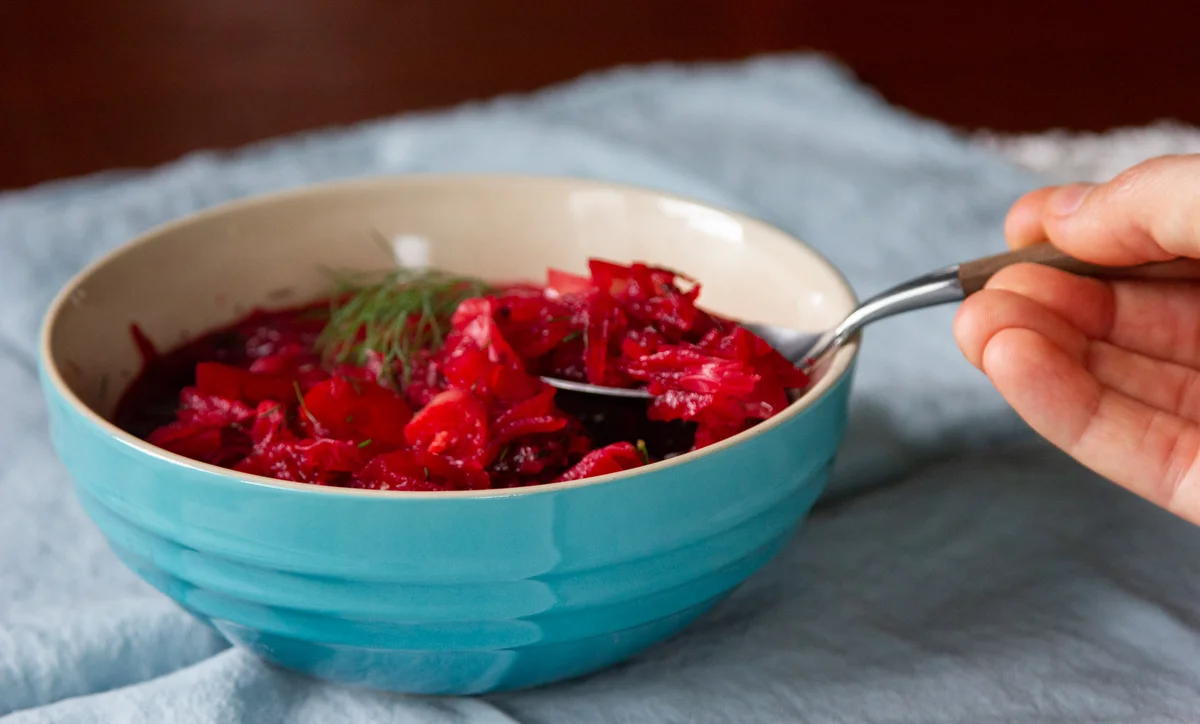
This simple, oil-free borscht is a colourful beet and cabbage soup simmered with onion, carrot, celery and dill. It makes a straightforward, vegetable-packed meal with a bright finish from red wine vinegar.
Ingredients
- 1.2 litres (5 cups)water
- 15 ml (1 tablespoon), or to tastered wine vinegar
- 2bay leaves
- 5 ml (1 teaspoon), or to tasteHimalayan pink salt
- 2.5 ml (1/2 teaspoon), or to tastefreshly ground black pepper
- 1 pinchground cloves
- 300 g (2 cups)beetroot, peeled and grated
- 160 g (1 cup)onion, sliced
- 2 clovesgarlic, chopped
- 2 stalkscelery, thinly sliced
- 1carrot, sliced
- 360 g (4 cups)cabbage, finely chopped
- 10 g (1/4 cup)fresh dill, minced
Instructions
- 1
Start the stock
Put the water, red wine vinegar, bay leaves, salt and pepper in a large saucepan over high heat.
- 2
Prepare vegetables
Peel and grate the beetroot using a food processor, mandoline or hand grater. Slice the onion, chop the garlic, wash and slice the celery and carrot, then chop the cabbage. Add each prepared vegetable to the soup stock.
- 3
Simmer the soup
Bring the soup to the boil, then lower the heat and simmer for 30 minutes, until the vegetables are well cooked. Stir in the fresh dill just before serving.
- 4
Serve with topping
Enjoy with a dollop of sour cream or yoghurt.
What is borscht?
Borscht is a beetroot soup associated with Eastern European cooking, with many regional and household versions. This simple version combines beetroot and cabbage with a light, water-based stock.
Grated beetroot and chopped vegetables cook together in one saucepan, while vinegar adds a tangy note and dill brings a fresh finish.
Nutrition and macros by portion
The nutrition label shows one serving as written: 127 calories, 4g protein, 28g carbs, 1g fat.
| Portion | Adjustment | kcal | Protein | Carbs | Fat |
|---|---|---|---|---|---|
| Lighter | Smaller bowl, no topping | 89 kcal | 3g | 20g | 0g |
| This serving | As written | 127 kcal | 4g | 28g | 1g |
| Hungry | Larger bowl with bread | 191 kcal | 6g | 42g | 1g |
Most of the carbohydrates and fibre come from the beetroot, cabbage, carrot and onion; the vegetables also provide a modest amount of protein. With no oil in the recipe, fat is very low, while salt contributes most of the sodium. Pair a bowl with beans or yoghurt and bread if you want a more substantial, balanced plate.
The vegetable choices
Beetroot: grating it helps it cook through during the simmer and colours the broth. A food processor, mandoline or hand grater will do the job.
Cabbage and aromatics: finely chopped cabbage, sliced onion, garlic, celery and carrot make up the vegetable base. Keep the pieces fairly even so they soften at a similar pace.
Build the stock
Seasoned water is the starting point here, rather than a stock made with oil. Bay leaves, black pepper, salt, a pinch of ground cloves and red wine vinegar give it flavour as it heats.
The vinegar can be adjusted to taste. Start with the listed amount, then taste the soup before serving if you want a sharper finish.
Get the texture right
Cut size: finely chop the cabbage and slice the other vegetables as directed. Smaller, consistent pieces soften more evenly over the 30-minute simmer.
Doneness: the vegetables should be well cooked and tender before the soup is served. If they are still firm, continue simmering until they reach that texture.
Finish with dill
Fresh dill goes in just before serving, not at the start of the simmer. This keeps its flavour distinct in the finished soup.
Remove the bay leaves before eating. Add sour cream or yoghurt at the table if you would like a creamy topping.
Serve it as a meal
Serve the soup hot, with sour cream or yoghurt if desired. Bread makes a practical accompaniment for a more filling meal.
For extra protein, serve it alongside beans or another protein-rich dish; the soup itself is mainly made from vegetables.
Recipe notes & tips
- Grate the beetroot in a food processor for quicker preparation.
- Taste the broth before serving and adjust the vinegar, salt or pepper to your preference.
- Keep the cabbage finely chopped so it softens within the stated simmer.
- Remove the bay leaves before serving.
- Add the dill at the end rather than simmering it with the vegetables.
Variations
- Creamy topping: add a dollop of sour cream or yoghurt when serving.
- More vinegar: add a little extra red wine vinegar to taste for a tangier soup.
- Extra dill: scatter more minced fresh dill over each bowl at the table.
- Heartier bowl: serve with beans or bread on the side.
- Milder seasoning: reduce the black pepper and ground cloves to suit your taste.
Common mistakes to avoid
- Large vegetable pieces: they may not soften evenly; slice and chop them as directed.
- Skipping the taste check: vinegar and salt preferences vary; adjust the seasoning before serving.
- Adding dill too early: its fresh flavour can fade; stir it in just before serving.
- Leaving bay leaves in the bowls: remove them before serving.
- Stopping while vegetables are firm: simmer longer until they are well cooked.
How to store
Cool leftovers and refrigerate them in a covered container for up to 3–4 days. Reheat gently in a saucepan until hot throughout; add a little water if the soup has thickened. The soup can also be frozen, though the vegetables may soften further after thawing.
Frequently asked questions
Can I grate the beetroot by hand?
Yes. Use a hand grater, mandoline or food processor, as convenient.
How do I know when the soup is ready?
After 30 minutes of simmering, check that the vegetables are well cooked and tender. Simmer a little longer if needed.
Can I adjust the vinegar?
Yes. The recipe gives vinegar to taste, so start with the listed amount and add more if you prefer a sharper broth.
When should I add the dill?
Add the minced fresh dill just before serving, as directed, to keep its flavour fresh.
What can I serve with this borscht?
Serve it with sour cream or yoghurt, as suggested, or add bread or beans on the side for a more filling meal.
Can I make the soup ahead?
Yes. Refrigerate it in a covered container and reheat it gently before serving. Add the dill just before serving.
Cook it from the original
This recipe comes from goodgutayurveda.com. Their page has the author’s own photos, notes and tips — the best place to cook it from.
Open the recipe on goodgutayurveda.com