
Recipe for Poha Breakfast
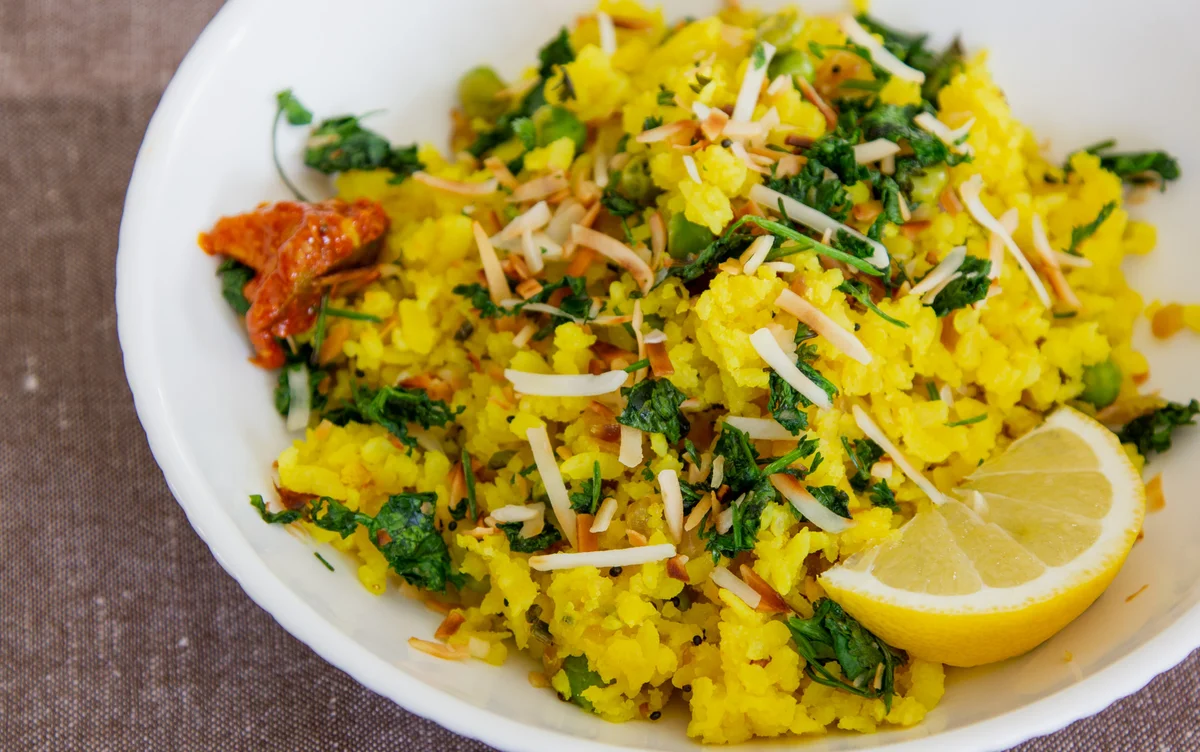
Poha is a quick Indian dish of softened flattened rice cooked with mustard seeds, ginger and peas, then finished with lemon and fresh coriander. It works as a simple breakfast, light meal or snack, and comes together in about 20 minutes.
Ingredients
- 480 ml (2 cups)thick poha flakes
- 1.25 ml (1/4 teaspoon)turmeric powder
- 1.25 ml (1/4 teaspoon), or to tasteHimalayan pink salt
- 10 ml (2 teaspoons)ghee
- 1.25 ml (1/4 teaspoon)black mustard seeds
- A pinchasafoetida (hing), optional
- 5 ml (1 teaspoon)minced ginger
- 120 ml (1/2 cup)frozen peas
- 15 ml (1 tablespoon)water
- 60 ml (1/4 cup)chopped fresh coriander
- 15 ml (1 tablespoon)freshly squeezed lemon juice
Instructions
- 1
Defrost the peas
Take the frozen peas out of the freezer and leave them in a bowl on the worktop to defrost. To speed this up, rinse them with cold water, then drain before cooking.
- 2
Rinse the poha
Put the poha in a bowl and cover with cold water. Mix thoroughly with your fingers, then drain through a sieve; repeat this process 3 times and drain away all the water. Sprinkle over 1/4 teaspoon each of turmeric and salt, then mix well.
- 3
Prepare the aromatics
Mince the ginger and set it by the hob with the spices, ready to use.
- 4
Fry the spices
Heat the ghee in a saucepan over medium heat. Add the mustard seeds and cook until about half of them pop. Turn the heat to low, add the optional asafoetida and then the ginger. Stir often and cook until the ginger just begins to brown.
- 5
Cook the peas
Add the peas with a pinch of salt and 1 tablespoon of water. Stir, cover with a lid and cook for 5 minutes. If using additional vegetables, add them at this stage. Check at least once that the pan still has moisture, adding a little more water if needed.
- 6
Add the poha
Add the prepared poha and a couple of tablespoons of water, then stir to combine. Cover and cook over low heat for 3 minutes.
- 7
Steam until tender
Turn off the heat and remove the lid to check the poha's moisture. If it seems dry or is sticking to the bottom of the pan, add a little more water. Aim for poha that is moist but not sticky or gloppy; replace the lid and leave it to steam for 3–5 minutes.
- 8
Finish and serve
Stir in the lemon juice and coriander. Serve in bowls with any optional toppings you like; if available, serve with a teaspoon of Indian pickle or mango chutney.
What is poha?
Poha is an Indian dish made with flattened rice, often served for breakfast but also enjoyed as a snack or light meal. It is especially familiar in western India, though versions are made in many parts of the country.
This version combines the mild rice flakes with peas, ginger and the crackle of mustard seeds. Lemon and fresh coriander brighten the finished dish.
Nutrition and macros by portion
The nutrition label shows one serving as written: 79 calories, 2g protein, 6g carbs, 5g fat.
| Portion | Adjustment | kcal | Protein | Carbs | Fat |
|---|---|---|---|---|---|
| Lighter | Use less ghee | 55 kcal | 1g | 4g | 4g |
| This serving | As written | 79 kcal | 2g | 6g | 5g |
| Hungry | Serve a larger bowl | 119 kcal | 3g | 9g | 8g |
The recipe's carbohydrates come mainly from the poha and peas, while the ghee provides most of the fat; the peas contribute some protein. For a more substantial meal, serve it with a protein-rich accompaniment such as yoghurt or eggs.
Choosing and rinsing the poha
Thick flakes: this recipe calls for thick poha, which holds its shape better during cooking than very thin flakes. Handle it gently after rinsing so it softens without breaking down.
Rinsing: three rinses remove loose starch and start softening the flakes. Drain thoroughly before adding the turmeric and salt.
Building the spice base
Mustard seeds: heat them in the ghee until about half have popped, then lower the heat before adding the next ingredients. This gives the seeds time to release their flavour without scorching.
Ginger and hing: stir the ginger frequently and cook only until it starts to brown. Asafoetida is optional, so leave it out if you do not have it.
Getting the texture right
Moisture: the poha needs enough water to soften, but excess liquid can make it sticky. Add water sparingly and check the texture after the covered cooking.
Resting: the final 3–5 minutes under the lid let the flakes steam gently after the heat is off. The poha should be tender and separate rather than wet or clumped.
Timing the peas and poha
Peas first: cook them, covered, for 5 minutes before adding the poha so they have time to heat through. Check the pan during this stage and top up the water if it is drying out.
Poha last: once the flakes go in, cook them on low for just 3 minutes, then let them steam off the heat. This short finish helps keep them from turning mushy.
Serving suggestions
Fresh finish: add the lemon juice and coriander after cooking, then stir them through just before serving. Their freshness balances the warm, savoury spices.
On the side: serve the poha in bowls with a teaspoon of Indian pickle or mango chutney if you have it. It can also be served on its own as a simple breakfast or snack.
Recipe notes & tips
- Use a sieve to drain the poha well after its final rinse.
- Have the ginger and spices beside the hob before heating the ghee.
- Lower the heat as soon as the mustard seeds have started popping.
- Check the peas while they cook so the pan does not dry out.
- Add extra water a little at a time to avoid sticky poha.
- Stir in the lemon juice and coriander after turning off the heat.
Variations
- Add vegetables: stir additional vegetables in with the peas so they cook before the poha is added.
- Skip the hing: leave out the asafoetida for a simpler spice base.
- Adjust the salt: season to taste, keeping in mind that the recipe also suggests a pinch with the peas.
- Serve with pickle: add a teaspoon of Indian pickle on the side for a sharp, savoury contrast.
- Use chutney: serve with mango chutney if you have it.
Common mistakes to avoid
- Using thin flakes: they can soften too quickly; choose thick poha as specified.
- Leaving excess rinse water: poorly drained flakes can turn sticky; drain them thoroughly.
- Scorching the ginger: it can brown too far while the spices cook; lower the heat and stir often.
- Letting the pan dry out: the peas may catch; check during their covered cooking and add a little water if needed.
- Adding too much water: the poha can become gloppy; add it gradually and check the texture.
- Cooking the flakes for too long: they may break down; stick to 3 minutes on low before the covered rest.
How to store
Refrigerate leftovers in a covered container and use within 2 days. Reheat gently in a covered pan with a small splash of water, checking that it is heated through.
Frequently asked questions
Can I use thin poha instead of thick flakes?
Thick flakes are best for this method because they are less likely to break down. If using thin poha, rinse it very gently and check it earlier during cooking.
Do I need to soak the poha?
No separate soaking is needed here. The recipe rinses the flakes three times, drains them and then cooks them briefly with a little water.
How can I tell when the poha is done?
The flakes should be tender and moist, but not sticky or gloppy. If they seem dry or stick to the pan, add a little water before the covered steaming rest.
Can I leave out the asafoetida?
Yes. It is optional in this recipe, so you can simply omit it.
When should I add the lemon and coriander?
Stir both in after turning off the heat, just before serving. This keeps the finish fresh and fragrant.
What can I serve with poha?
The recipe suggests Indian pickle or mango chutney, served on the side. Poha can also be eaten by itself as breakfast, a light meal or a snack.
Cook it from the original
This recipe comes from goodgutayurveda.com. Their page has the author’s own photos, notes and tips — the best place to cook it from.
Open the recipe on goodgutayurveda.com