
Carrots Halwa Aka Gajar Ka Halwa
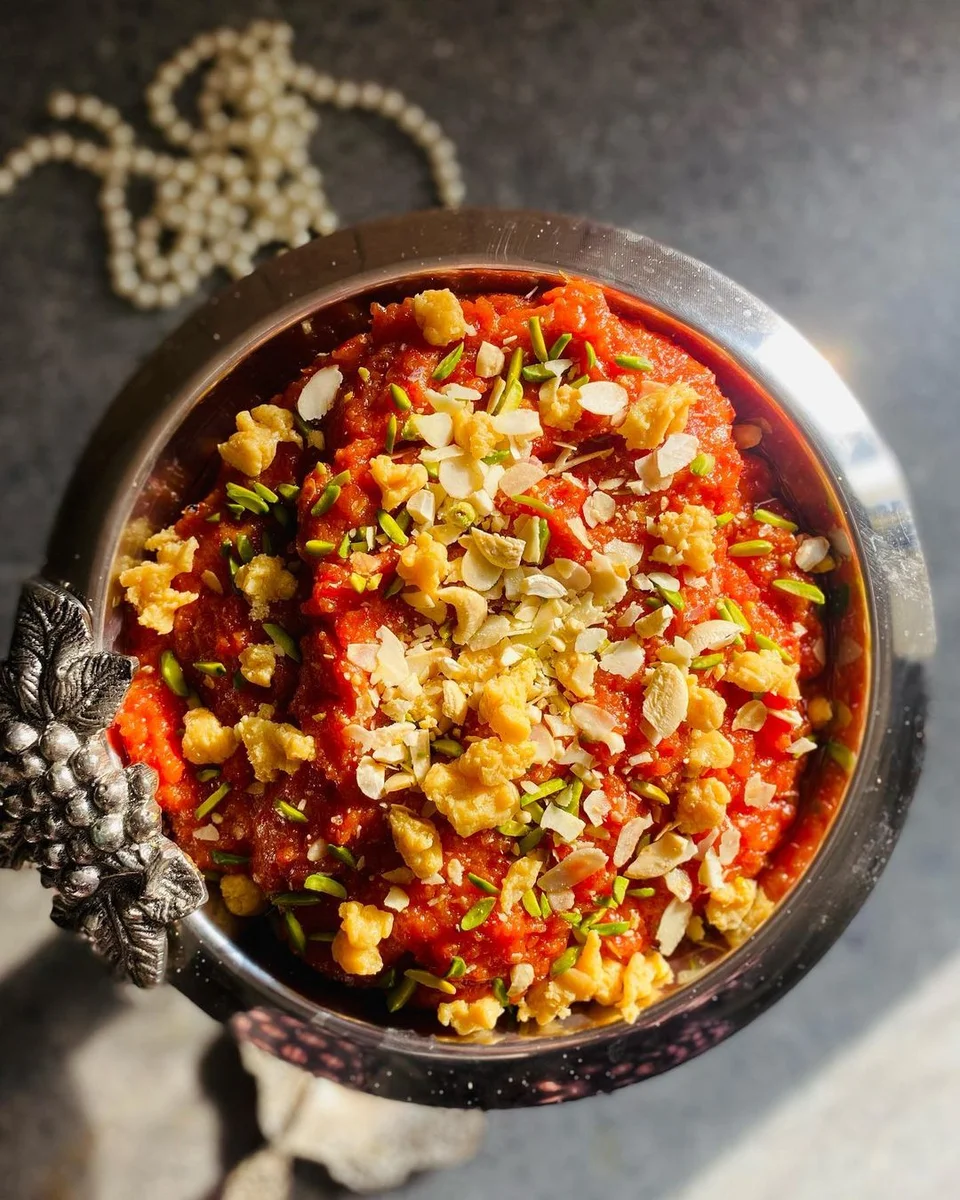
Gajar ka halwa is a rich Indian carrot dessert, slow-cooked with milk, sugar and ghee until tender and deeply coloured. This version uses sliced carrots and a long, steady simmer for a soft, spoonable finish.
Ingredients
- 1 kgcarrots, cut into round slices
- 1,000 mlmilk
- 200 g (1 cup)sugar
- 227 g (1 cup)ghee
- a fewcardamoms
- to tastedried fruit, for garnish
Instructions
- 1
Prepare the carrots
Wash and peel the carrots, then slice them into rounds.
- 2
Simmer with milk
Cook the carrots with the milk over medium heat until they are tender enough to mash and the milk has evaporated. This takes about 30–40 minutes.
- 3
Mash the carrots
Use a hand mortar to mash the softened carrots; they should be easy to break down after simmering.
- 4
Add ghee and cardamom
Stir in the ghee, then add a few cardamoms.
- 5
Cook with sugar
Stir with a wooden spoon for a few minutes, then add the sugar. Cook over a low to medium heat for 30 minutes, stirring again.
- 6
Check the finish
Keep stirring until the ghee rises to the surface and the colour shifts from raw orange to a golden reddish shade.
- 7
Garnish and serve
Top with dried fruit and, as mentioned in the method, khoya if using, then serve.
What is gajar ka halwa?
Gajar ka halwa is a traditional Indian pudding made by cooking carrots with milk, sugar and ghee. The carrots soften as the liquid reduces, leaving a dense, sweet dessert with a rich aroma.
This version starts with sliced carrots and cooks them until mashable, then continues with ghee and sugar. Slow cooking gives the mixture time to lose moisture and develop its characteristic deep colour.
Nutrition and macros by portion
The nutrition label shows one serving as written: 772 calories, 10g protein, 68g carbs, 55g fat.
| Portion | Adjustment | kcal | Protein | Carbs | Fat |
|---|---|---|---|---|---|
| Lighter | Use less ghee and sugar | 540 kcal | 7g | 48g | 39g |
| This serving | As written | 772 kcal | 10g | 68g | 55g |
| Hungry | Serve a larger scoop | 1158 kcal | 15g | 102g | 83g |
The carrots and sugar provide most of the carbohydrates, while the milk contributes protein and some fat. Ghee is the main source of fat, so serve a moderate scoop alongside a lighter meal or share it as a dessert.
Choosing and preparing the carrots
Carrot slices: Cut them into reasonably even rounds so they soften at a similar pace. Peeling and washing first keeps the final texture clean.
Softness: Cook until the carrots can be mashed easily before moving on. If they are still firm, give them more time in the milk.
Reducing the milk
Steady heat: Keep the pan at medium heat while the carrots simmer, allowing the milk to evaporate gradually. The stated cooking time is about 30–40 minutes, but the visual cue is that the milk has gone.
Stirring: Check the pan regularly as the liquid reduces so the carrots do not stick. Once the mixture thickens, pay closer attention.
Mashing for the right texture
Hand mortar: Mash the tender carrots after the milk has evaporated, as the method directs. Break them down to the texture you prefer, leaving some pieces if you like a less uniform halwa.
Timing: Mashing while the carrots are soft is easier than trying to crush them while they are still firm. Avoid adding sugar before this step, as the recipe adds it later.
Cooking with ghee and sugar
Ghee first: Add the ghee and cardamom before the sugar, then stir for a few minutes. This coats the mashed carrots and brings in the cardamom aroma.
Sugar stage: Add the sugar and cook over low to medium heat for 30 minutes, stirring regularly. The ghee rising and the change to a golden reddish colour are the cues given for the finish.
Serving and toppings
Dried fruit: Scatter it over the halwa just before serving for a contrasting garnish. The recipe gives no specific type or quantity, so use what you have to taste.
Khoya: The method mentions khoya as a topping, although it is not included in the ingredient list or given a quantity. Add it only if you have it and want to follow that suggestion.
Recipe notes & tips
- Use a wide, heavy-based pan to help the milk evaporate evenly.
- Stir more often as the mixture thickens to prevent sticking.
- Crush the cardamom seeds for a stronger aroma, removing the husks if you prefer.
- Wait until the carrots are very tender before mashing.
- Taste near the end and adjust the garnish to suit your preference.
Variations
- Add khoya: Stir or crumble some over the top, as suggested in the method, though no amount is specified.
- Change the dried fruit: Use raisins or chopped dried apricots for a different garnish.
- Add chopped nuts: Scatter chopped almonds or pistachios over the finished halwa.
- Boost the spice: Add a little ground cardamom along with the pods.
- Adjust the sweetness: Reduce the sugar slightly if you prefer a less sweet dessert.
Common mistakes to avoid
- Adding sugar too early: Follow the method and add it after the carrots have been mashed and cooked briefly with ghee.
- Stopping while carrots are firm: Continue simmering until they are tender enough to mash easily.
- Leaving the pan unattended: Stir regularly, especially as the mixture thickens, to reduce the chance of sticking.
- Using high heat throughout: Keep to medium heat for the milk stage and low to medium for the sugar stage.
- Expecting a precise khoya quantity: The method mentions it but does not specify an amount, so treat it as an optional topping.
How to store
Cool leftovers and refrigerate them in a covered container for up to 3 days. Reheat gently in a pan over low heat, stirring; add a small splash of milk if the halwa has become too thick.
Frequently asked questions
How do I know when the carrots are ready to mash?
They should be tender enough to crush easily with a hand mortar. The recipe gives about 30–40 minutes for cooking with the milk.
Why does the milk need to evaporate?
Reducing the milk concentrates the mixture so the halwa becomes thick rather than milky. The method says to wait until the milk has completely evaporated before mashing.
When should I add the sugar?
Add it after stirring the mashed carrots with ghee and cardamom for a few minutes. Then cook for a further 30 minutes over low to medium heat.
What does it mean when the ghee comes up?
It means the ghee is visible at the surface of the cooked mixture. The method uses this, along with the golden reddish colour, as a cue that the halwa is ready.
Is khoya required?
Khoya is mentioned as a topping in the method, but it is not listed among the ingredients or assigned a quantity. It can be left out or added to taste.
Cook it from the original
This recipe comes from fooooods.com. Their page has the author’s own photos, notes and tips — the best place to cook it from.
Open the recipe on fooooods.com