
Recipe for Khichdi With Cauliflower And Green Pepper
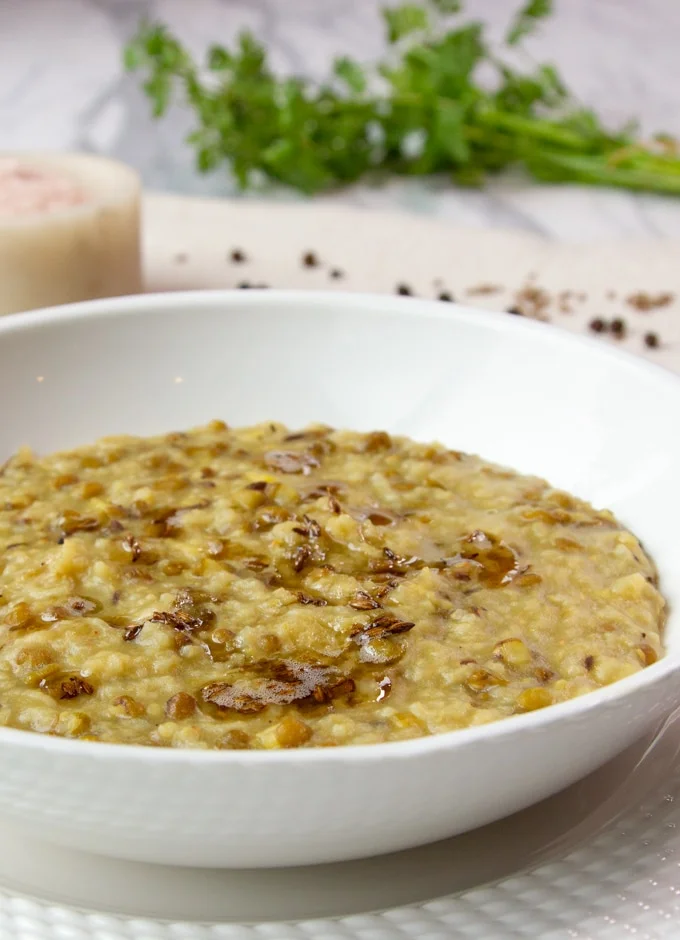
This Indian one-pot khichdi brings rice and mung beans together with ghee, cumin and ginger, then finishes with lemon and an optional topping of spiced cauliflower and green pepper. It is a comforting, gently seasoned meal with two ways to cook the grains and two ways to prepare the vegetables.
Ingredients
- 95 g (½ cup)rice
- 100 g (½ cup)whole mung beans (or yellow moong dal)
- 950–1,180 ml (4–5 cups)water
- ½ teaspoonground turmeric
- ½ teaspoon, or to tasteHimalayan pink salt
- ½ teaspoonghee
- 1 tablespoonghee
- ¾ teaspooncumin seeds
- A pinchasafoetida (optional but recommended)
- 1 teaspoonminced or grated ginger
- ½ lemonfreshly squeezed lemon juice
- 1 teaspoonvegetable oil
- About 600 g (6 cups)cauliflower florets
- About 150 g (1 cup)chopped green pepper
- ½ teaspoonground turmeric
- A pinchblack pepper
- ½ teaspoonHimalayan pink salt
Instructions
- 1
Rinse the grains
You can cook the khichdi in a pressure cooker or a thick-bottomed saucepan. Soaking the dried mung beans is optional; if you do soak them, 4 hours is sufficient. Drain and rinse them 3–4 times, until the water runs clear.
- 2
Pressure cook
For an electric pressure cooker, add the rice, mung beans, 950 ml (4 cups) water, ½ teaspoon turmeric, the first ½ teaspoon salt and ½ teaspoon ghee. Lock the lid, select high pressure and cook for 10 minutes. Let the pressure release naturally for 15 minutes, then vent any remaining steam and open the lid safely. For a stovetop pressure cooker, bring the same ingredients to high pressure, then lower the heat enough to maintain it and cook for 6 minutes. Turn off the heat and allow 15 minutes for natural pressure release before opening.
- 3
Cook in a saucepan
For the saucepan method, add the rice, mung beans, 1,180 ml (5 cups) water, ½ teaspoon turmeric, the first ½ teaspoon salt and ½ teaspoon ghee to a thick-bottomed pan. Cook for 40 minutes, until the rice and beans are very soft and beginning to break apart.
- 4
Make the seasoning
Warm 1 tablespoon ghee in a small frying pan over medium heat. Add the cumin seeds and cook until lightly browned. Stir in the asafoetida for about 20 seconds, then add the ginger and cook for 1–2 minutes, until it begins to brown lightly. Turn off the heat.
- 5
Season the khichdi
If you are not making the vegetable topping, pour the hot spiced ghee over the cooked rice and mung beans. Stir, taste and adjust the salt. Divide between bowls and finish with fresh lemon juice.
- 6
Cook the vegetables
For the frying-pan method, heat the vegetable oil in a large pan over medium-high heat. Add the second ½ teaspoon turmeric and the black pepper; cook for a few seconds, then add the cauliflower, green pepper and second ½ teaspoon salt. Stir occasionally and sauté for about 10 minutes, until lightly browned. For the oven method, heat the oven to 200°C (400°F). Toss the vegetables with the turmeric, black pepper, salt and oil, spread them in one layer on a parchment-lined baking tray and roast for 35 minutes, until caramelised at the edges.
- 7
Serve with vegetables
Divide the khichdi among serving bowls and squeeze over fresh lemon juice. Spoon the spiced cauliflower and green pepper on top.
What is khichdi?
Khichdi is an Indian comfort-food dish made by cooking rice and lentils or beans together until soft. It is associated with home cooking, and the one-pot method gives the grains a tender, cohesive texture.
This version uses whole mung beans and finishes the khichdi with cumin, ginger and ghee. A topping of turmeric-seasoned cauliflower and green pepper adds colour and a contrast of lightly browned vegetables.
Nutrition and macros by portion
The nutrition label shows one serving as written: 274 calories, 11g protein, 46g carbs, 6g fat.
| Portion | Adjustment | kcal | Protein | Carbs | Fat |
|---|---|---|---|---|---|
| Lighter | Use less ghee | 192 kcal | 8g | 32g | 4g |
| This serving | As written | 274 kcal | 11g | 46g | 6g |
| Hungry | Serve a larger bowl | 411 kcal | 17g | 69g | 9g |
The rice supplies most of the carbohydrates, while mung beans contribute both protein and carbohydrates. Ghee and vegetable oil provide most of the fat, and the mung beans add further protein. For a more balanced plate, serve with a fresh salad or extra non-starchy vegetables.
Choosing the beans and rice
Whole mung beans: These give the dish a little more texture than split yellow moong dal. Soaking is optional, but if you choose to soak them, drain and rinse well before cooking.
Rice: The rice and beans cook in the same pot, so they soften together and form the gently thick base. Use the saucepan method if you want to keep a closer eye on their texture.
Pressure cooker or saucepan
Pressure cooker: The recipe gives separate timings for electric and stovetop models: 10 minutes at high pressure for an electric cooker, or 6 minutes at high pressure for a stovetop cooker. In both cases, allow 15 minutes for the pressure to release naturally before opening.
Saucepan: This route takes 40 minutes and uses 5 cups (1,180 ml) of water. Keep the pan at a steady simmer and cook until the beans and rice are very soft and starting to break apart.
Building the spiced ghee
Cumin first: Let the seeds turn lightly brown in the ghee to bring out their aroma. Add the asafoetida briefly before the ginger, as directed, so the ginger has time to soften and brown without burning.
Ginger finish: Cook it for 1–2 minutes, then take the pan off the heat. Pouring the warm seasoning over the cooked rice and beans distributes its flavour through the whole dish.
Getting the vegetables right
Frying pan: Medium-high heat and occasional stirring help the cauliflower and pepper brown in about 10 minutes. Avoid stirring constantly, which can interrupt browning.
Oven: Spread the vegetables in a single layer and roast at 200°C (400°F) for 35 minutes. The edges should be caramelised when they are ready.
Checking the texture
Soft grains: The cooked rice and mung beans should be very tender, with some pieces beginning to break apart. If using the saucepan, check near the end of the 40-minute cooking time for this cue.
Balanced finish: Stir in the spiced ghee and taste before serving; the lemon is added at the end to brighten the soft, savoury base. Keep the vegetables on top so their browned edges remain distinct.
Serving ideas
Serve the khichdi in individual bowls, squeeze over fresh lemon juice and add the cauliflower and green pepper topping. The grains and beans make a soft base, while the vegetables provide a more substantial bite.
For a simple meal, serve it as written. If you want something alongside, a crisp salad or plain yoghurt can provide a cool contrast without competing with the spices.
Recipe notes & tips
- Soak the mung beans for 4 hours if you want to prepare them ahead, then drain and rinse them well.
- Use a pressure cooker of at least 3 quarts if following the pressure-cooker method.
- Give the cooker the full 15 minutes of natural pressure release before venting and opening it.
- Keep the roasted vegetables in one layer on the tray so they can brown at the edges.
- Taste the khichdi after stirring in the seasoning and adjust the salt before portioning.
- Add the lemon juice at serving time for a fresh finish.
Variations
- Use yellow moong dal: Swap in yellow moong dal for the whole mung beans.
- Choose the oven topping: Roast the vegetables at 200°C (400°F) for 35 minutes.
- Choose the frying-pan topping: Sauté the vegetables for about 10 minutes, until lightly browned.
- Skip the topping: Stir the spiced ghee into the cooked rice and beans and serve with lemon.
- Adjust the heat: Add a little extra black pepper to the vegetables for a more peppery finish.
Common mistakes to avoid
- Opening the cooker too soon: Allow 15 minutes of natural pressure release before venting the remaining steam.
- Using too little saucepan water: Use 5 cups (1,180 ml) for the saucepan method as listed.
- Stopping while the beans are firm: Continue cooking until the rice and mung beans are very soft and starting to break apart.
- Burning the ginger: Cook it for 1–2 minutes and turn off the heat once it begins to brown lightly.
- Crowding the roasting tray: Spread the vegetables in a single layer so their edges can caramelise.
- Adding the lemon too early: Squeeze it over the bowls just before serving.
How to store
Refrigerate leftovers in a covered container for up to 3 days. Reheat gently in a saucepan or microwave, adding a splash of water if the khichdi has thickened; store the vegetables separately if you want to preserve more of their texture.
Frequently asked questions
Do I need to soak the mung beans?
No, soaking is optional for this recipe. If you do soak them, 4 hours is sufficient; drain and rinse them 3–4 times before cooking.
Can I use yellow moong dal instead of whole mung beans?
Yes. The ingredient list offers yellow moong dal as an alternative to whole mung beans.
How do I know when the khichdi is cooked?
The rice and mung beans should be very soft, with some beginning to break apart. In a saucepan this takes about 40 minutes; pressure-cooker timing depends on the type of cooker.
Can I make the vegetable topping without an oven?
Yes. Sauté it in a large frying pan over medium-high heat for about 10 minutes, stirring occasionally, until lightly browned.
Can I leave out the vegetable topping?
Yes. Stir the spiced ghee into the cooked rice and mung beans, taste and adjust the salt, then serve with fresh lemon juice.
How should I reheat leftover khichdi?
Reheat it gently in a saucepan or microwave. Add a splash of water if it has thickened in the fridge.
Cook it from the original
This recipe comes from goodgutayurveda.com. Their page has the author’s own photos, notes and tips — the best place to cook it from.
Open the recipe on goodgutayurveda.com