
Crispy Fish Fillet Recipe
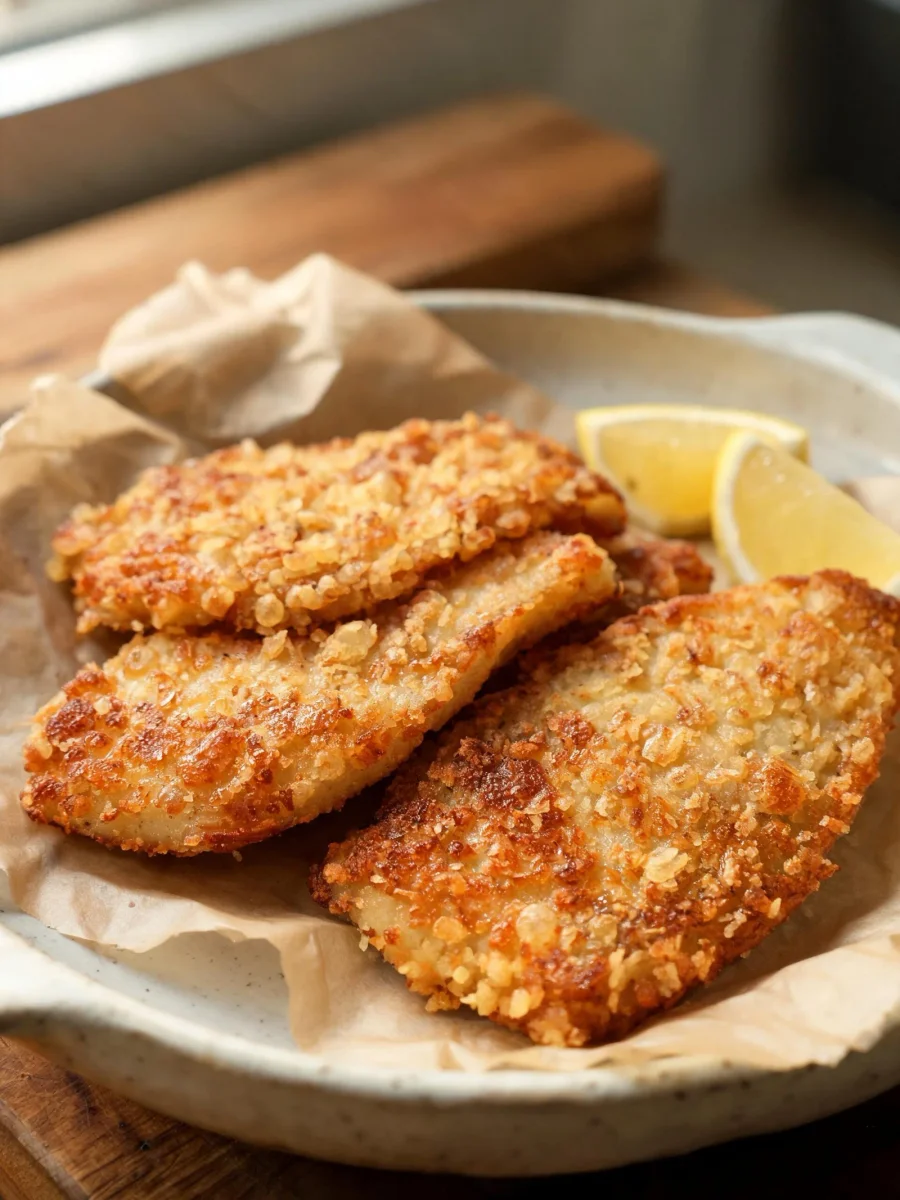
These American-style crispy fish fillets are coated in seasoned flour, egg and crunchy panko, then pan-fried until golden. They make a quick main course, with lemon to brighten the crisp coating and tender fish.
Ingredients
- 4 fillets, about 170 g (6 oz) eachwhite fish, such as flounder, cod or tilapia
- 1 teaspoonsalt
- ½ teaspoonblack pepper
- ½ teaspoongarlic powder
- ½ teaspoonsmoked paprika
- 60 g (½ cup)plain flour
- 2 largeeggs, beaten
- 60 g (1 cup)panko breadcrumbs
- 25 g (¼ cup), optionalgrated Parmesan
- 80 ml (⅓ cup)neutral oil, such as vegetable or rapeseed oil
- 14 g (1 tablespoon)butter
- to servelemon wedges
Instructions
- 1
Dry the fish
Pat both sides of the fish fillets completely dry with kitchen paper.
- 2
Season the fillets
Season both sides of each fillet with the salt, black pepper, garlic powder and smoked paprika.
- 3
Set up bowls
Put the flour in one shallow bowl and the beaten eggs in a second. In a third bowl, mix the panko with the Parmesan.
- 4
Coat each fillet
Coat each fillet in flour and shake off the excess. Dip it in the egg, let the extra drip away, then press it into the panko mixture on both sides.
- 5
Heat the oil
Heat the oil in a large frying pan over a medium-high heat. It is ready when a dropped breadcrumb sizzles immediately.
- 6
Fry the first side
Add the fillets without crowding the pan. Cook without moving them for 3 to 4 minutes.
- 7
Turn and finish
Gently turn each fillet with a wide spatula and add the butter to the pan. Cook for another 3 to 4 minutes, until golden and the fish flakes easily.
- 8
Serve straight away
Transfer the fillets to a wire rack or a plate lined with kitchen paper. Squeeze fresh lemon over the top and serve immediately.
What are crispy fish fillets?
Crispy fish fillets are pieces of mild white fish coated in crumbs and fried until the outside is crisp and the centre flakes apart. This American-style version uses panko for a light, crunchy crust and adds smoked paprika for gentle savoury warmth.
The flour, egg and crumb layers help the coating cling to the fish as it cooks. Parmesan is optional, but adds a savoury note to the panko.
Nutrition and macros by portion
The nutrition label shows one serving as written: 500 calories, 38g protein, 25g carbs, 26g fat.
| Portion | Adjustment | kcal | Protein | Carbs | Fat |
|---|---|---|---|---|---|
| Lighter | Use less frying oil | 350 kcal | 27g | 18g | 18g |
| This serving | As written | 500 kcal | 38g | 25g | 26g |
| Hungry | Add another fish fillet | 750 kcal | 57g | 38g | 39g |
The fish provides most of the protein, while the flour and panko contribute carbohydrates. The frying oil, butter, egg and optional Parmesan contribute much of the fat; serve with vegetables or salad to round out the plate.
Choosing the fish
Cod and tilapia: These mild, relatively firm options are easy to coat and turn. Flounder also works, though its thinner fillets may need especially gentle handling.
Even thickness: Fillets of similar thickness are easier to cook at the same rate. If one end is much thinner, take care when turning so it does not break.
Build a coating that stays put
Dry fish: Patting the fillets dry helps the flour adhere rather than slipping on a damp surface. Season both sides before coating so the fish itself is flavoured.
Three bowls: Keep the flour, beaten egg and panko mixture separate, and let excess flour and egg fall away at each stage. Press the fish into the crumbs on both sides to make an even coating.
Get the pan ready
Hot oil: Wait until a breadcrumb sizzles immediately before adding the fish. If the oil is not hot enough, the coating may take longer to crisp.
Room to cook: Leave space between fillets so they can fry rather than crowding one another. Cook in batches if your pan cannot fit them comfortably.
Check for crispness and doneness
Hands off: Let the first side cook undisturbed for 3 to 4 minutes so the crumb layer can set and brown. Turn the fillets gently with a wide spatula.
Flaking fish: After another 3 to 4 minutes, the crust should be golden and the fish should flake easily. Thicker fillets may need a little longer; use the flaking cue rather than relying only on colour.
Serve while crisp
Lemon: A squeeze of fresh lemon adds brightness just before serving. Serve the fillets immediately for the best contrast between the crisp coating and tender fish.
On the side: Pair them with a simple green salad, steamed vegetables or boiled potatoes. A tangy slaw also complements the fried crumb coating.
Recipe notes & tips
- Set out the coating bowls in order before you start so the fish can be breaded efficiently.
- Use one hand for the dry coating and the other for the egg to reduce clumping on your fingers.
- Press the panko onto the fish rather than brushing it over loosely.
- Let excess coating fall away so it does not burn in the frying pan.
- Use a wide spatula to support the fillet when turning it.
- Drain the cooked fish on a wire rack if you want air to circulate around the underside.
Variations
- Add herbs: Mix finely chopped parsley into the panko for a fresh savoury note.
- Skip the cheese: Leave out the Parmesan for a simpler crumb coating.
- Use fresh paprika: Replace smoked paprika with sweet paprika for a less smoky flavour.
- Try another fish: Use similarly sized haddock fillets in place of cod, flounder or tilapia.
- Add a dip: Serve with tartare sauce or a simple yoghurt and lemon sauce.
Common mistakes to avoid
- Damp fillets: The coating can slide off; pat the fish completely dry before seasoning.
- Loose breadcrumbs: A thin, patchy crust can result; press the panko firmly onto both sides.
- Cool oil: The coating may turn greasy before it browns; wait for a breadcrumb to sizzle immediately.
- Crowded pan: Fillets can steam and cook unevenly; fry in batches if needed.
- Early turning: The crust may tear; leave the first side undisturbed for 3 to 4 minutes.
- Rough handling: Thin fish can break apart; turn each fillet gently with a wide spatula.
How to store
Refrigerate leftovers in a covered container for up to 2 days. Reheat in a frying pan or oven until hot, aiming to restore some crispness; the coating will soften during storage.
Frequently asked questions
Can I use frozen fish?
Yes, but thaw it fully first and pat it very dry on both sides. Excess moisture can make the coating slide off.
Can I make these without Parmesan?
Yes. The Parmesan is optional, and the panko will still make a crisp coating without it.
How do I know when the fish is cooked?
The outside should be golden and the fish should flake easily when gently tested. Thicker fillets may need more time than thinner ones.
Can I cook the fillets in batches?
Yes. Keep the first batch warm while you cook the rest, and allow the oil to heat back up between batches.
What can I serve with crispy fish?
Try salad, steamed vegetables, boiled potatoes or slaw. Lemon wedges are included for serving and help brighten the rich, crisp coating.
Cook it from the original
This recipe comes from bluerecipes.com. Their page has the author’s own photos, notes and tips — the best place to cook it from.
Open the recipe on bluerecipes.com