
Low FODMAP Veggie Burger
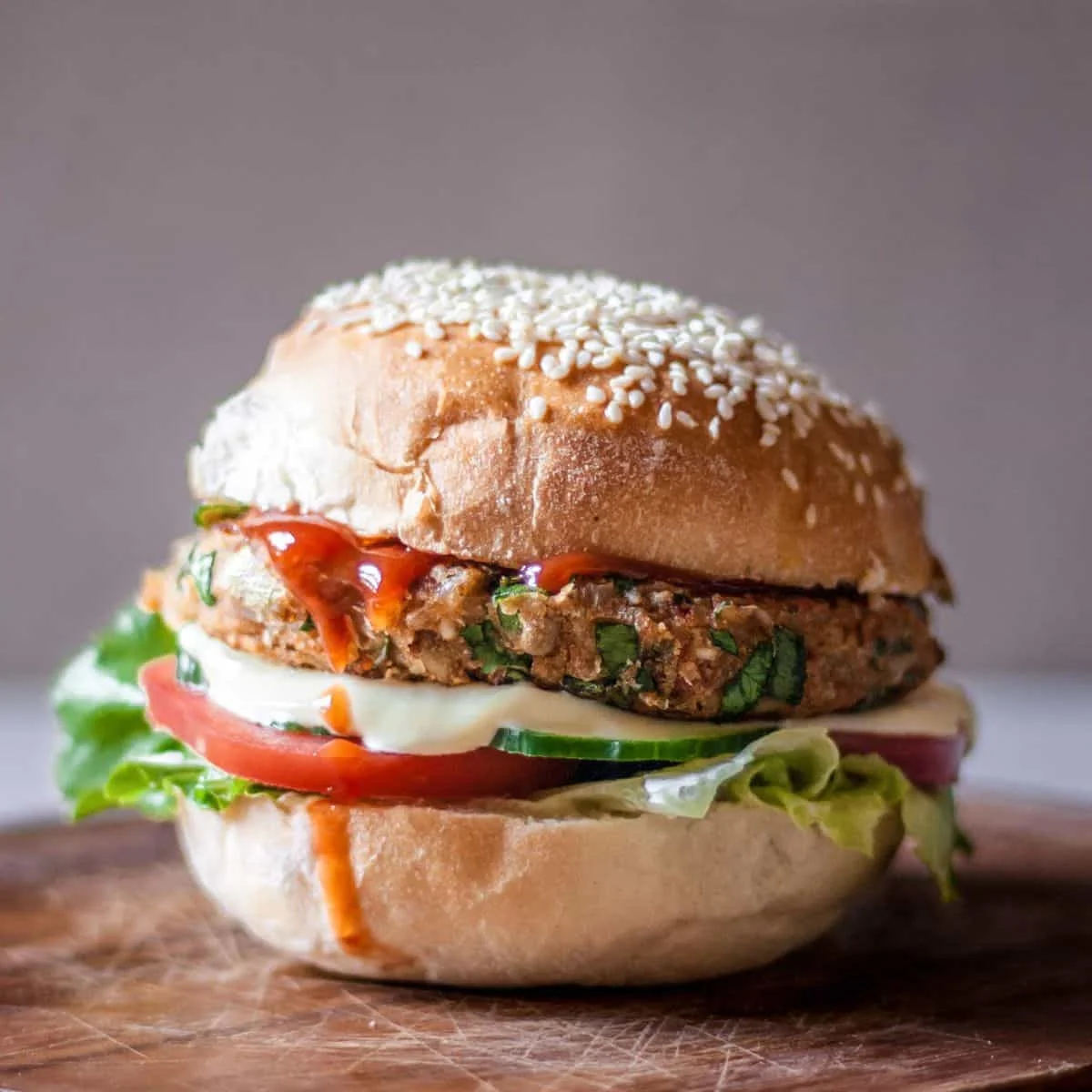
These vegan veggie burgers combine brown rice, butter beans, toasted nuts and seeds for a hearty, textured patty. They’re a good choice when you want a homemade burger that can be cooked in a skillet or on the grill.
Ingredients
- 140 gtinned butter beans, rinsed and drained
- 200 gcooked brown rice
- 50 gwalnuts
- 30 gsunflower seeds
- 20 gcoriander
- 2spring onions, green parts only
- 1 tbspsesame seeds
- 1 slicegluten-free bread
- 3 tbspolive oil
- to tastesalt
- to tasteblack pepper
- ½ tspchilli flakes
- ½ tspsmoked paprika
Instructions
- 1
Cook the rice
Cook the brown rice, using the suggested method for the best results.
- 2
Mash the beans
Put the drained butter beans in a large mixing bowl and mash them finely with a fork, leaving a few small lumps.
- 3
Toast the walnuts
Heat a skillet over medium heat. Add the walnuts and toast for 5–7 minutes, stirring frequently, until fragrant and golden brown. Leave them to cool.
- 4
Chop the greens
Finely chop the spring onions into pieces about ½ cm across, chop the coriander, and add both to the bowl with the mashed beans.
- 5
Soak the bread
Soak the bread in water, then drain it very well and add it to the bean mixture.
- 6
Chop the walnuts
Chop the cooled toasted walnuts and add them to the bowl.
- 7
Add the seasonings
Drain any liquid from the cooked rice and add it to the bowl. Add the spices, salt, oil, sesame seeds and sunflower seeds.
- 8
Mix the ingredients
Mix everything thoroughly; use your hands if that makes it easier to bring the ingredients together.
- 9
Shape the patties
Divide the mixture into 4 portions and shape them into patties. For smaller burgers, divide it into 5 or 6 portions; the original recipe notes that each of its four patties weighed about 130 g.
- 10
Heat the cooking surface
For grilling, heat the grill and brush its surface with oil. Otherwise, heat the same skillet used for the walnuts over medium heat.
- 11
Add the burgers
If using a skillet, add just enough oil to lightly coat its base, then add the patties. If grilling, place the patties on the grill and close the lid.
- 12
Cook both sides
Cook for 4–5 minutes on the first side, until well browned, then flip gently. The patties are less firm than meat burgers but should hold their shape; reduce the heat if they brown too quickly. Cook for another 3–4 minutes on the other side.
- 13
Cool and prepare
Take the burgers off the heat and let them cool slightly. While they cool, prepare your toppings and sides, and toast the buns.
- 14
Serve the burgers
Serve the patties on their own or in toasted buns with your preferred toppings. Refrigerate leftovers for 2–3 days; consult the original recipe’s make-ahead guidance for freezing instructions.
What is a veggie burger?
A veggie burger is a plant-based patty served much like a conventional burger. Rather than relying on meat, this version uses beans and rice as its base, with nuts and seeds adding texture.
This combination makes a substantial patty with a mix of soft, chewy and crunchy elements. The recipe’s use of spring onion greens and coriander also brings freshness to the smoky, spiced mixture.
Nutrition and macros by portion
The nutrition label shows one serving as written: 352 calories, 8g protein, 27g carbs, 25g fat.
| Portion | Adjustment | kcal | Protein | Carbs | Fat |
|---|---|---|---|---|---|
| Lighter | Use less oil | 246 kcal | 6g | 19g | 18g |
| This serving | As written | 352 kcal | 8g | 27g | 25g |
| Hungry | Make a larger portion | 528 kcal | 12g | 41g | 38g |
Brown rice, beans and bread provide most of the carbohydrates, while the beans, nuts and seeds contribute protein. Olive oil, walnuts, sunflower seeds and sesame make up much of the fat. For a more balanced plate, serve a patty with plenty of salad or vegetables; the nutrition estimate does not account for buns or toppings.
Building the mixture
Bean base: Mash the butter beans finely but leave a few small lumps; this gives the mixture some texture while helping it hold together.
Rice and bread: Cooked rice forms part of the bulk, while the soaked bread helps bind the ingredients. Drain both well so the mixture doesn’t become wet.
Why toast the walnuts
Toasting: Give the walnuts 5–7 minutes in a dry skillet, stirring often. Their fragrant, golden appearance is the cue to take them off the heat.
Chopping: Let them cool before chopping and mixing them in. Smaller pieces distribute through the patties, while still contributing a noticeable bite.
Shaping patties that hold
Portioning: Divide the mixture into four even portions, or make five or six smaller patties. Press each one together firmly so it is less likely to crumble when turned.
Handling: These patties are more delicate than meat burgers, so use a wide spatula and flip them gently. If the mixture feels loose, avoid rushing the turn.
Getting a browned outside
Skillet: Heat the pan over medium heat and use just enough oil to lightly coat the base. Allow the patties to brown for 4–5 minutes before turning.
Grill: Oil the grill surface before adding the patties, then cook with the lid closed. Watch the heat and lower it if the outside browns too fast.
Serving ideas
Buns and toppings: Toasted buns give the patties a sturdy base. Add toppings of your choice, keeping them ready while the burgers cool briefly.
On the side: Serve with a salad or cooked vegetables for a fresh contrast, or add potatoes if you want a more substantial meal.
Recipe notes & tips
- Drain the beans and rice well to keep excess moisture out of the mixture.
- Stir the walnuts frequently as they toast so they colour evenly.
- Chop the spring onion greens and coriander finely for an even distribution.
- Shape the patties firmly before cooking to help them stay together.
- Let the first side brown before attempting to flip the patties.
- Have toppings and toasted buns ready while the cooked burgers cool slightly.
Variations
- Extra herbs: Add more chopped coriander for a fresher, greener flavour.
- Milder heat: Reduce or leave out the chilli flakes for a gentler patty.
- More smoky: Adjust the smoked paprika to suit your taste.
- Smaller burgers: Divide the mixture into five or six patties and watch the cooking closely.
- Bun-free serving: Serve the cooked patties with toppings and sides instead of putting them in buns.
Common mistakes to avoid
- Wet mixture: Drain the beans, rice and soaked bread thoroughly before combining them.
- Burnt walnuts: Stir them often and take them off the heat once golden and fragrant.
- Patties falling apart: Shape each portion firmly and flip it gently with a wide spatula.
- Turning too soon: Wait 4–5 minutes for the first side to brown before flipping.
- Over-browning: Reduce the heat if the patties are cooking or colouring too quickly.
How to store
Store leftover cooked patties in a covered container in the refrigerator for 2–3 days. Reheat in a skillet until warmed through, turning carefully; follow the original recipe’s make-ahead guidance for freezing.
Frequently asked questions
Can I make these burgers without a grill?
Yes. The recipe gives a skillet method: heat the pan over medium heat, lightly coat its base with oil and cook the patties on both sides.
How many patties does the mixture make?
It makes 4 standard patties. Divide it into 5 or 6 portions if you prefer smaller burgers.
How do I stop the patties from crumbling?
Drain the wet ingredients thoroughly, mash the beans well and press the patties together firmly. Flip them gently after the first side has browned.
Can I use leftover cooked brown rice?
Yes, as long as it is cooked and drained of any liquid before it goes into the mixture.
How long do leftovers keep?
The recipe says cooked leftovers keep in the refrigerator for 2–3 days. It refers to separate make-ahead guidance for freezing.
What can I serve with the burgers?
Serve them in toasted buns with your chosen toppings, or on their own with salad, vegetables or potatoes.
Cook it from the original
This recipe comes from glutenfreestories.com. Their page has the author’s own photos, notes and tips — the best place to cook it from.
Open the recipe on glutenfreestories.com