
Pan-Fried Peanut Butter Jelly Sandwich
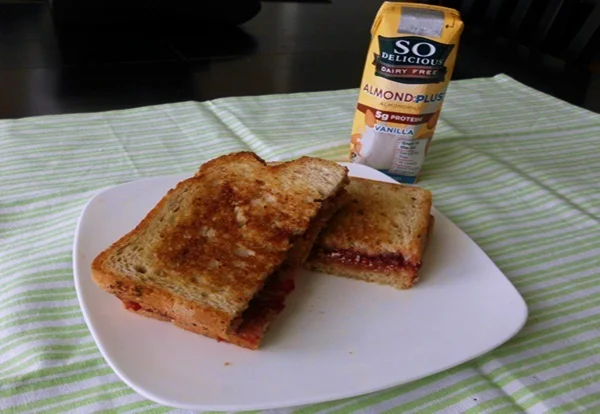
A familiar peanut butter and jelly sandwich gets crisp, golden outsides from a quick pan-fry. It makes a warm, filling lunch or snack, served with almond milk.
Ingredients
- 2 teaspoons, plus extra for spreadingnon-hydrogenated dairy-free margarine
- 4 sliceswheat or gluten-free sandwich bread
- to tastepeanut butter
- to tastejelly, any flavour
- 2 glasses or 2 single-serving packagesalmond milk
Instructions
- 1
Melt the margarine
Melt 1 teaspoon of margarine in a frying pan over medium heat.
- 2
Butter the bread
As the pan warms, lightly spread dairy-free margarine on one side of each bread slice; you do not need much.
- 3
Fill the sandwiches
Spread peanut butter on the opposite side of two slices and jelly on the opposite side of the other two, using as much as you like. Pair the slices to make two sandwiches, with the margarine-coated sides facing out.
- 4
Fry until golden
When the pan is hot, add one sandwich and cook until lightly browned, about 3 minutes. Flip and brown the other side lightly. Serve it, then repeat with the second sandwich.
- 5
Serve with milk
Serve the sandwiches with almond milk.
What is a pan-fried peanut butter and jelly sandwich?
Peanut butter and jelly sandwiches are a familiar American combination, with sweet fruit spread paired with savoury, creamy nut butter. This version borrows the crisp, buttery exterior of a grilled sandwich while keeping the classic filling.
A light coating of margarine helps the bread brown in the pan. The recipe keeps the filling amounts flexible, so you can adjust them to suit your bread and taste.
Nutrition and macros by portion
The nutrition label shows one serving as written: 460 calories, 15g protein, 58g carbs, 22g fat.
| Portion | Adjustment | kcal | Protein | Carbs | Fat |
|---|---|---|---|---|---|
| Lighter | Less margarine and jelly | 322 kcal | 11g | 41g | 15g |
| This serving | As written | 460 kcal | 15g | 58g | 22g |
| Hungry | Add another sandwich | 690 kcal | 23g | 87g | 33g |
Most of the carbohydrates come from the bread and jelly, while peanut butter and margarine provide much of the fat. Peanut butter also contributes protein, with a smaller amount from the bread and almond milk. To balance the plate, serve a sandwich with fresh fruit or sliced vegetables.
Choose bread that holds its shape
Bread: Wheat, gluten-free or sourdough multigrain can all work. Choose slices sturdy enough to hold the fillings and turn without breaking.
Size: Bread slices vary, so spread the fillings to the edges without piling them too thickly; this helps the sandwich stay together as it cooks.
Balance the spreads
Peanut butter: Spread it on one slice of each sandwich, leaving the amount to your preference. A reasonably even layer makes each bite consistent.
Jelly: Use the flavour and quantity you like on the paired slices. Avoid an overly thick layer, which can squeeze out when the sandwich is flipped.
Brown gently in the pan
Margarine: Coat the outside of each sandwich lightly, then melt a teaspoon in the pan. The extra coating helps the bread colour without needing a heavy layer.
Heat: Medium heat gives the bread time to brown while the filling warms. If it darkens before about 3 minutes, lower the heat.
Look for an even finish
First side: Cook until the underside is lightly browned, around 3 minutes. A golden surface and a little crispness are the cues to turn it.
Second side: Flip carefully and brown the other side lightly. The sandwich is ready when both sides are coloured and the filling is warm.
Serve while warm
Serve each sandwich soon after frying, while the bread is still crisp. Almond milk is the suggested drink alongside it.
For a fuller plate, add fresh fruit or sliced vegetables; these complement the sweet-and-savoury sandwich without changing how it is cooked.
Recipe notes & tips
- Spread the margarine thinly so the bread browns rather than feeling greasy.
- Keep the filling layer even to make the sandwiches easier to flip.
- Let the pan reach medium heat before adding the first sandwich.
- Use a wide spatula to support the sandwich as you turn it.
- Cook the second sandwich in a fresh teaspoon of margarine if the pan looks dry.
Variations
- Try sourdough: Use sturdy sourdough multigrain bread for a more savoury, chewy base.
- Switch the jelly: Choose a different fruit flavour to change the sweetness and aroma.
- Use crunchy peanut butter: Add a little crunch to the filling.
- Choose gluten-free bread: Use gluten-free sandwich slices and handle them gently when flipping.
- Adjust the filling: Add more peanut butter or jelly to suit your preference, keeping the layers manageable.
Common mistakes to avoid
- Overfilling the sandwich: Thick layers can ooze out when turned; spread the fillings evenly and moderately.
- Using high heat: The bread may brown too quickly; cook over medium heat and lower it if needed.
- Skipping the outside margarine: The bread may not brown evenly; coat each outer side lightly.
- Flipping too soon: The sandwich can come apart before its first side has set; wait until it is lightly browned.
- Leaving it in the pan too long: The bread can become overly dark; check around the 3-minute mark.
How to store
These sandwiches are best eaten just after cooking, when the outside is crisp. If needed, refrigerate leftovers in a sealed container for up to 2 days and reheat in a frying pan over low to medium heat until warmed through.
Frequently asked questions
Can I use gluten-free bread?
Yes. The recipe allows wheat or gluten-free sandwich bread. Gluten-free slices can be more delicate, so turn the sandwich carefully with a wide spatula.
How much peanut butter and jelly should I use?
Use the amounts you prefer, since the bread size and filling preferences vary. Keep the layers even and not so thick that they squeeze out during cooking.
How long should I fry each sandwich?
Cook the first side for about 3 minutes, until lightly browned, then flip and brown the other side. Adjust the heat if the bread colours too quickly.
Can I use dairy-free margarine?
Yes; dairy-free margarine is the specified choice. Use a small amount inside the pan and lightly spread some on the outside of the bread.
What can I serve with it?
The recipe suggests almond milk. Fresh fruit or sliced vegetables also make simple accompaniments.
Cook it from the original
This recipe comes from godairyfree.org. Their page has the author’s own photos, notes and tips — the best place to cook it from.
Open the recipe on godairyfree.org