
Recipe for Perfect Basmati Rice
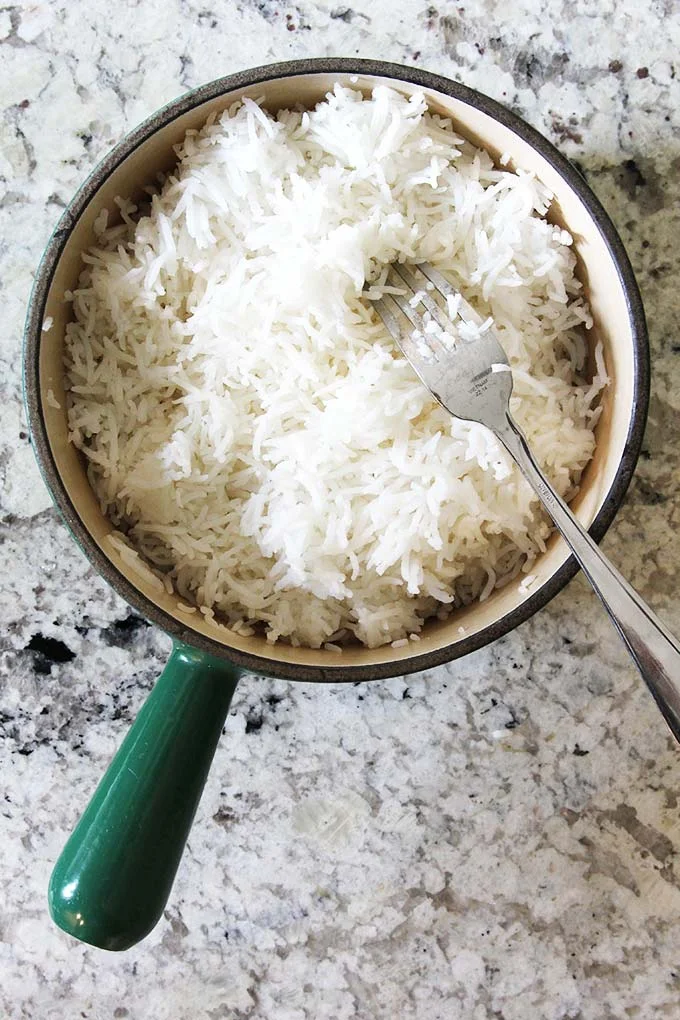
Basmati rice is prized for its nutty aroma and long, separate grains. This simple stovetop method uses rinsing, gentle simmering and a brief covered rest to make a soft, fragrant side dish.
Ingredients
- 190 g (1 cup)basmati rice
- 480 ml (2 cups)cold water
- 2.5 ml (1/2 teaspoon)ghee
- a pinchHimalayan pink salt
Instructions
- 1
Rinse the rice
Measure the rice into a saucepan and rinse it in cold water 1–3 times. When draining, use a small sieve so the grains do not fall into the sink.
- 2
Simmer the rice
Add 480 ml (2 cups) water, the ghee and salt. Bring to a boil over medium-high heat, stir gently once, then lower the heat to very low and cover. Simmer for 12–15 minutes; the timing depends on the rice, with drier, better-quality aged rice taking longer.
- 3
Rest covered
Turn off the heat, add 1–2 tablespoons of water and replace the lid. Leave for 5 minutes, or until ready to eat; the added water helps loosen any rice stuck to the bottom and steams the grains a little further.
- 4
Fluff to serve
Just before serving, gently fluff the rice with a fork and serve.
What is basmati rice?
Basmati is a long-grain, aromatic rice associated with the Indian subcontinent and widely used in Indian cooking. Its naturally nutty fragrance and slender grains make it a popular accompaniment to curries and dals.
This version keeps the ingredient list simple and relies on rinsing, a low simmer and a covered rest to help the grains cook softly without becoming clumped.
Nutrition and macros by portion
The nutrition label shows one serving as written: 232 calories, 4g protein, 49g carbs, 1g fat.
| Portion | Adjustment | kcal | Protein | Carbs | Fat |
|---|---|---|---|---|---|
| Lighter | Use less ghee | 162 kcal | 3g | 34g | 1g |
| This serving | As written | 232 kcal | 4g | 49g | 1g |
| Hungry | Serve a larger portion | 348 kcal | 6g | 74g | 2g |
Most of the carbohydrates in each serving come from the basmati rice, while the small amount of ghee contributes most of the fat. Rice provides a little protein, but this is mainly a carbohydrate-rich side; pair it with lentils, beans or another protein and vegetables for a more balanced plate.
Why rinse the grains?
Rinsing the rice in cold water 1–3 times removes some loose surface starch, which can otherwise make the cooked grains stick together. Drain carefully through a small sieve so the grains are not lost.
Choosing the rice
The method works with basmati rice, but the rice itself affects the cooking time. Drier, aged grains may need the full 15 minutes, while other rice may be ready sooner.
Keep the simmer gentle
Once the water boils, stir the rice just once, turn the heat down very low and cover the pan. Keeping the lid on during the 12–15-minute simmer lets the rice cook in the measured water.
The covered rest
A tablespoon or two of water added after cooking helps release grains that may have stuck to the base of the pan. The final 5 minutes under the lid also gives the rice a little more time to steam and soften.
Check the texture
The recipe gives a 12–15-minute simmer rather than one fixed time because rice can vary. If your grains are still firm, use the longer end of the stated cooking window; fluff gently with a fork just before serving.
What to serve it with
Serve the rice alongside a curry, dal or saucy vegetable dish so it can take up the flavours on the plate. It also works as a simple base for a meal with vegetables and a protein of your choice.
Recipe notes & tips
- Rinse the rice 1–3 times, as directed, to remove loose starch.
- Drain through a small sieve to keep grains out of the sink.
- After the water boils, stir only once before covering the pan.
- Keep the heat very low during the covered simmer.
- Use the full 5-minute covered rest before fluffing the rice.
- Fluff gently with a fork to avoid crushing the long grains.
Variations
- Plain rice: Omit the ghee for a simpler, dairy-free version.
- More fragrant: Add a whole aromatic spice to the cooking water if you want to change the flavour.
- Herb finish: Sprinkle chopped fresh herbs over the rice just before serving.
- Citrus finish: Add a little lemon juice at the table for a fresh contrast.
- Meal base: Serve with lentils or beans and vegetables to make the rice part of a fuller meal.
Common mistakes to avoid
- Skipping the rinse: Loose starch can make the grains stick; rinse in cold water 1–3 times.
- Draining without a sieve: Grains can wash down the sink; use a small sieve when pouring off the water.
- Cooking on high throughout: The rice may not simmer gently; lower the heat to very low after the boil.
- Lifting the lid repeatedly: This interrupts the covered cooking; keep the pan covered for the simmer.
- Skipping the rest: The rice may be less soft and stuck grains harder to release; add 1–2 tablespoons of water and rest covered for 5 minutes.
- Stirring vigorously: This can break the grains; stir once gently, then fluff with a fork at the end.
How to store
Cool leftover rice promptly, place it in a covered container and refrigerate for up to 2 days. Reheat until steaming hot throughout, adding a small splash of water to help loosen the grains.
Frequently asked questions
Why rinse basmati rice before cooking?
Rinsing removes some loose surface starch, which can help the cooked grains stay less clumped. Drain it through a small sieve to catch the grains.
How long does basmati rice take to cook?
The method simmers it, covered, for 12–15 minutes, then rests it for 5 minutes off the heat. Drier, aged rice may take longer within that cooking window.
How can I tell when the rice is ready?
The recipe allows for differences between rice varieties and recommends 12–15 minutes of covered simmering. Use the longer end of that range for drier aged rice, then let it rest covered.
Why add water after turning off the heat?
The extra 1–2 tablespoons help loosen rice that has stuck to the bottom and provide a little more steam during the covered rest.
Can I make this without ghee?
Yes. The rice can be cooked without the ghee, though it will have a slightly different flavour.
What should I serve with basmati rice?
It goes well with curry, dal or a saucy vegetable dish. Add lentils, beans or another protein alongside it for a more substantial plate.
Cook it from the original
This recipe comes from goodgutayurveda.com. Their page has the author’s own photos, notes and tips — the best place to cook it from.
Open the recipe on goodgutayurveda.com