
Bacon Potato Roses
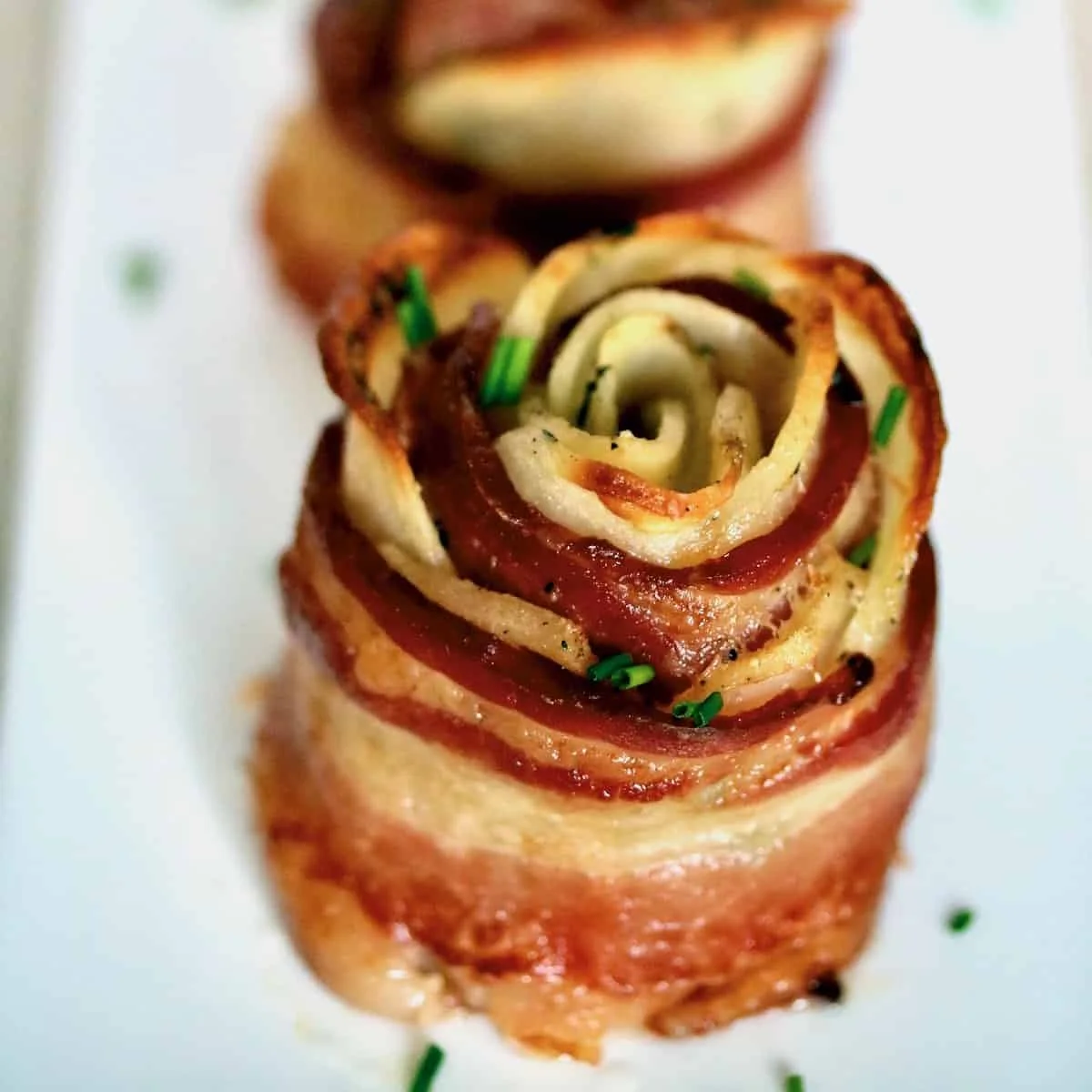
Bacon potato roses are thin slices of potato rolled inside overlapping strips of bacon and baked in a muffin tin. They make a striking savoury side or appetiser without requiring complicated shaping.
Ingredients
- 10 slicesthick-cut bacon
- 1russet potato
- 2 tspneutral oil
- 1 tspkosher salt
- 1/2 tspground black pepper
Instructions
- 1
Heat the oven
Preheat the oven to 204°C (400°F).
- 2
Arrange the bacon
Lay two bacon slices down with a slight overlap at one end.
- 3
Slice the potato
Peel the potato, slice it thinly on a mandoline and toss the slices with just enough oil to coat them.
- 4
Season the slices
Season the potato with the salt and pepper. Add any extra seasoning you like, such as garlic powder, smoked paprika or rosemary.
- 5
Layer the potato
Lay the potato slices over the bacon, overlapping them slightly and lining up one edge of the potato with the edge of the bacon.
- 6
Roll into roses
Roll the bacon and potato from one end to the other, then place each roll in a cup of a muffin tin.
- 7
Bake until cooked
Bake for 45 minutes. Loosely cover the tops with foil to prevent over-browning, then bake for another 15 minutes so the bacon cooks through inside.
What are bacon potato roses?
These savoury bites turn bacon and potato into flower-like rolls, using the shape of a muffin tin to hold each one in place. This American-style version keeps the seasoning simple and lets the bacon provide much of the savoury flavour.
Thin potato slices are layered along overlapping bacon before everything is rolled up. The method gives the roses their petal-like edges while keeping the ingredient list short.
Nutrition and macros by portion
The nutrition label shows one serving as written: 349 calories, 10g protein, 9g carbs, 30g fat.
| Portion | Adjustment | kcal | Protein | Carbs | Fat |
|---|---|---|---|---|---|
| Lighter | Use less bacon | 244 kcal | 7g | 6g | 21g |
| This serving | As written | 349 kcal | 10g | 9g | 30g |
| Hungry | Serve a larger portion | 524 kcal | 15g | 14g | 45g |
Bacon provides most of the fat and protein, while the potato contributes most of the carbohydrates. Pair a rose with vegetables or salad for a more balanced plate.
Choosing and slicing the potato
Russet potato: its starchy texture works well in a baked dish like this. Peel it before slicing, as directed.
Thin slices: a mandoline makes it easier to cut the potato evenly. Consistent slices help the layers bend around the roll rather than breaking.
Building the rose shape
Bacon overlap: arrange two strips with a slight overlap at one end, as the method specifies. This creates a continuous strip to roll around the potato.
Potato alignment: overlap the potato slices slightly and line one edge up with the bacon edge. Roll steadily from one end to the other, then set each roll in a muffin cup.
Getting the bacon cooked through
First bake: the roses bake uncovered for 45 minutes at 204°C (400°F), giving the bacon and potato time to cook and brown.
Foil finish: cover the tops loosely for the final 15 minutes to limit further browning while the bacon cooks through inside. The recipe gives a total baking time of 60 minutes.
Seasoning the layers
Salt and pepper: season the potato slices before layering them so the seasoning is distributed through the roses.
Optional extras: garlic powder, smoked paprika or rosemary are suggested as possibilities in the method, but they are not included in the ingredient list. If using one, keep the amount modest so it does not overwhelm the bacon.
Serving the roses
Serve the roses warm as a side dish or appetiser, straight from the muffin tin once they are safe to handle. Their rich, salty flavour pairs well with a fresh green salad or simply cooked vegetables.
For a fuller plate, add a protein-rich main such as roast chicken or beans. The roses can also be served as part of a brunch spread.
Recipe notes & tips
- Slice the peeled potato thinly and evenly so it can bend around the roll.
- Use just enough oil to coat the potato slices, as directed.
- Keep the potato slices slightly overlapping so the rose holds together.
- Set each roll upright in a muffin cup to help it keep its shape.
- Cover the tops loosely with foil for the final 15 minutes to limit over-browning.
Variations
- Smoked paprika: season the potato with a little smoked paprika for a deeper savoury note.
- Garlic: add garlic powder to the potato seasoning for extra savouriness.
- Rosemary: add a little rosemary to the potato for an aromatic variation.
- Peppery finish: add a touch more black pepper to the potato before rolling.
- Brunch side: serve the roses alongside eggs and fresh vegetables.
Common mistakes to avoid
- Thick potato slices: they are harder to roll; slice the peeled potato thinly on a mandoline.
- Uneven layering: gaps can make the roll less tidy; overlap the potato slices slightly.
- Misaligned edges: the rose may roll unevenly; line one edge of the potato up with the bacon edge.
- Skipping the foil: the tops may over-brown during the final bake; cover them loosely after 45 minutes.
- Shortening the final bake: the bacon inside may not cook through; bake for the additional 15 minutes under foil.
How to store
Refrigerate leftovers in an airtight container and use within 3–4 days. Reheat in an oven until hot throughout; the bacon may soften somewhat after chilling.
Frequently asked questions
Can I make these without a mandoline?
Yes. Slice the peeled potato as thinly and evenly as you can with a sharp knife.
Why cover the roses with foil?
The foil helps prevent the tops from browning too much during the final 15 minutes, while the bacon cooks through inside.
How long do the roses bake?
Bake for 45 minutes, then cover loosely with foil and bake for another 15 minutes.
Can I add other seasonings?
Yes. The method suggests garlic powder, smoked paprika or rosemary as optional additions to the potato seasoning.
Can I prepare them ahead?
They are best baked shortly before serving for the freshest texture. Refrigerate any leftovers promptly and reheat them in the oven.
Cook it from the original
This recipe comes from goodgriefcook.com. Their page has the author’s own photos, notes and tips — the best place to cook it from.
Open the recipe on goodgriefcook.com