
Homemade Empanadas Dough Recipe
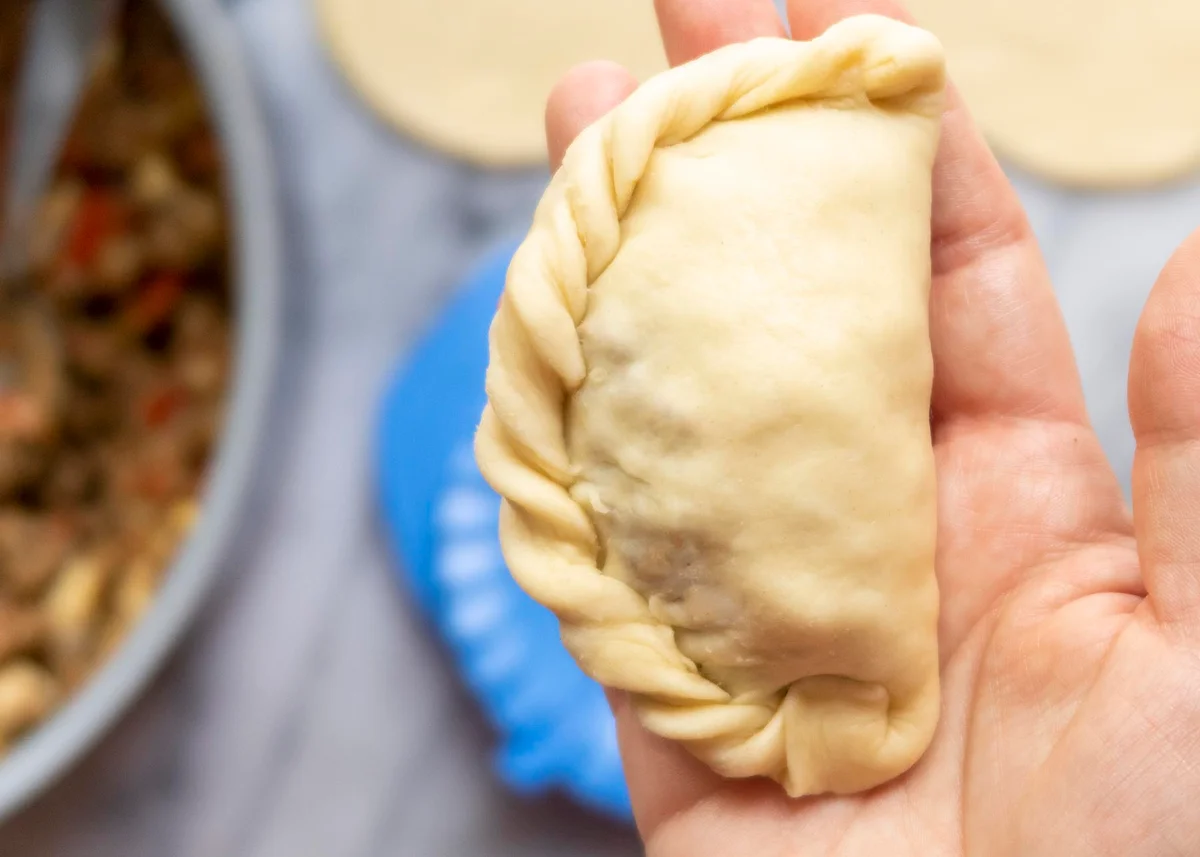
This buttery, savoury pastry dough is made in a food processor and rolled out for baked empanadas. It comes together quickly and can be used straight away or chilled for later.
Ingredients
- 375 g (3 cups)plain flour
- 3 g (½ tsp)salt
- 170 g (6 oz; 1 stick plus 2 tbsp), cold and cut into piecesunsalted butter
- 180 ml (¾ cup)water
- 2eggs
Instructions
- 1
Make the dough
Put the flour, salt and cold butter in a food processor. Pulse until the butter is incorporated. Add 1 egg and 120 ml (½ cup) of the water, then pulse until a dough forms. Add more water if the dough will not hold together or crumbles when pressed between your fingers. Use the dough straight away, or divide it in two, wrap it in cling film and refrigerate it. Keep the second egg for the egg wash.
- 2
Roll and shape
On a lightly floured surface, roll out the dough to about the thickness of a US nickel. Cut out circles 13 cm (5 inches) in diameter using a cutter or medium bowl. Add 1 tablespoon of filling to each circle, fold the dough over and press the edges together. Fold the edge over itself, pressing down to create a rope-like crimp.
- 3
Bake the empanadas
Preheat the oven to 200°C (400°F). Arrange the empanadas on a baking sheet lined with baking parchment. Beat the remaining egg, brush it over the empanadas and bake for 20 minutes at 200°C (400°F).
What is empanada dough?
Empanadas are filled pastries found in many Latin American cuisines, with dough and fillings varying from place to place. This version is a buttery dough designed to be rolled, folded around a savoury filling and baked.
A food processor brings the flour and butter together quickly, while egg and water help the dough hold its shape. The result is a useful base for a range of fillings.
Nutrition and macros by portion
The nutrition label shows one serving as written: 169 calories, 3g protein, 18g carbs, 9g fat.
| Portion | Adjustment | kcal | Protein | Carbs | Fat |
|---|---|---|---|---|---|
| Lighter | Use less butter | 118 kcal | 2g | 13g | 6g |
| This serving | As written | 169 kcal | 3g | 18g | 9g |
| Hungry | Serve a larger portion | 254 kcal | 5g | 27g | 14g |
The flour supplies most of the carbohydrates, while the butter contributes much of the fat. The egg adds some protein as well as fat; the recipe lists 3 g protein, 18 g carbohydrates and 9 g fat per serving. Pair an empanada with vegetables or salad for a more balanced plate.
Choosing the ingredients
Cold butter: cutting it into pieces helps it mix through the flour without warming too quickly. Keep it cold until you are ready to process the dough.
Water and egg: the egg adds richness and helps bind the mixture, while the water brings it together. Add the remaining water only as needed; the dough should hold when pressed.
Getting the dough together
Pulse briefly: process the flour, salt and butter until incorporated, then add the egg and measured water. Stop when a dough forms rather than continuing to run the machine.
Check the texture: press a little dough between your fingers. If it crumbles instead of sticking together, add a small amount of the reserved water and pulse again.
Rolling and sealing
Even thickness: roll the dough to about the thickness of a US nickel so the circles are easy to fold. A lightly floured work surface helps prevent sticking.
Firm edges: press the pastry together around the filling before making the rope-like crimp. Keep filling away from the rim so the edges can seal.
Baking cues
Egg wash: brush the tops with the remaining beaten egg for an even finish. Use a light coating rather than letting egg pool around the edges.
Bake time: bake at 200°C for 20 minutes as directed. Check that the pastry is cooked through and has coloured before taking the tray out.
Filling and serving ideas
Filling amount: use 1 tablespoon for each 13 cm circle, adjusting the filling so the pastry can close neatly. Choose a savoury filling that is not overly wet.
On the plate: serve the baked empanadas with a crisp salad or cooked vegetables. A simple dip or salsa can add contrast without changing the dough.
Recipe notes & tips
- Keep the butter cold until it goes into the food processor.
- Add the remaining water gradually if the dough still crumbles when pressed.
- Flour the work surface lightly to make rolling easier without drying the dough.
- Leave a clear border around the filling so the pastry can seal.
- Line the baking sheet with baking parchment to make the empanadas easier to lift off.
Variations
- Savoury filling: use a favourite cooked filling, leaving enough space to seal each pastry.
- Make ahead: divide and wrap the dough, then refrigerate it until you are ready to roll.
- Freeze the dough: wrap it securely before freezing and thaw it in the refrigerator before rolling.
- Change the shape: use a different cutter size, keeping the filling amount suited to each circle.
Common mistakes to avoid
- Adding too much water: the dough can become difficult to handle; add it gradually and stop once the dough holds together.
- Overworking the mixture: the dough may become tough; pulse only until it forms.
- Rolling on an unfloured surface: the pastry may stick; dust the surface lightly with flour.
- Overfilling: the edges may not seal; keep to about 1 tablespoon per circle and leave a border.
- Skipping the seal: filling can escape during baking; press the edges together before crimping.
How to store
Wrap unused dough in cling film and refrigerate it; use it within 2 days. It can also be frozen, then thawed in the refrigerator before rolling. Baked empanadas can be refrigerated in a covered container for up to 3 days and reheated in the oven until hot.
Frequently asked questions
Can I make the dough ahead?
Yes. Divide it in two, wrap it in cling film and refrigerate it until you are ready to roll.
How do I know if the dough needs more water?
Press a piece between your fingers. If it crumbles instead of sticking together, add a little more water and pulse again.
Can I freeze this dough?
Yes. Wrap it securely before freezing and thaw it in the refrigerator before rolling it out.
What filling should I use?
Use any savoury filling you like. Avoid adding too much or using a filling that is very wet, as both can make sealing difficult.
How thick should I roll the dough?
Roll it to about the thickness of a US nickel, then cut circles 13 cm (5 inches) in diameter.
How long do the empanadas bake?
Bake them for 20 minutes at 200°C (400°F), until the pastry is cooked through and coloured.
Cook it from the original
This recipe comes from goodlifexplorers.com. Their page has the author’s own photos, notes and tips — the best place to cook it from.
Open the recipe on goodlifexplorers.com